


Gratis Versand ab € 9,99
Bookbot

Terrence J. Sejnowski

    Terrence Sejnowski ist ein Pionier auf dem Gebiet der neuronalen Netze und der computergestützten Neurowissenschaften. Seine Forschung in diesen Bereichen hat unser Verständnis des Gehirns maßgeblich beeinflusst. Er ist an führenden Forschungseinrichtungen und Universitäten tätig und leitet Labore, die sich auf theoretische und computergestützte Biologie und Neurowissenschaften konzentrieren. Seine Arbeit befasst sich eingehend mit den Funktionsweisen neuronaler Netze.

    Neural Information Processing: New Directions in Statistical Signal Processing
    Liars, Lovers, and Heroes
    Grundlagen zur Neuroinformatik und Neurobiologie
    • Grundlagen zur Neuroinformatik und Neurobiologie

      The Computational Brain in deutscher Sprache

      • 720 Seiten
      • 26 Lesestunden

      Das Buch über vergleichende Forschung zwischen menschlichem Gehirn und moderner Computertechnologie liegt nun erstmals in deutscher Sprache vor. Verfasst von einem renommierten Forscherteam aus den USA, bietet es umfassende Einblicke in den aktuellen Stand der Wissenschaft auf diesem Gebiet. Die Autoren verknüpfen Neuroinformatik und Neurobiologie mit ausgewählten Beispielen und fundierter Hintergrundinformation. Dadurch wird es sowohl Fachwissenschaftlern als auch interdisziplinär interessierten Informatikern und Biologen gerecht. Die Übersetzung stammt von Prof. Dr. Steffen Hölldobler und Dipl.-Biol. Claudia Hölldobler. Die Originalausgabe von 1992 gilt bereits als Klassiker. Das Werk wird als unverzichtbar empfohlen, da es die Faszination theoretischer Hirnforschung vermittelt, die in Deutschland immer mehr Wissenschaftler anzieht. Das Inhaltsverzeichnis umfasst Themen wie neurowissenschaftliche Grundlagen, Berechnungsgrundlagen, die Repräsentation der Welt, Plastizität sowie sensomotorische Integration. Es behandelt unter anderem die Mechanismen des Lernens, die Entwicklung von Nervensystemen und verschiedene neuronale Modelle. Zudem werden anatomische und physiologische Techniken zur Untersuchung des Gehirns erläutert.

      Grundlagen zur Neuroinformatik und Neurobiologie
    • Liars, Lovers, and Heroes

      What the New Brain Science Reveals About How We Become Who We Are

      • 336 Seiten
      • 12 Lesestunden

      This exciting, timely book merges cutting-edge neuroscience with historical and contemporary examples to provide fresh insights into human nature. Introducing the science of cultural biology, the authors, Drs. Quartz and Sejnowski, explore the intricate relationship between brain and environment that shapes our humanity. They reveal how our development occurs in stages, influenced by factors as ancient as climate change and as recent as the events of September 11. The authors tackle enduring questions about why we live together, love, kill, and sometimes sacrifice ourselves for others, uncovering surprising truths: many noble traits like altruism, love, and courage are rooted in ancient brain systems shared with insects, which also underpin some of our darker tendencies. They challenge conventional views on brain development, arguing that we are not merely products of instinct or genetics but creators of a symbolic reality known as culture, which we pass down as a survival blueprint. Through compelling historical and contemporary examples, the authors illustrate how engagement with the world stimulates brain chemistry, fostering cultural complexity. They also propose thought-provoking ideas on how cultural shifts may impact human development. Their scientific insights offer profound implications for understanding our past, present, and future.

      Liars, Lovers, and Heroes
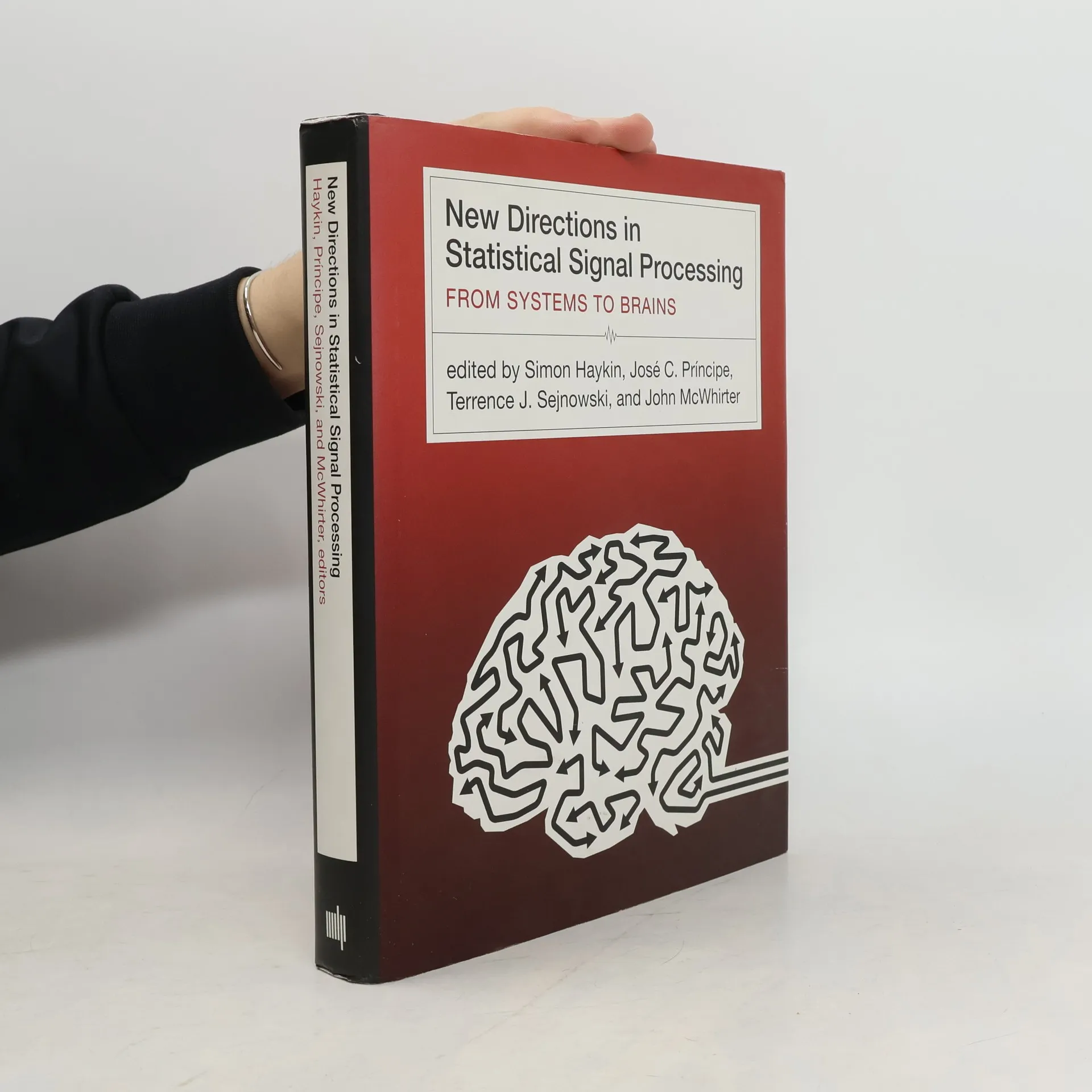
    • Leading researchers in signal processing and neural computation present work aimed at promoting the interaction and cross-fertilization between the two fields. Signal processing and neural computation have separately and significantly influenced many disciplines, but the cross-fertilization of the two fields has begun only recently. Research now shows that each has much to teach the other, as we see highly sophisticated kinds of signal processing and elaborate hierachical levels of neural computation performed side by side in the brain. In New Directions in Statistical Signal Processing, leading researchers from both signal processing and neural computation present new work that aims to promote interaction between the two disciplines. The book's 14 chapters, almost evenly divided between signal processing and neural computation, begin with the brain and move on to communication, signal processing, and learning systems. They examine such topics as how computational models help us understand the brain's information processing, how an intelligent machine could solve the cocktail party problem with active audition in a noisy environment, graphical and network structure modeling approaches, uncertainty in network communications, the geometric approach to blind signal processing, game-theoretic learning algorithms, and observable operator models (OOMs) as an alternative to hidden Markov models (HMMs).

      Neural Information Processing: New Directions in Statistical Signal Processing