

Gratis Versand ab € 14,99. Mehr Infos.
Bookbot

Edward Osborne Wilson

    The Insect Societies
    Ameisen
    • Ameisen

      • 265 Seiten
      • 10 Lesestunden

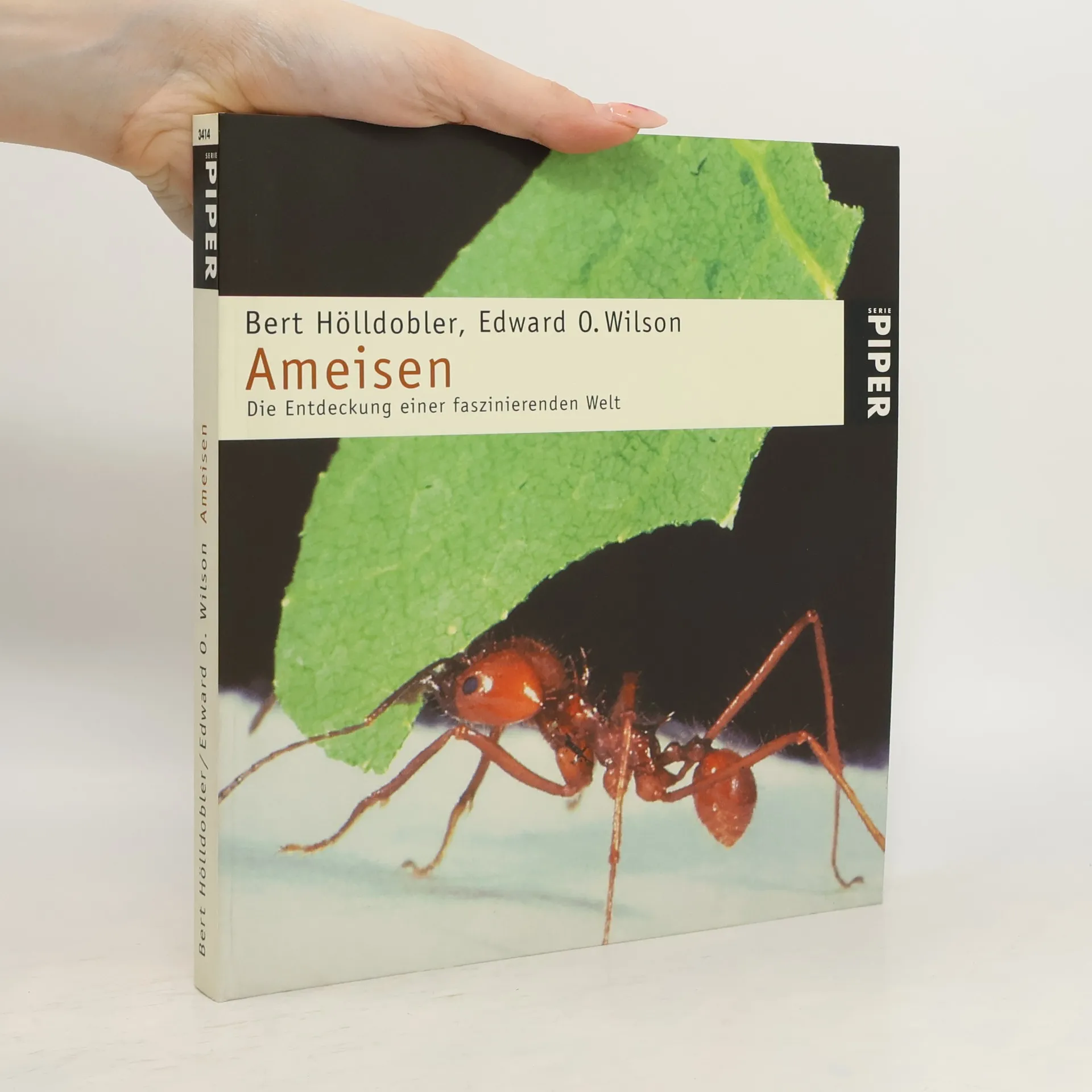
      Ameisen existieren seit gut 120 Millionen Jahren. Diese von den beiden weltberühmten Experten geschriebene, reich illustrierte Naturgeschichte führt in die faszinierende Welt der Ameisen. Sie erfahren von der Artenvielfalt, von typischen Verhaltensweisen, von der effektiven Zusammenarbeit und den Verständigungsmöglichkeiten innerhalb der Kolonien und von den perfekt geplanten kämpferischen Auseinandersetzungen mit anderen Völkern. Die Autoren lassen Sie an der Spannung und dem Vergnügen teilhaben, welches sie bei ihrer Erforschung der Ameisen erlebt haben. Der Text wurde für diese deutsche Neuauflage von Bert Hölldobler auf den aktuellen Stand gebracht und umfangreich ergänzt. Zahlreiche zusätzliche neue Farbtafeln illustrieren die Welt der Ameisen noch beeindruckender. Die erste Auflage wurde 1995 von bild der wissenschaft als Wissenschaftssachbuch des Jahres ausgezeichnet. Spannendes aus der Naturgeschichte der Ameisen aus mehr als 100 gemeinsamen Forscher-Jahren.

      Ameisen
      4,5
    • The Insect Societies

      • 548 Seiten
      • 20 Lesestunden

      A study of insect sociology, presenting individual investigations of wasps, ants, bees, and termites, and discussing caste, behavior, communication, symbioses, and other topics. "This first comprehensive study of social insects since the 1930s includes more than 250 illustrations and covers all aspects of classification, evolution, anatomy, physiology, and behavior of the higher social insects-the ants, social wasps and bees, and termites. Since the publication of W.M. Wheeler's "The Social Insects" in 1928 and Franz Maidl's "Die Lebensgewohnheiten und Instinkte der staatenbildenden Insekten" in 1934, the literature on social insects has increased enormously and entirely new ways of studying insect societies have developed. Mr. Wilson reinterprets here the knowledge on the subject through the concepts of modern biology-from biochemistry to evolutionary theory and population ecology. He reviews the evolution of parental care and other primitive forms of social behavior throughout the arthropods and investigates various forms of symbiosis between the social insects and other anthropods. He also compares insect and vertebrate societies in basic theoretical terms, showing how unified sociobiology is possible if developed as a branch of population biology" -- Book Jacket.

      The Insect Societies