Kuhns Thema ist der Prozeß, in dem wissenschaftliche Erkenntnisse erzielt werden. Fortschritt in der Wissenschaft - das ist seine These - vollzieht sich nicht durch kontinuierliche Veränderung, sondern durch revolutionäre Prozesse. Dabei beschreibt der Begriff der wissenschaftlichen Revolution den Vorgang, bei dem bestehende Erklärungsmodelle, an denen und mit denen die wissenschaftliche Welt bis dahin gearbeitet hat, abgelöst und durch andere ersetzt werden: es findet ein Paradigmenwechsel statt.
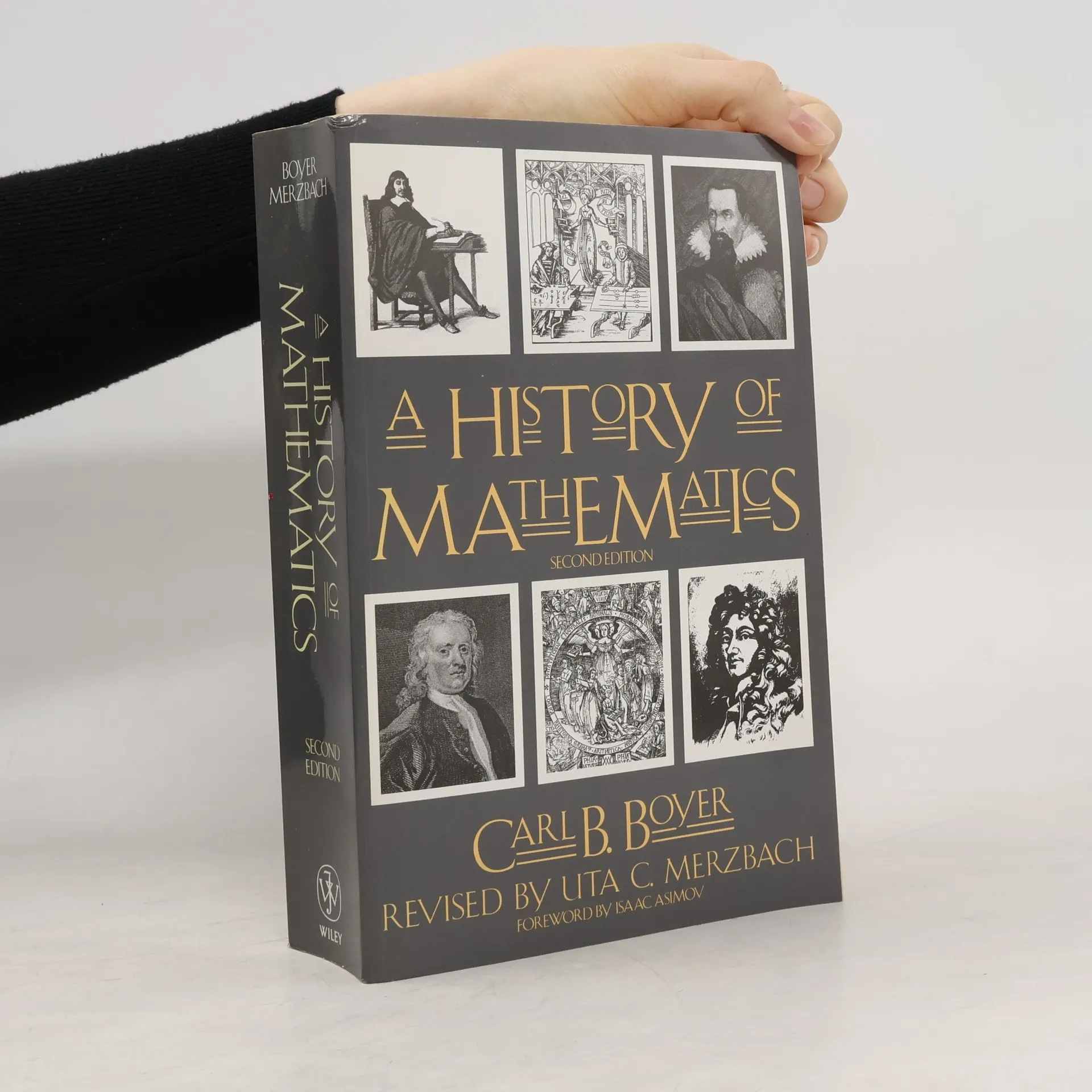
Boyer and Merzbach distill thousands of years of mathematics into a captivating chronicle, showcasing brilliant mathematics and a distinguished cast of characters. They trace the development of European mathematics while also acknowledging the significant contributions from Chinese, Indian, and Arabic civilizations. This work stands as a classic one-volume history of mathematics and the mathematicians behind it. The authors present a mounting structure of knowledge, with a solid foundation dating back to Thales' early geometrical theorems nearly 26 centuries ago. It is regarded as one of the most useful and comprehensive general introductions to the subject. Both readable and scholarly, it serves as an excellent introduction and reference source. Revised for accessibility, the text vividly illustrates humankind's relationship with numbers and includes broadened coverage of twentieth-century advances in probability and computing. Additionally, it features an appendix with an extensive chronological table of mathematical and historical developments, appealing to a wide range of readers.