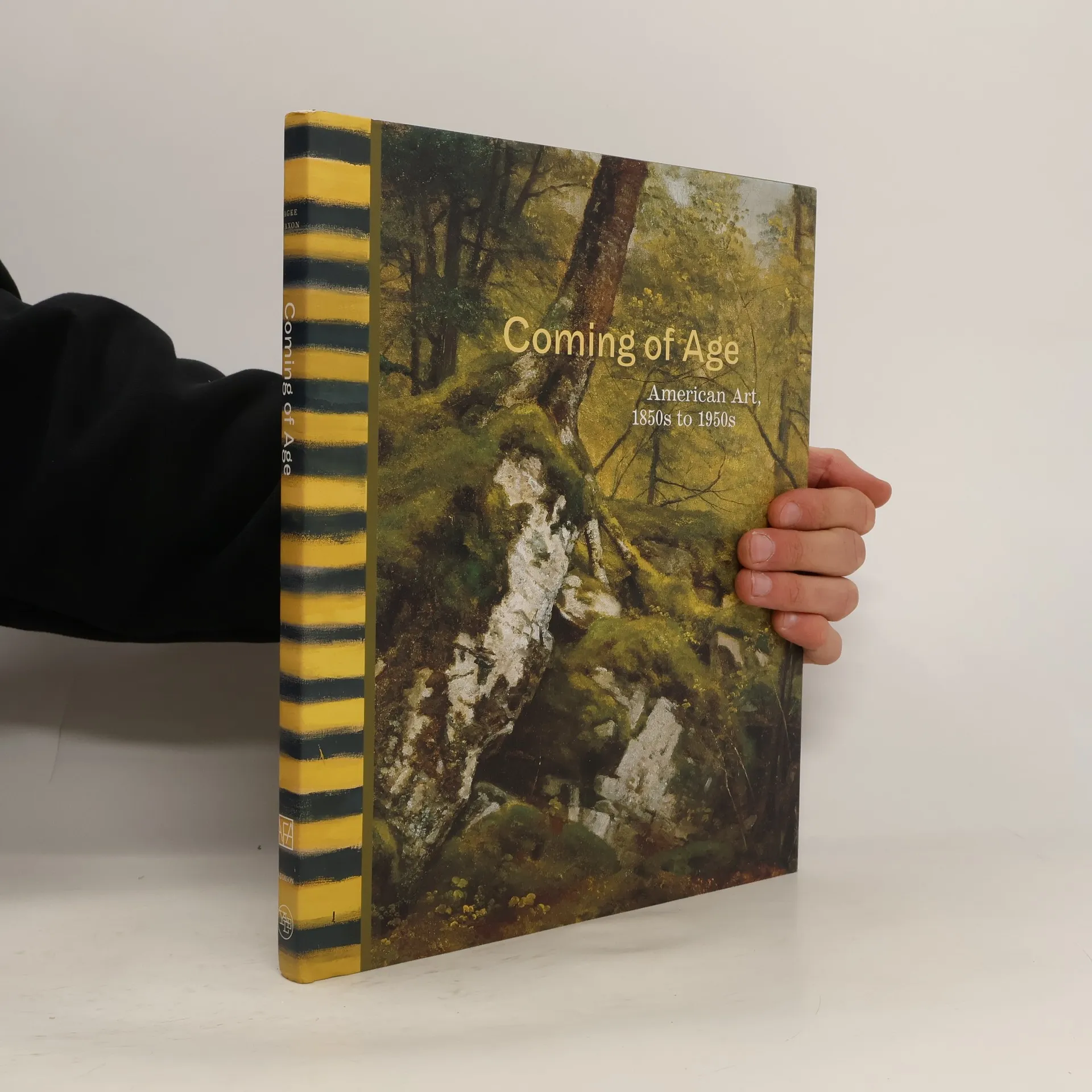
This sumptuous catalogue traces the evolution of a uniquely American aesthetic identity from the 1850s to the 1950s, highlighting the transition of American art from provincial to international prominence. It chronicles a complex century of maturation through a selection of paintings from the Addison Gallery of American Art. Beginning with Albert Bierstadt, Frederic Church, and the Hudson River School landscapes, the book reflects the new nationalism of mid-nineteenth-century America. Successors like Jasper Cropsey and Fitz H. Lane infused their surroundings with glowing light, while tonalists such as George Inness captured the American ethos through emotional landscapes. In the later 19th century, Winslow Homer, Thomas Eakins, and Eastman Johnson depicted native subjects with realism. Childe Hassam and Maurice Prendergast introduced Impressionist aesthetics, while expatriates like John Singer Sargent and James McNeil Whistler made their mark in European art capitals. The Ashcan school painters of turn-of-the-century New York portrayed gritty cityscapes, leading to modernism champions like Alfred Stieglitz and Marsden Hartley. In the 1930s, Josef Albers introduced new theories of color and space, paving the way for Abstract Expressionism. By the 1950s, American art had firmly established itself at the forefront of the international art scene.
Susan C. Faxon Reihenfolge der Bücher (Chronologisch)