

Gratis Versand ab € 14,99. Mehr Infos.
Bookbot

Oz Shy

    Industrial Organization
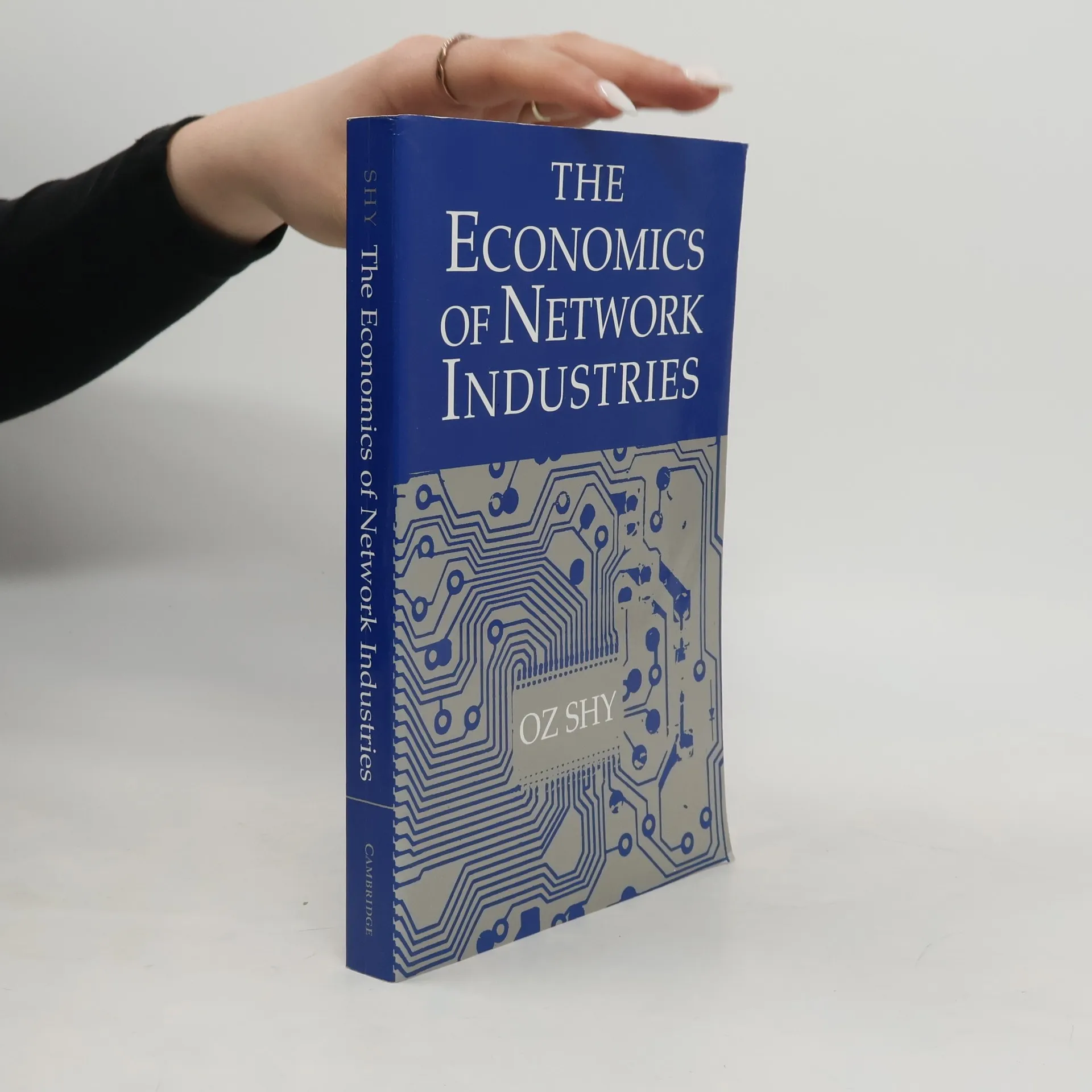
    The Economics of Network Industries
    • The Economics of Network Industries

      • 334 Seiten
      • 12 Lesestunden

      This book introduces upper-level undergraduates, graduate students, and researchers to the latest developments in network economics, one of the fastest-growing fields in all industrial organization. Network industries include the Internet, e-mail, telephony, computer hardware and software, music and video players, and service operations in the banking, legal, and airlines industries among many others. The work offers an overview of the subject matter as well as investigations about specific industries. It conveys the essential features of how strategic interactions between firms are affected by network activity, as well as covering social interaction and its influence on consumers' choices of products and services. Virtually no calculus is used in the text, and each chapter ends with a series of exercises and selected references. The text may be used for both one- and two-semester courses.

      The Economics of Network Industries
      3,8
    • Industrial Organization

      Theory and Applications

      • 488 Seiten
      • 18 Lesestunden

      This upper-level undergraduate text introduces industrial organization theory, focusing on applications and nontechnical analyses of the legal system and antitrust laws. It adopts a modern approach without emphasizing the mathematical complexity found in many arguments, effectively bridging the gap between nontheoretical undergraduate texts and highly technical graduate-level works. Suitable for master's programs, it also serves as a guide for advanced graduate students. The treatment is rigorous and comprehensive, covering a wide range of models for various market structures, strategic marketing devices, compatibility and standards, advertising, and R&D, while simplifying complex concepts to retain essential intuition. The author first defines the key issues in industrial organization before developing the necessary tools to address fundamental questions. Starting with perfect competition, the text explores imperfectly competitive market structures, including various monopolies and competition forms. A notable feature is the final chapter, which connects different theories to specific industries. Key topics include market structure (monopoly, homogeneous and differentiated products), mergers and entry, research and development, economics of compatibility and standards, advertising, quality and durability, pricing and marketing tactics, management, compensation, information, price dispersion, search theory, and special ind

      Industrial Organization