

Bookbot

Robert A. Ferguson

    Inferno
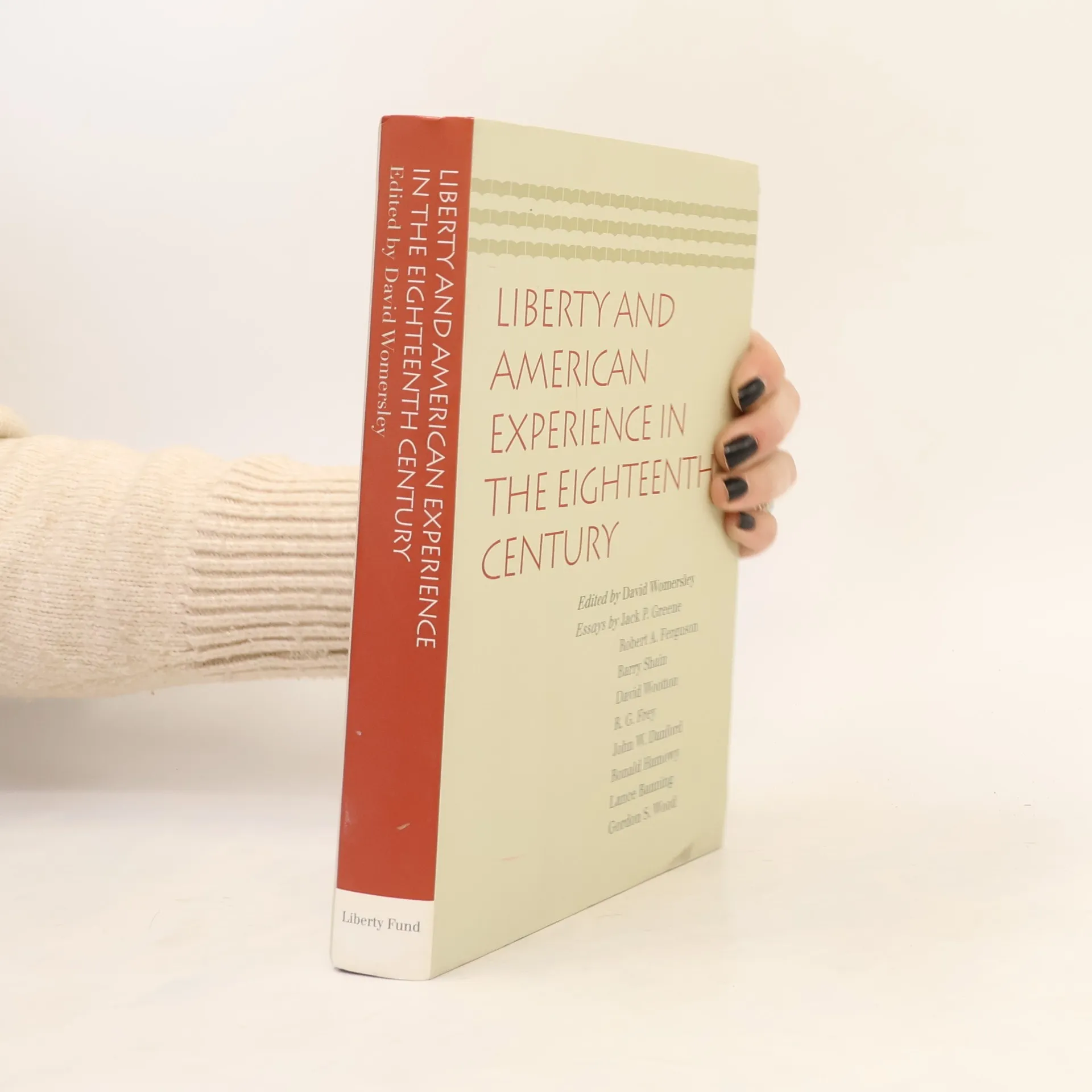
    Liberty and American Experience in the Eighteenth Century
    • Written by leading scholars of American history, this volume examines key themes and ideologies central to the formation of the United States. David Womersley’s introduction discusses Edmund Burke’s theories on property rights and government, laying the groundwork for the themes of liberty explored throughout the book. Jack Greene’s case study on Jamaica highlights the colonies' influence over their governance in “Of Liberty and the Colonies.” Robert Ferguson investigates the interplay between religious and legal concepts of liberty in “The Dialectic of Liberty.” Barry Shain supports Ferguson’s argument by exploring the significant impact of religion on the colonists’ outlook in “Religious Conscience and Original Sin.” John Danford analyzes the Founders' economic views in relation to the Enlightenment in “Riches Valuable at All Times and to All Men,” emphasizing their preference for established governance over untested theories. R. G. Frey discusses conflicting viewpoints between moral sense theory and natural rights in “Moral Sense Theory and the Appeal to Natural Rights.” David Wootton presents an opposing view, suggesting that Enlightenment ideas shaped the Founders' innovative yet resistant system in “Liberty, Metaphor, and Mechanism.” Ronald Hamowy pays tribute to the intellectual force of American affairs in “Scottish Thought and the American Revolution.” Lance Banning examines revolutionary divisions regarding liberty i

      Liberty and American Experience in the Eighteenth Century
      4,0
    • Inferno

      An Anatomy of American Punishment

      • 337 Seiten
      • 12 Lesestunden

      America's criminal justice system is broken. The United States punishes at a higher per capita rate than any other country in the world. In the last twenty years, incarceration rates have risen 500 percent. Sentences are harsh, prisons are overcrowded, life inside is dangerous, and rehabilitation programs are ineffective. Police and prosecutors operate in the dark shadows of the legal process--sometimes resigning themselves to the status quo, sometimes turning a profit from it. The courts define punishment as "time served," but that hardly begins to explain the suffering of prisoners. Looking not only to court records but to works of philosophy, history, and literature for illumination, Robert Ferguson, a distinguished law professor, diagnoses all parts of a now massive, out-of-control punishment regime. He reveals the veiled pleasure behind the impulse to punish (which confuses our thinking about the purpose of punishment), explains why over time all punishment regimes impose greater levels of punishment than originally intended, and traces a disturbing gap between our ability to quantify pain and the precision with which penalties are handed down. Ferguson turns the spotlight from the debate over legal issues to the real plight of prisoners, addressing not law professionals but the American people. Do we want our prisons to be this way? Or are we unaware, or confused, or indifferent, or misinformed about what is happening? Acknowledging the suffering of prisoners and understanding what punishers do when they punish are the first steps toward a better, more just system.

      Inferno