

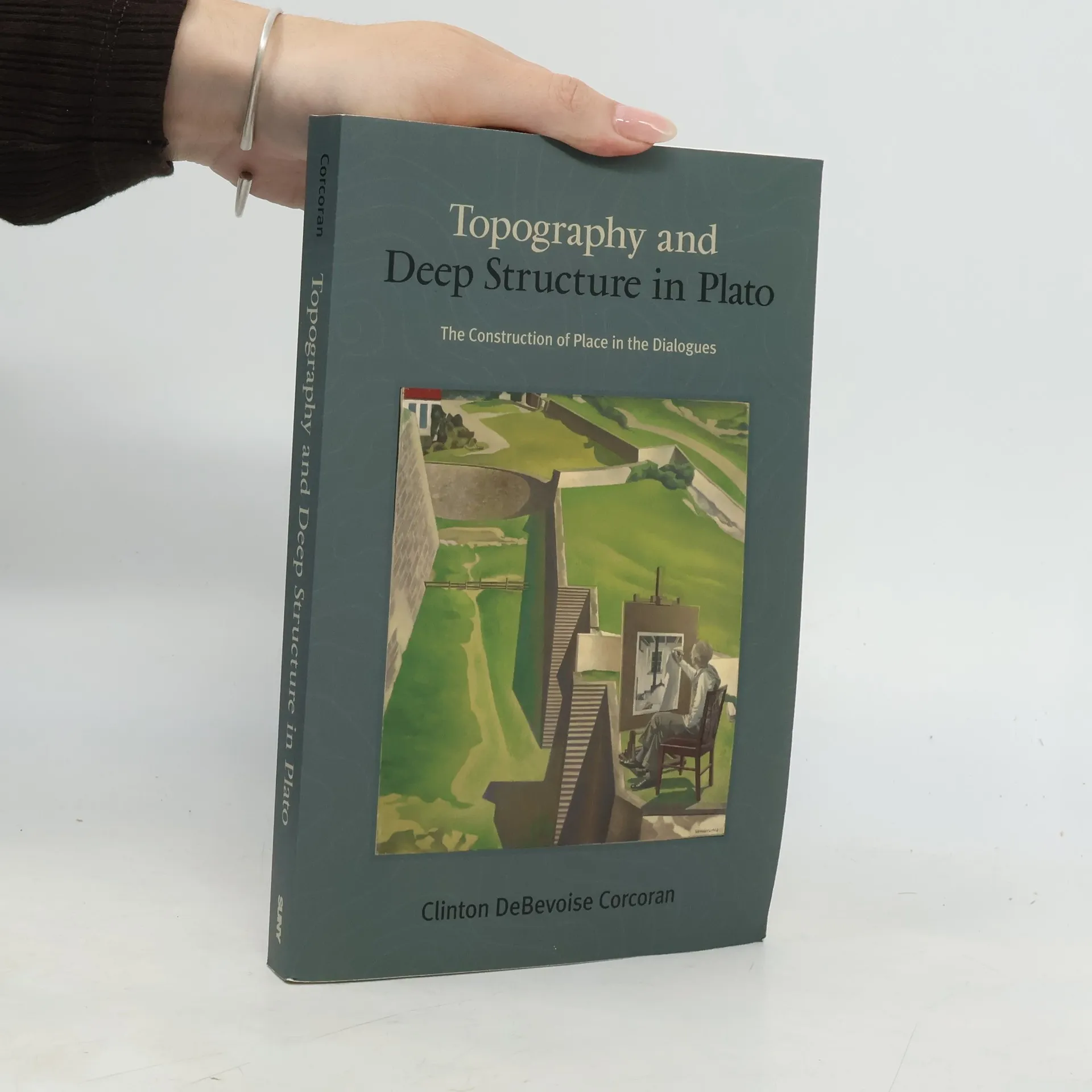
SUNY series in Ancient Greek Philosophy: Topography and Deep Structure in Plato
The Construction of Place in the Dialogues
- 302 Seiten
- 11 Lesestunden
This book offers a literary and historical analysis of the symbols, images, and actions in Plato’s dialogues, focusing on the significance of place. Clinton DeBevoise Corcoran argues that spatial representations—such as walls, caves, and roads—along with patterns and chaotic images, reveal insights into Plato’s philosophical project. The concept of the Good emerges as a central ordering principle that shapes the construction of place and defines the limits of various spaces, whether in the physical world, the underworld, or the ideal realm of the Forms. The Good transcends space and time, enabling Plato to craft settings and arguments that intertwine different dimensions of reality, allowing otherwise incompatible worlds to coexist. Additionally, the Good serves as an ethical framework for assessing the order of spaces. Corcoran examines how Plato employs metaphors of wrestling and war to illustrate the interaction of nonspatial, eternal forms with the temporal world and history, and how spatial imagery critiques Athens’s tragic overreach during the Peloponnesian War. Place, therefore, is not merely a backdrop but a vital element that highlights the tragic intersection of the mortal and immortal, good and evil, as well as Athens’s past, present, and future.