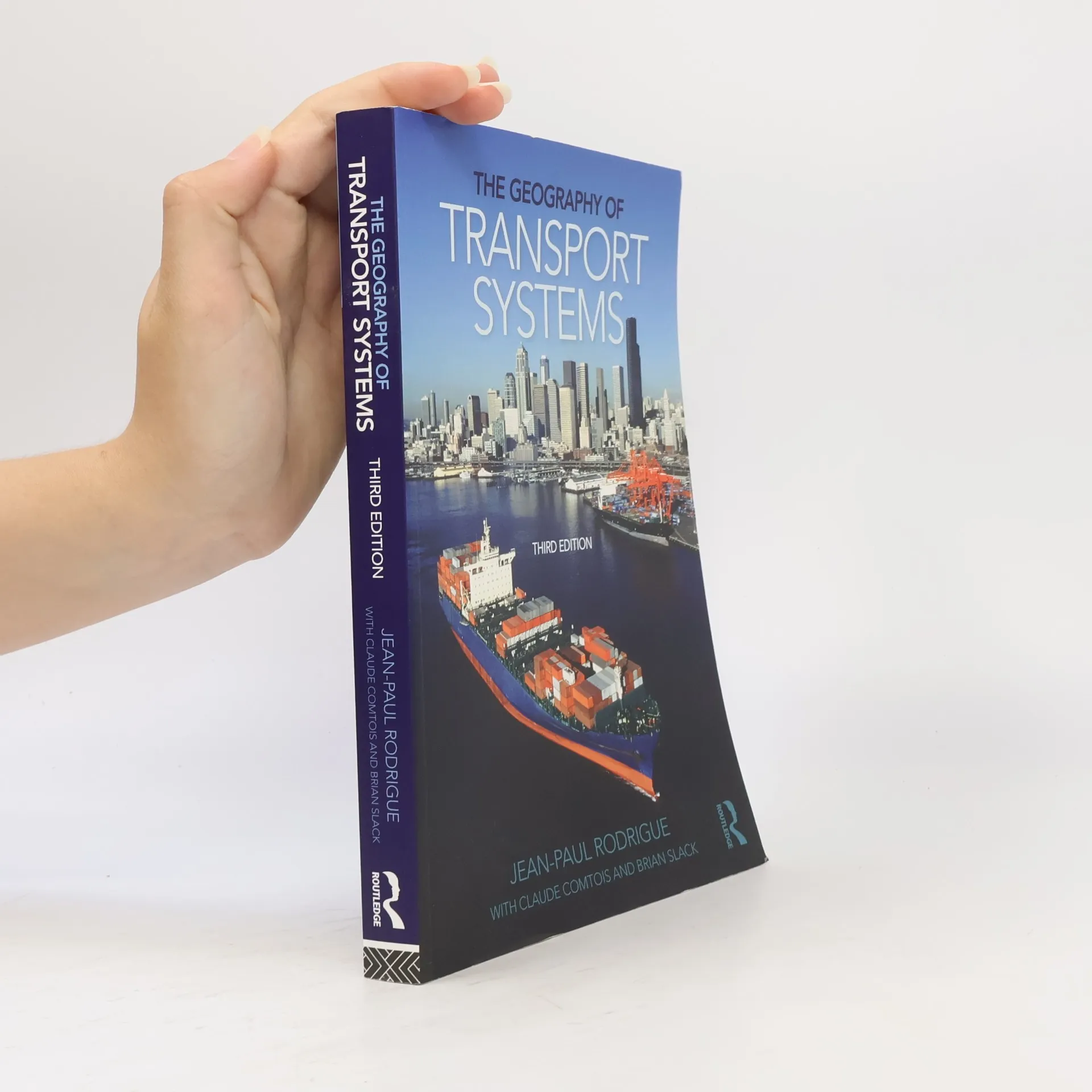
Mobility is essential for economic and social activities like commuting and manufacturing, with each movement defined by its origin, potential intermediate locations, destination, and geographical attributes. Transport systems, consisting of infrastructures, modes, and terminals, are deeply integrated into the socio-economic fabric, often rendering them invisible to consumers. This paradox arises from their efficiency. The primary aim of this book is to explore the connection between mobility and geography. The revised third edition offers an updated overview of transportation's spatial aspects, emphasizing security, energy, and green logistics, alongside new case studies and figures. Each chapter addresses specific dimensions, including networks, modes, terminals, freight and urban transportation, and environmental impacts. A concluding chapter presents methodologies related to transport geography, such as accessibility, spatial interactions, graph theory, and Geographic Information Systems for transportation (GIS-T). This text serves as a comprehensive introduction to the field, covering its concepts, methods, and applications. An accompanying website provides additional resources, including digital maps, PowerPoint slides, databases, and further reading links. This work is a vital resource for undergraduates in transport geography and those interested in economic and urban geography, transport planning, and engineering.
Brian Slack Reihenfolge der Bücher (Chronologisch)