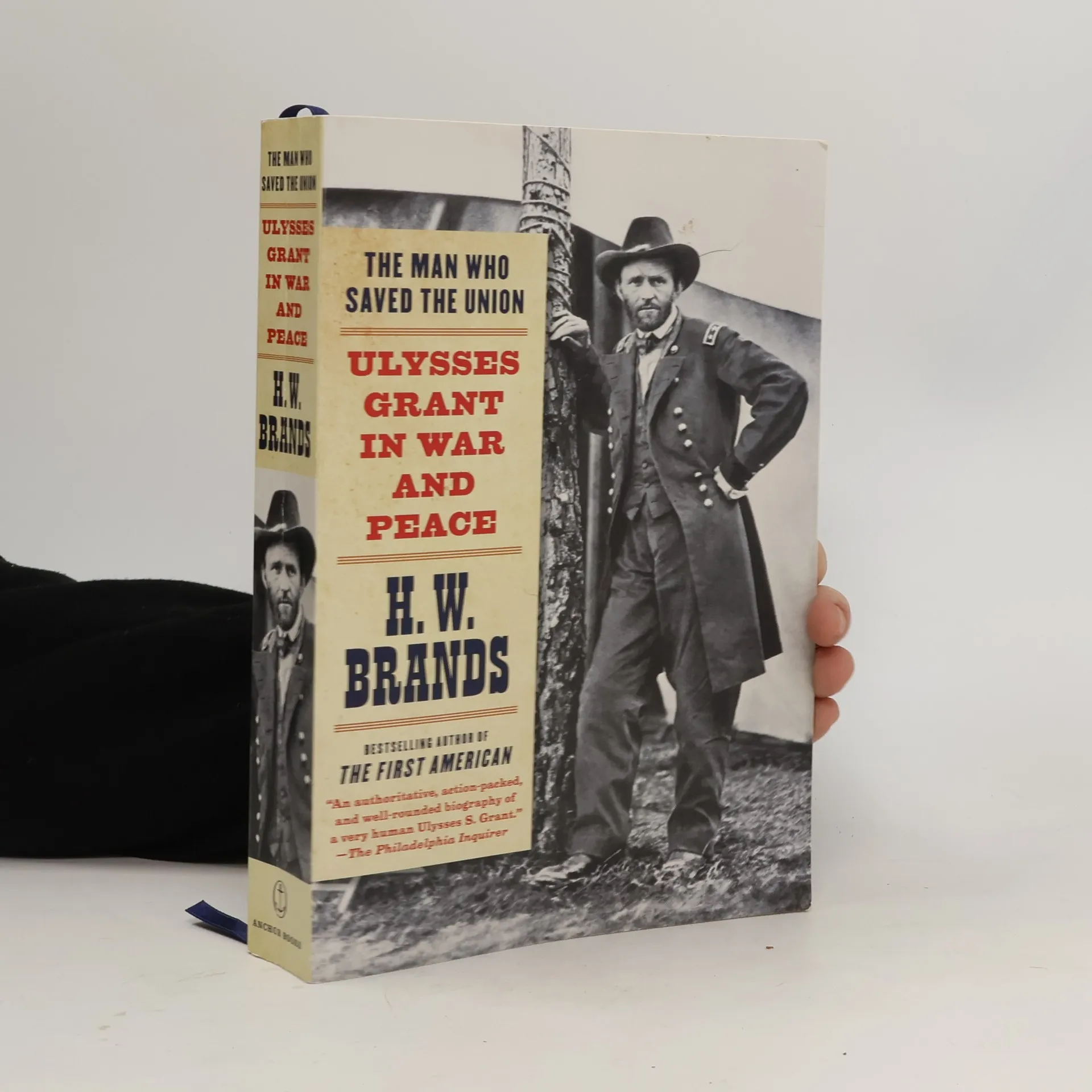
Ulysses Grant emerges in this masterful biography as a genius in battle and a driven president to a divided country, who remained fearlessly on the side of right. He was a beloved commander in the field who made the sacrifices necessary to win the war, even in the face of criticism. He worked valiantly to protect the rights of freed men in the South. He allowed the American Indians to shape their own fate even as the realities of Manifest Destiny meant the end of their way of life. In this sweeping and majestic narrative, bestselling author H.W. Brands now reconsiders Grant's legacy and provides an intimate portrait of a heroic man who saved the Union on the battlefield and consolidated that victory as a resolute and principled political leader.
H. W. Brands Bücher
Henry William Brands ist ein herausragender Historiker, dessen umfangreiches Werk sich mit der amerikanischen Geschichte und Politik befasst. Er verfügt über eine bemerkenswerte Fähigkeit, komplexe historische Ereignisse und Figuren durch akribische Recherche und fesselnde Erzählungen ans Licht zu bringen. Brands navigiert meisterhaft durch entscheidende Momente der amerikanischen Entwicklung und analysiert die tiefgreifenden sozialen und politischen Kräfte, die die Nation geformt haben. Seine Schriften werden für ihre intellektuelle Strenge, Klarheit und ihre Fähigkeit, die Vergangenheit mit der Gegenwart zu verbinden, gefeiert.


The Zealot and the Emancipator
- 480 Seiten
- 17 Lesestunden
What do moral people do when democracy allows evil? This question emerged in mid-nineteenth-century America during the slavery struggle. John Brown's response was violence, which some later labeled terrorism. A deeply religious man, he believed he was commanded by God to eradicate slavery. When Congress opened Kansas to slavery, Brown rallied followers to wage war against it. One night, his men brutally killed proslavery settlers as a grim warning. Three years later, Brown and his group attacked the federal arsenal at Harpers Ferry, aiming to arm slaves for a race war to eliminate slavery. In contrast, Abraham Lincoln advocated for political solutions. An ambitious lawyer, he read the Bible not for moral guidance but as a writer's tool. Although he opposed slavery, he deemed it unworthy of bloodshed. Distancing himself from Brown, Lincoln joined the moderate antislavery Republican party and cautiously plotted his political ascent. However, he couldn't escape the violence unleashed by Brown. After being arrested and executed, Brown was hailed as a martyr in the North, while Southerners viewed him as a terrorist. Lincoln's attempts at moderation failed as seven Southern states seceded. His resistance led to the Civil War, which evolved from a fight for the Union into the war against slavery that Brown had sought to ignite. Ultimately, slavery was abolished, but Lincoln's belief in democracy's ability to resolve moral crises peac
The First American
- 784 Seiten
- 28 Lesestunden
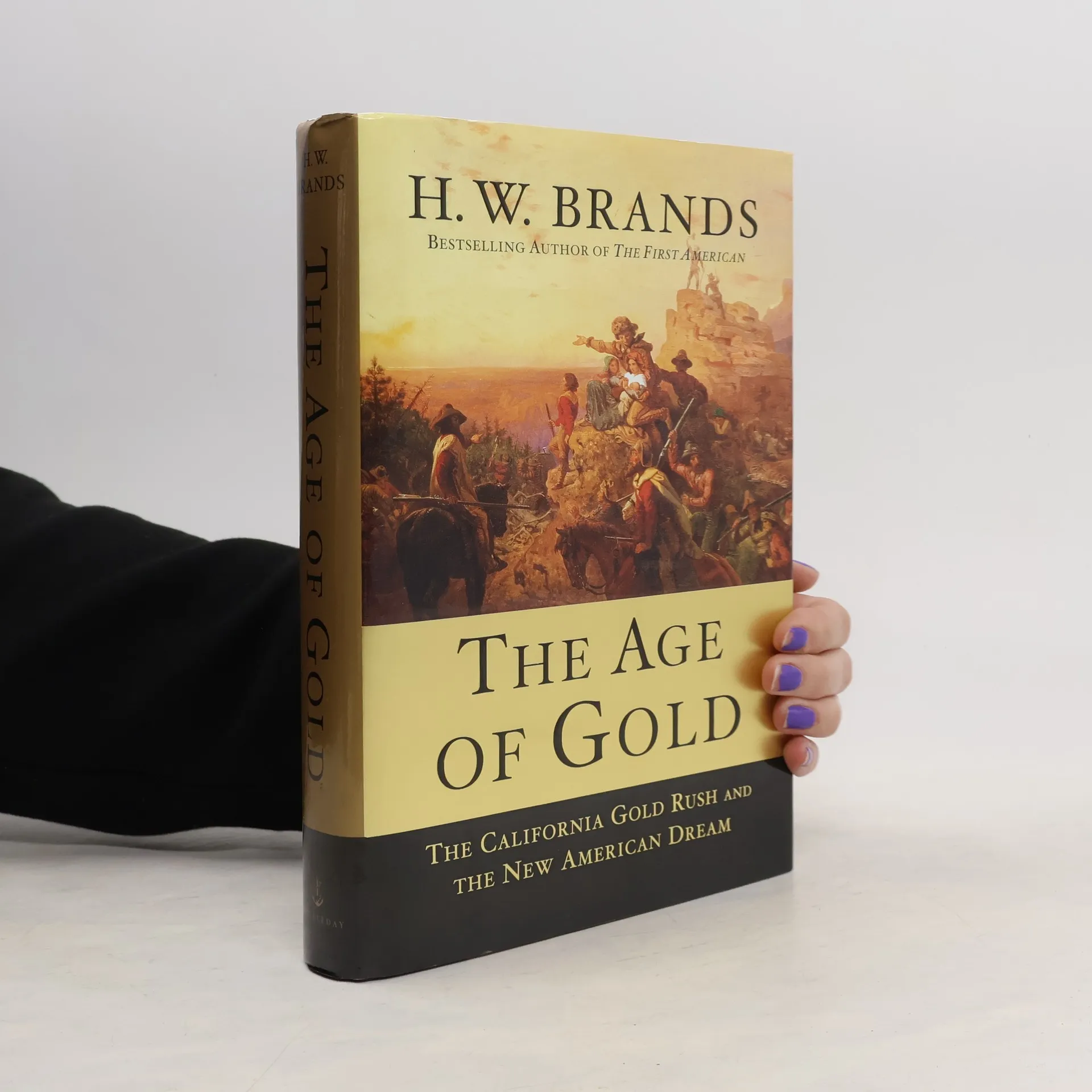
The first major biography of Benjamin Franklin in more than sixty years, The First American is history on a grand scale -- a work of meticulous scholarship and a thoroughly engaging portrait of the foremost American of his day. Diplomat, scientist, philosopher, businessman, inventor, wit, and bon vivant, Benjamin Franklin was in every respect America's first Renaissance man. The eighteenth-century genius comes to life in this masterwork by acclaimed historian H.W. Brands, whose access to previously unpublished letters and a host of other sources makes this the definitive biography. A much-needed reminder of Franklin's greatness and humanity, The First American provides a magnificent tour of a legendary historical figure, the countless arenas in which the protean Franklin left his legacy, and a pivotal era in American life
The Age of Gold
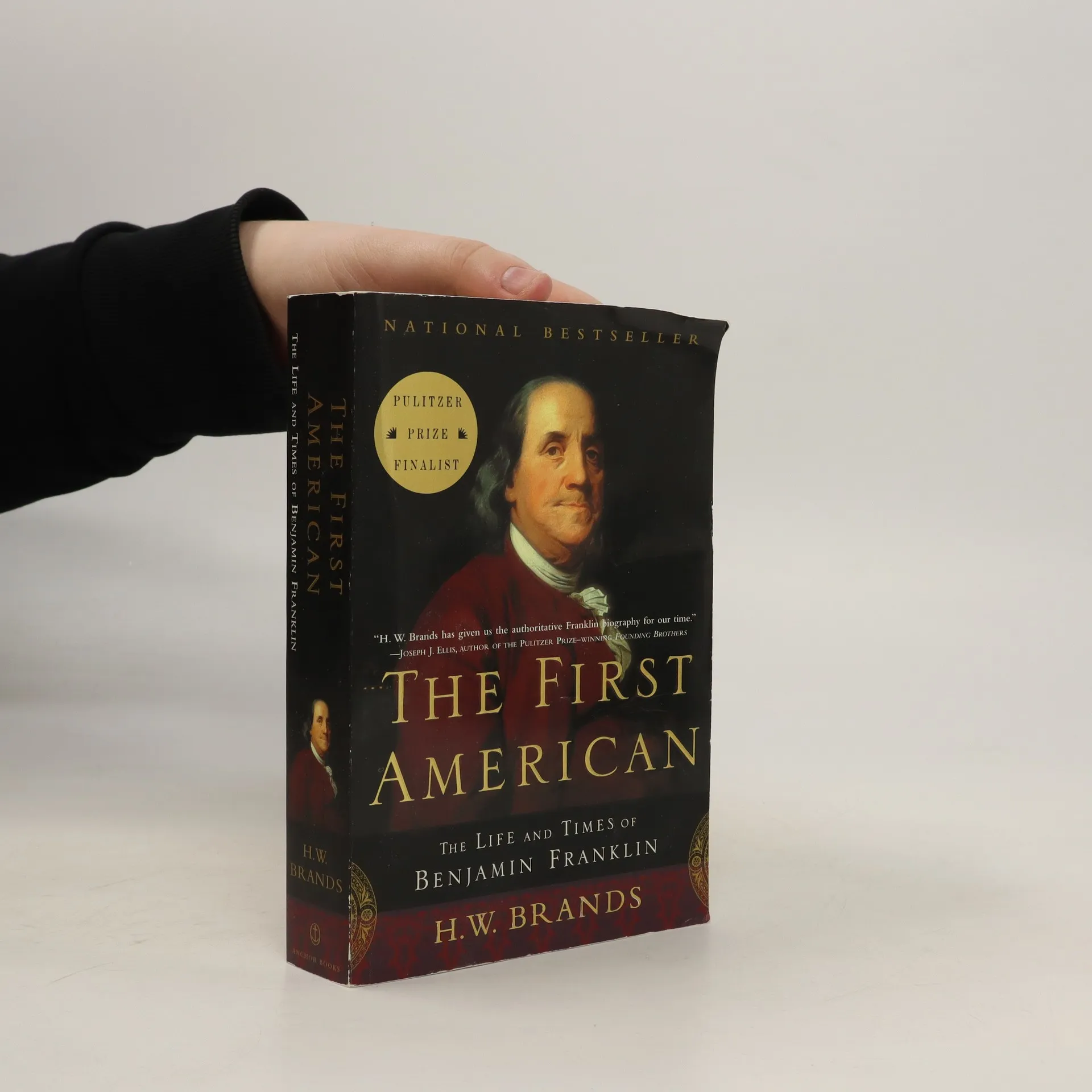
The California Gold Rush and the New American Dream
When gold was discovered on the American River above Sutter's Fort in January 1848, California was a sparsely populated frontier territory that had yet to be officially ceded to the United States following the war with Mexico. The astonishing news -- GOLD! IN CALIFORNIA! -- prompted hundreds of thousands of people from around the world to flock to California in hopes of finding instant riches. This book explores the far-reaching implications of this pivotal point in U.S. history, interweaving the politics of the times with the gripping stories of both the ordinary and the famous in a colorful, intricate tapestry displaying both the best and worst of the American character
The Last Campaign
- 416 Seiten
- 15 Lesestunden
Bestselling historian and Pulitzer-prize finalist H. W. Brands follows the lives and battles of General William Tecumseh Sherman and Apache warrior Geronimo to tell the story of the Indian Wars and the final fight for control of the American continent.William Tecumseh Sherman and Geronimo were keen strategists and bold soldiers, ruthless with their enemies. Over the course of the 1870s and 1880s these two war chiefs would confront each other in the final battle for what the American West would be: a sparsely settled, wild home where Indian tribes could thrive, or a densely populated extension of the America to the east of the Mississippi. Sherman was a privileged son of Ohio who attended West Point and rose to prominence through his scorched earth campaigns in the Civil War. Geronimo grew up in the Apache tribe, hunting wild game for survival and roaming freely on the land. After the brutal killing of his wife, children, and mother, however, he became a relentless avenger, raiding Mexican settlements across the American border. When Sherman rose to General of the U.S. Army, he was tasked with bringing Geronimo and his tribe into an agreement with the U.S. government pledging that the Apache would live as farmers and ranchers and roam no more. But Geronimo preferred to fight. The Last Campaign is a powerful retelling of a turning point in the making of our nation and a searing elegy for a way of life that is gone.
Our First Civil War
- 512 Seiten
- 18 Lesestunden
What drives individuals to turn against their own country and take up arms? Conversely, what compels their neighbors, often similar in status and success, to defend that very country? H. W. Brands explores these questions in a compelling history of the American Revolution. Figures like George Washington and Benjamin Franklin were unexpected rebels; Washington was at the pinnacle of Virginia society, while Franklin achieved global recognition from humble beginnings. John Adams, known for his contentious nature, might seem a more fitting rebel, yet he held the law in high regard. Despite their shared backgrounds, these three men chose rebellion against the British Empire that had enabled their success. Others, like William Franklin, opted for loyalty to Britain, as did royal governor Thomas Hutchinson and early Crown challenger Joseph Galloway, who faced accusations of treachery for not betraying their homeland. The conflict also forced Native Americans and the enslaved to pick sides amid the civil war. After the Revolution, Patriots were celebrated as heroes, while Loyalists were largely forgotten. This narrative reminds us that before America could secure its independence from Britain, it first had to navigate a painful civil war among family, friends, and neighbors.
The book provides an in-depth exploration of the influential figure who significantly shaped American foreign policy, detailing their ascent to prominence and subsequent decline. It examines key events, decisions, and the broader historical context that defined their impact on international relations, offering insights into the complexities of political power and the dynamics of foreign diplomacy. Through this narrative, readers gain a nuanced understanding of the challenges and transformations within American foreign policy over time.
From master storyteller and New York Times bestselling Historian H. W. Brands comes the definitive biography of a visionary and transformative president In his magisterial new biography, H. W. Brands brilliantly establishes Ronald Reagan as one of the two great presidents of the twentieth century, a true peer to Franklin Roosevelt. Reagan conveys with sweep and vigor how the confident force of Reagan’s personality and the unwavering nature of his beliefs enabled him to engineer a conservative revolution in American politics and play a crucial role in ending communism in the Soviet Union. Reagan shut down the age of liberalism, Brands shows, and ushered in the age of Reagan, whose defining principles are still powerfully felt today. Employing archival sources not available to previous biographers and drawing on dozens of interviews with surviving members of Reagan’s administration, Brands has crafted a richly detailed and fascinating narrative of the presidential years. He offers new insights into Reagan’s remote management style and fractious West Wing staff, his deft handling of public sentiment to transform the tax code, and his deeply misunderstood relationship with Soviet leader Mikhail Gorbachev, on which nothing less than the fate of the world turned. Reagan is a storytelling triumph, an irresistible portrait of an underestimated politician whose pragmatic leadership and steadfast vision transformed the nation.