Robert G. IngersollReihenfolge der Bücher (Chronologisch)
Robert G. Ingersoll war der bedeutendste Verfechter des Freidenkertums im 19. Jahrhundert. Seine ausführlichen und fesselnden Vorträge im ganzen Land, die sich oft kritisch mit der Bibel und Religion auseinandersetzten, zogen immense Menschenmengen an. Als überzeugter Verfechter der Vernunft und Kritiker des Aberglaubens war Ingersoll ein unerschrockener Kämpfer für Fortschritt und menschliche Würde. Er setzte sich zudem entschieden für die Gleichberechtigung von Schwarzen und Frauen ein und verkörperte seine Überzeugungen von Menschlichkeit und Gerechtigkeit.
Focusing on accessibility, this book is a reproduction of a historical work presented in large print. The publishing house Megali aims to facilitate reading for individuals with impaired vision, ensuring that classic texts remain available and easy to read for all.
Focusing on accessibility, this book is a reproduction of a historical work presented in large print. The publishing house Megali is dedicated to enhancing readability for individuals with impaired vision, ensuring that classic texts remain available and enjoyable for a wider audience.
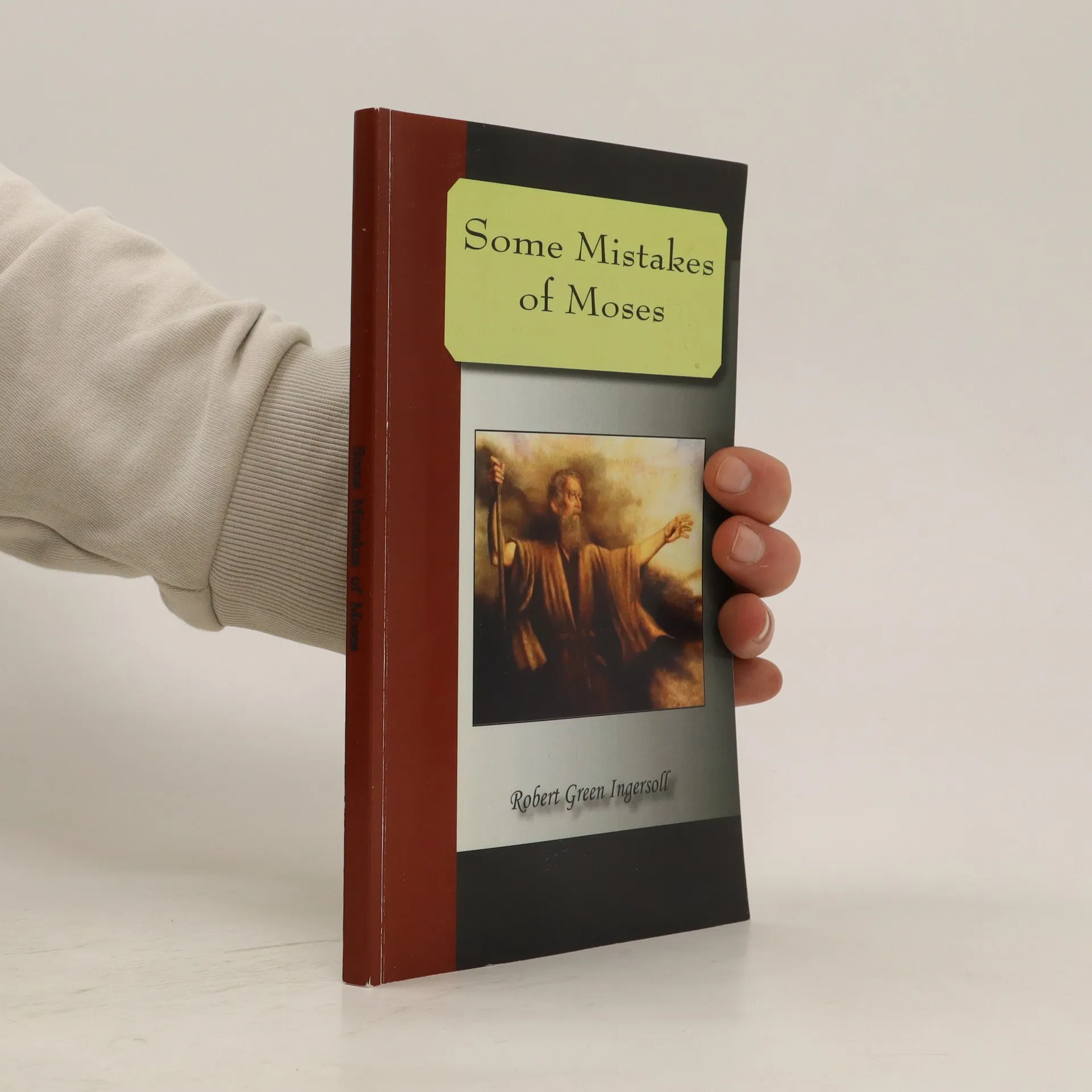
Robert G. Ingersoll (1833-99), the "Great Agnostic," was the greatest freethought orator in the history of the United States. After the Civil War, Ingersoll embarked upon a career as a lecturer, touring the United States to express his thoughts on religion, women's rights, and humanism. Some Mistakes of Moses is a critical examination of the Pentateuch (the first five books of the Bible). Ingersoll passionately believed that the alleged divine origins of the Bible were not sufficient reason for a suspension of critical judgment. His diatribe against Old Testament religion is a call for rationality, a quality sorely missing in times of political upheaval in the name of religion. Ingersoll feared that when the Bible was read as truth rather than as a collection of fables, mankind would destroy itself in its attempt to follow the teachings of Moses to the letter. He fervently believed that the most important belief one can have is belief in man. "Theology is a superstition - Humanity is a religion" - this was the credo of Robert G. Ingersoll.