Scott AmblerReihenfolge der Bücher (Chronologisch)
14. Juni 1966
Scott Ambler ist eine anerkannte Autorität im Bereich der Softwareentwicklung. Seine Arbeit konzentriert sich auf die Verbesserung der Softwareentwicklung und der Teamzusammenarbeit. Ambler hat zahlreiche Bücher und Artikel verfasst, in denen er sein umfassendes Wissen und seine Best Practices teilt. Sein Ziel ist es, Organisationen dabei zu helfen, bessere Software effektiver zu entwickeln.
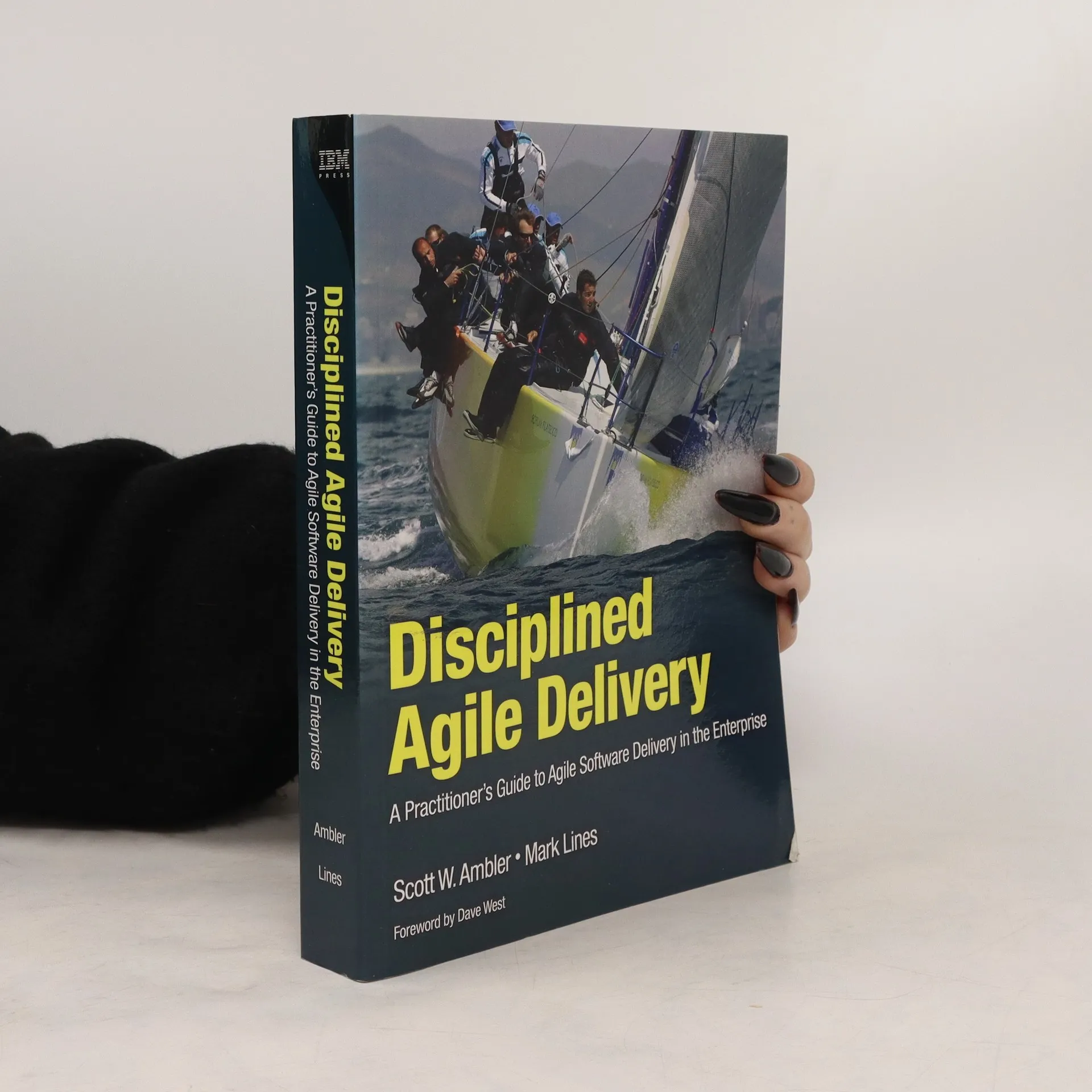
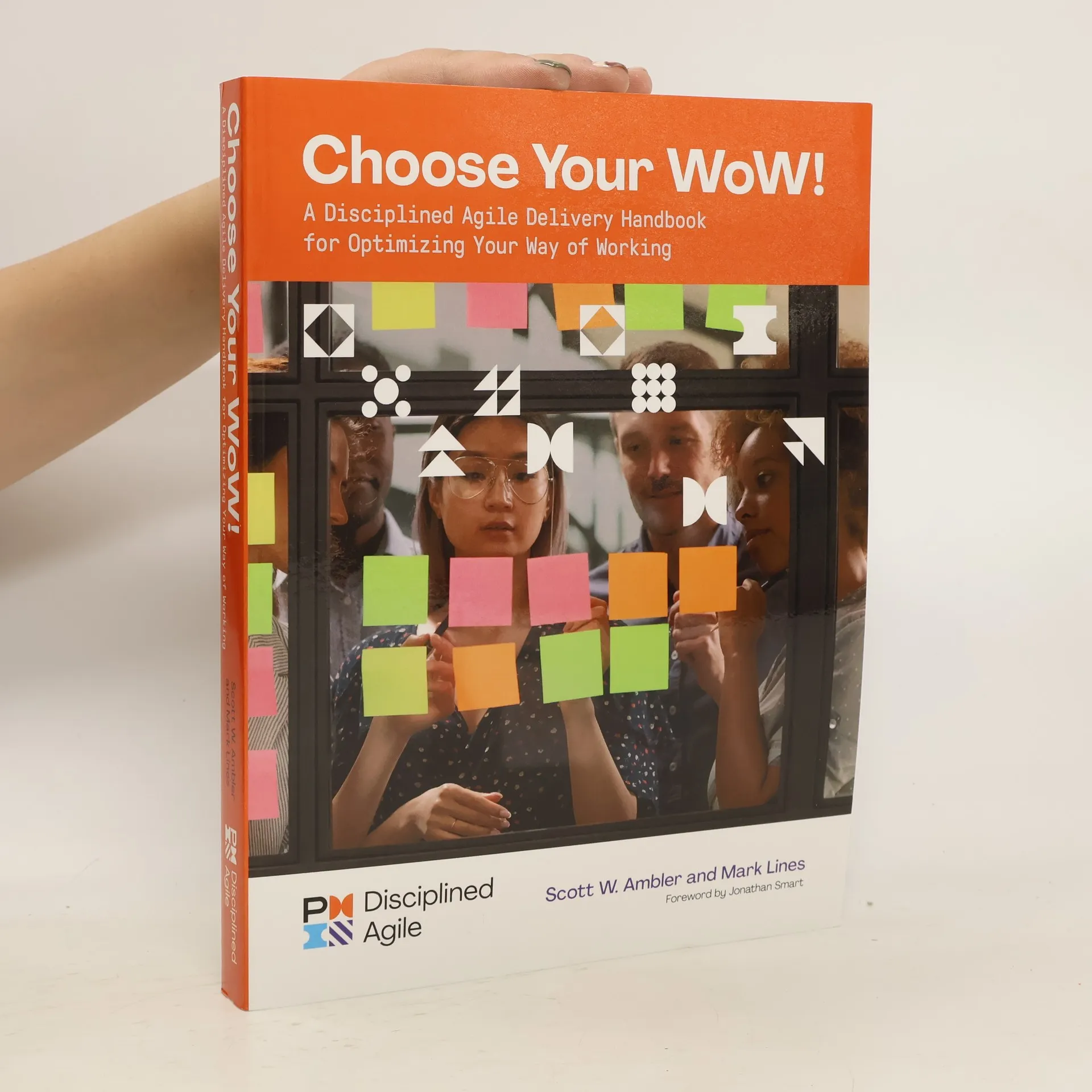
Provides a foundation for enterprise agility, value streams, and a disciplined
approach to DevOps, offering a pragmatic application of agile, lean, and
traditional techniques for your enterprise-class environment. The book also
overviews a strategy for teams to evolve a fit-for-purpose, flexible WoW.
Provides a foundation for enterprise agility, value streams, and a disciplined
approach to DevOps. The book offers an application of agile, lean, and
traditional techniques for your enterprise-class environment, and overviews a
strategy for teams to evolve a fit-for-purpose, flexible WoW that supports
consistent governance strategy.
"Hundreds of organizations around the world have already benefited from Disciplined Agile Delivery (DAD). Disciplined Agile (DA) is the only comprehensive tool kit available for guidance on building high-performance agile teams and optimizing your way of working (WoW). As a hybrid of all the leading agile and lean approaches, it provides hundreds of strategies to help you make better decisions within your agile teams, balancing self-organization with the realities and constraints of your unique enterprise context. The highlights of this handbook include: #1. As the official source of knowledge on DAD, it includes greatly improved and enhanced strategies with a revised set of goal diagrams based upon learnings from applying DAD in the field. #2 It is an essential handbook to help coaches and teams make better decisions in their daily work, providing a wealth of ideas for experimenting with agile and lean techniques while providing specific guidance and trade-offs for those "it depends" questions. #3 It makes a perfect study guide for Disciplined Agile certification. Why "fail fast" (as our industry likes to recommend) when you can learn quickly on your journey to high performance? With this handbook, you can make better decisions based upon proven, context-based strategies, leading to earlier success and better outcomes"--

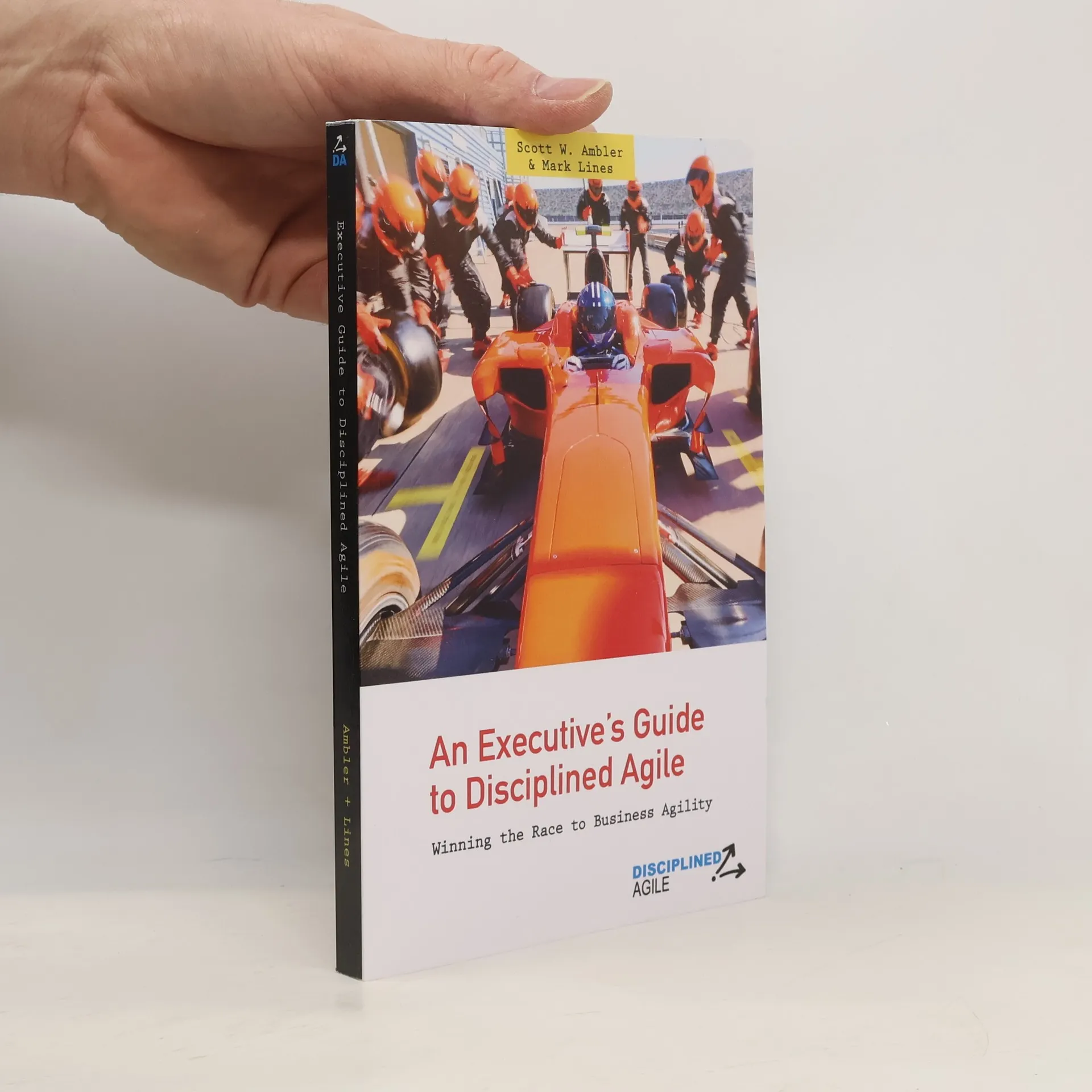
The agile community has discovered how to build and continuously enhance high-performance software development teams, akin to creating a race car engine and evolving it for better power and efficiency. Unfortunately, these exceptional engines are often placed in organizational structures that hinder their potential, leading to frustration. The solution lies in integrating these development teams into a DevOps ecosystem, supported by an effective IT organization, within a framework that can leverage IT for profitability. This book focuses on transitioning from optimizing team performance to enhancing the entire enterprise.
Achieving business agility—characterized by adaptability, lean practices, responsiveness, and a culture of learning—is essential for modern enterprises. However, there is no quick fix; it requires a multi-year commitment to hard work, experimentation, and a dedication to continuous improvement. The Disciplined Agile toolkit mitigates risks and accelerates the journey toward business agility, uniquely providing a cohesive roadmap for transformation.
The book outlines the challenges organizations face and introduces seven principles foundational to Disciplined Agile. It covers Disciplined Agile Delivery, Disciplined DevOps, and Disciplined Agile IT, culminating in what it means to be a Disciplined Agile Enterprise. Finally, it presents a plan for initiating an Agile transformation and evolving into a strategy
The book provides a comprehensive guide to developing object-oriented applications, covering the entire process from project analysis to user interface design and functionality testing. It emphasizes the importance of creating user-friendly interfaces and offers practical insights into ensuring the effectiveness of the developed applications.
How does a small development team in an established enterprise apply
Disciplined Agile strategies to successfully improve their agility and provide
real valueto their stakeholders? This guide to Disciplined Agile Delivery
provides the foundation from which to scale agile and lean software
development strategies.
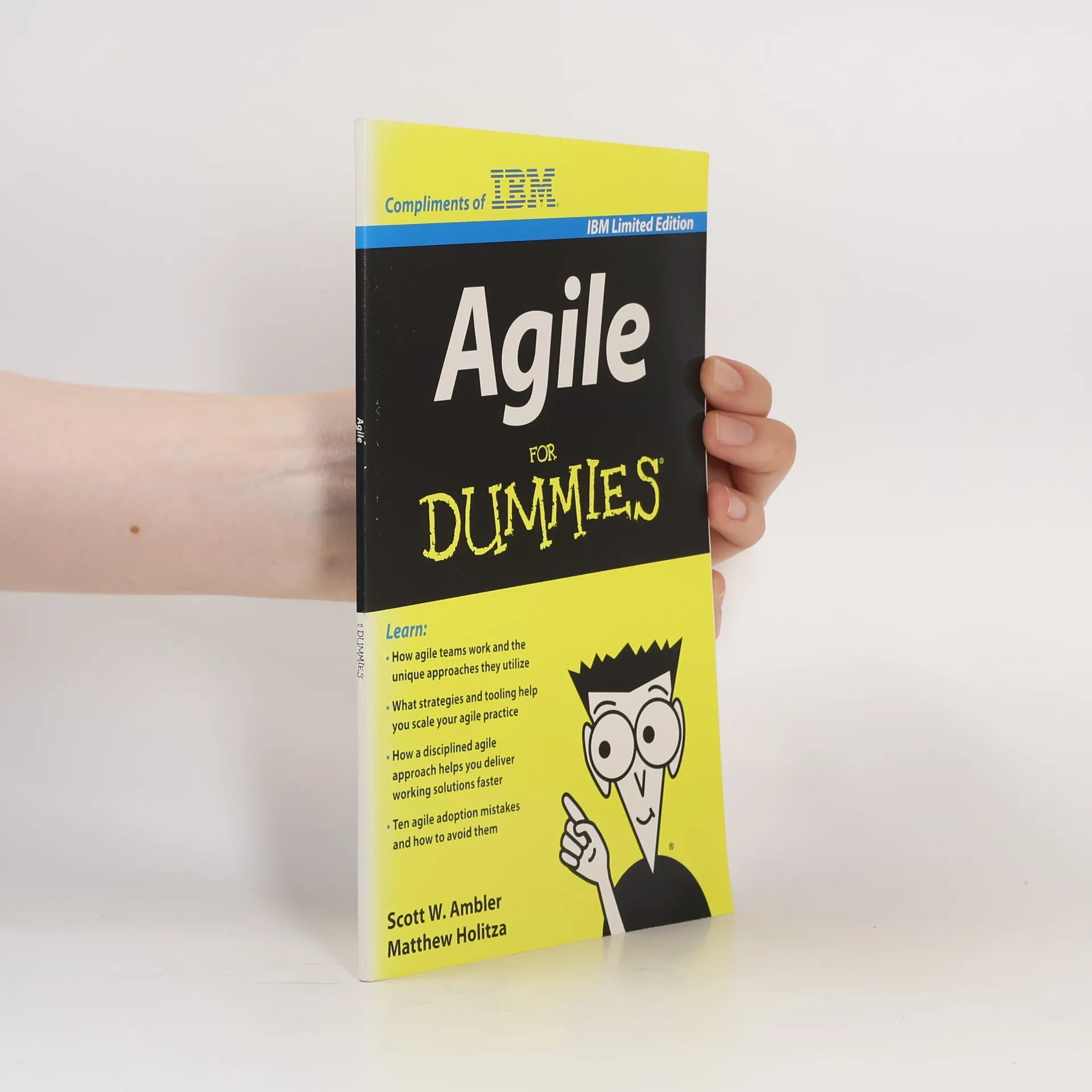
Welcome to Agile For Dummies, IBM Limited Edition. You’ve probably been hearing about agile for a long time, which isn’t surprising. If you’re not using agile methods already though, or if you’ve only been exposed to agile on small projects here and there, you may wonder how to get started with it. Can agile ever work in your environment? Relax. This book is here to help.
The authoritative guide to DAD, IBM's disciplined approach to applying agile practices in enterprise scale projects. Integrate enterprise discipline with powerful, widely-used agile practices into a proven solution for the entire software lifecycle. Scale agile strategies for complex development challenges, without compromising agile's advantages.
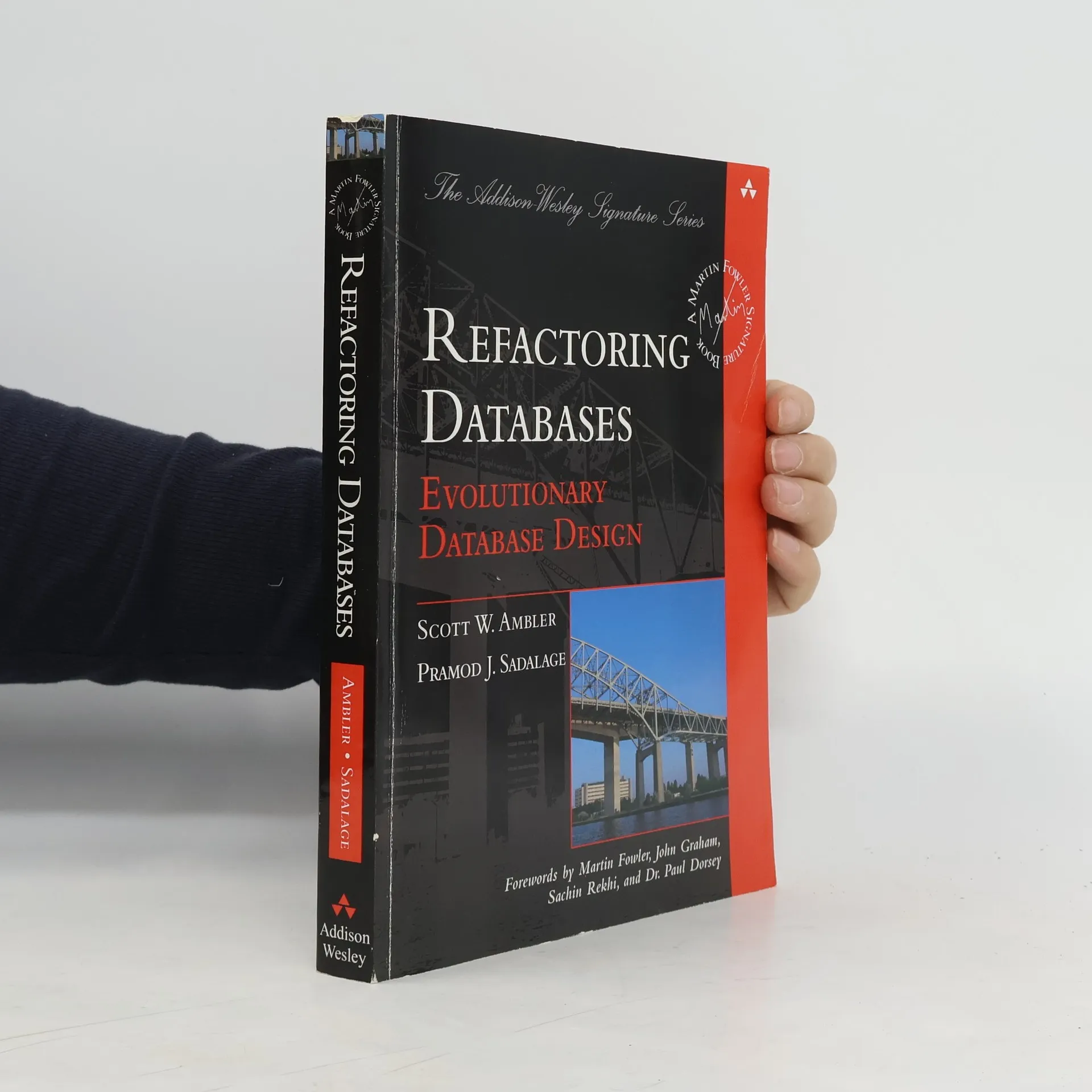
"This comprehensive guide and reference helps you overcome the practical obstacles to refactoring real-world databases by covering every fundamental concept underlying database refactoring. Using start-to-finish examples, the authors walk you through refactoring simple standalone database applications as well as sophisticated multi-application scenarios. You'll master every task involved in refactoring database schemas, and discover best practices for deploying refactorings in even the most complex production environments."--Jacket.
Scott Ambler, award-winning author of Building Object Applications that Work, Process Patterns, and More Process Patterns, has revised his acclaimed first book, The Object Primer. Long prized by both students and professionals as the best introduction to object-oriented technology, this book is now completely up-to-date, with all modeling notation rewritten in the just-released UML 2.0. All chapters have been revised to take advantage of Agile Modeling (AM), which is presented in the new chapter 2 along with other important new modeling techniques. Review questions at the end of each chapter allow readers to test their newly acquired knowledge. In addition, Ambler takes time to reflect on the lessons learned over the past few years by discussing the proven benefits and drawbacks of the technology. This is the perfect book for any software development professional or student seeking an introduction to the concepts and terminology of object technology. Previous Edition Pb (2001): 0-521-78519-7 Scott W. Ambler is a senior object consultant with Ronin International, Inc. and a popular speaker at conferences worldwide. He has worked with OO technology since 1990 as a business architect, system analyst, system designer, mentor, Smalltalk/C++/Java developer, and OO software process manager. He is a member of the IEEE Computer Society, the ACM, and Mensa.
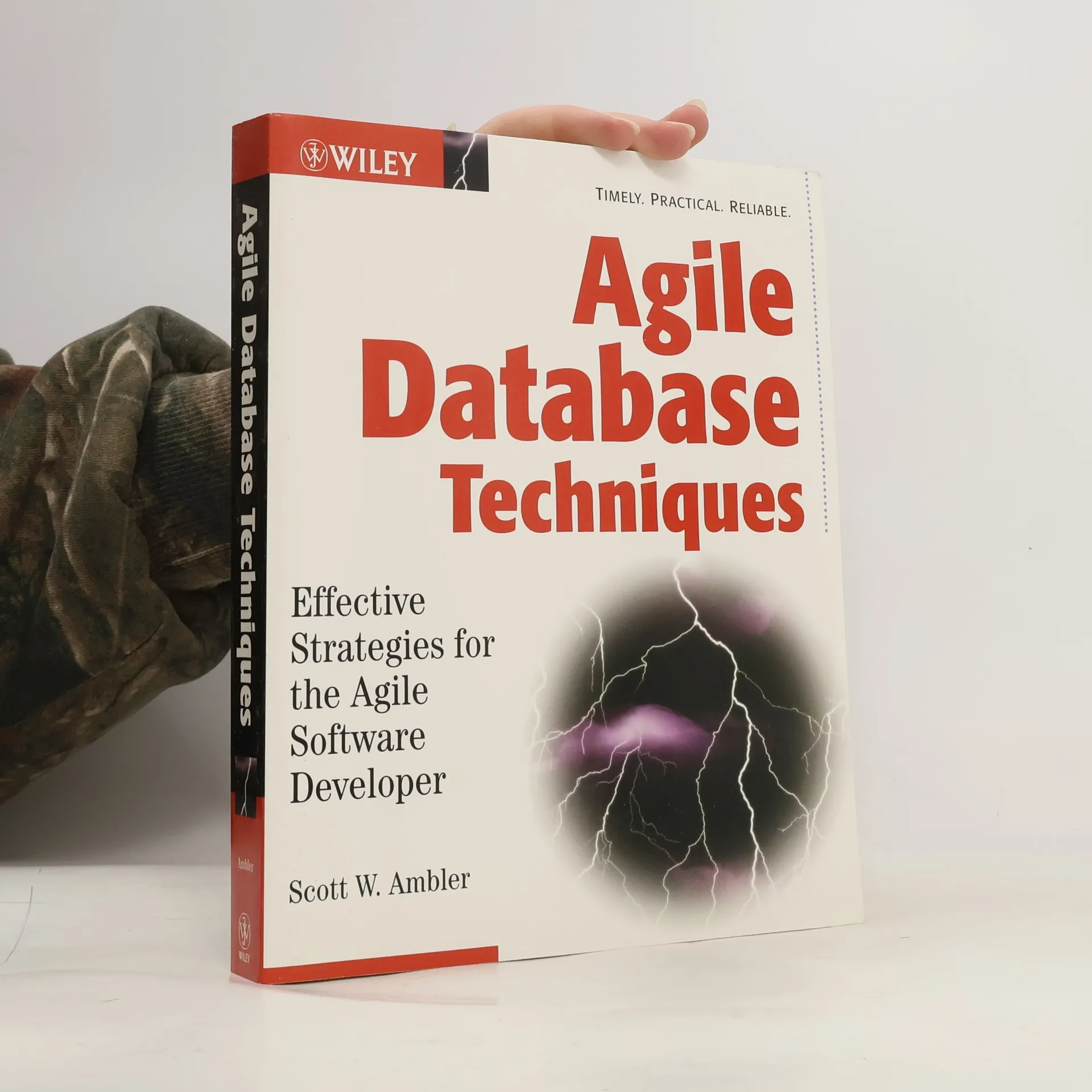
An agile database administrator (DBA) has the difficult task of focusing on data-oriented issues, including traditional database administration as well as any application development involving data. Agile DBAs also collaborate with enterprise professionals to ensure that the efforts of the project team reflect enterprise realities. Scott Ambler has written this invaluable book from the point of view of an agile DBA, enabling you to learn the techniques that agile DBAs use to work effectively on evolutionary (iterative and incremental) software projects.
Effective Practices for eXtreme Programming and the Unified Process
400 Seiten
14 Lesestunden
The first book to cover Agile Modeling, a new modeling technique created specifically for XP projects eXtreme Programming (XP) has created a buzz in the software development community-much like Design Patterns did several years ago. Although XP presents a methodology for faster software development, many developers find that XP does not allow for modeling time, which is critical to ensure that a project meets its proposed requirements. They have also found that standard modeling techniques that use the Unified Modeling Language (UML) often do not work with this methodology. In this innovative book, Software Development columnist Scott Ambler presents Agile Modeling (AM)-a technique that he created for modeling XP projects using pieces of the UML and Rational's Unified Process (RUP). Ambler clearly explains AM, and shows readers how to incorporate AM, UML, and RUP into their development projects with the help of numerous case studies integrated throughout the book. Companion Web site at www.agilemodeling.com features updates, links to XP and AM resources, and ongoing case studies about agile modeling.
Is the Unified Process the be all and end all standard for developing object-oriented component-based software? Scott Ambler doesn't think so. This book is one in a four-volume series that presents a critical review of the Unified Process -- designed to p
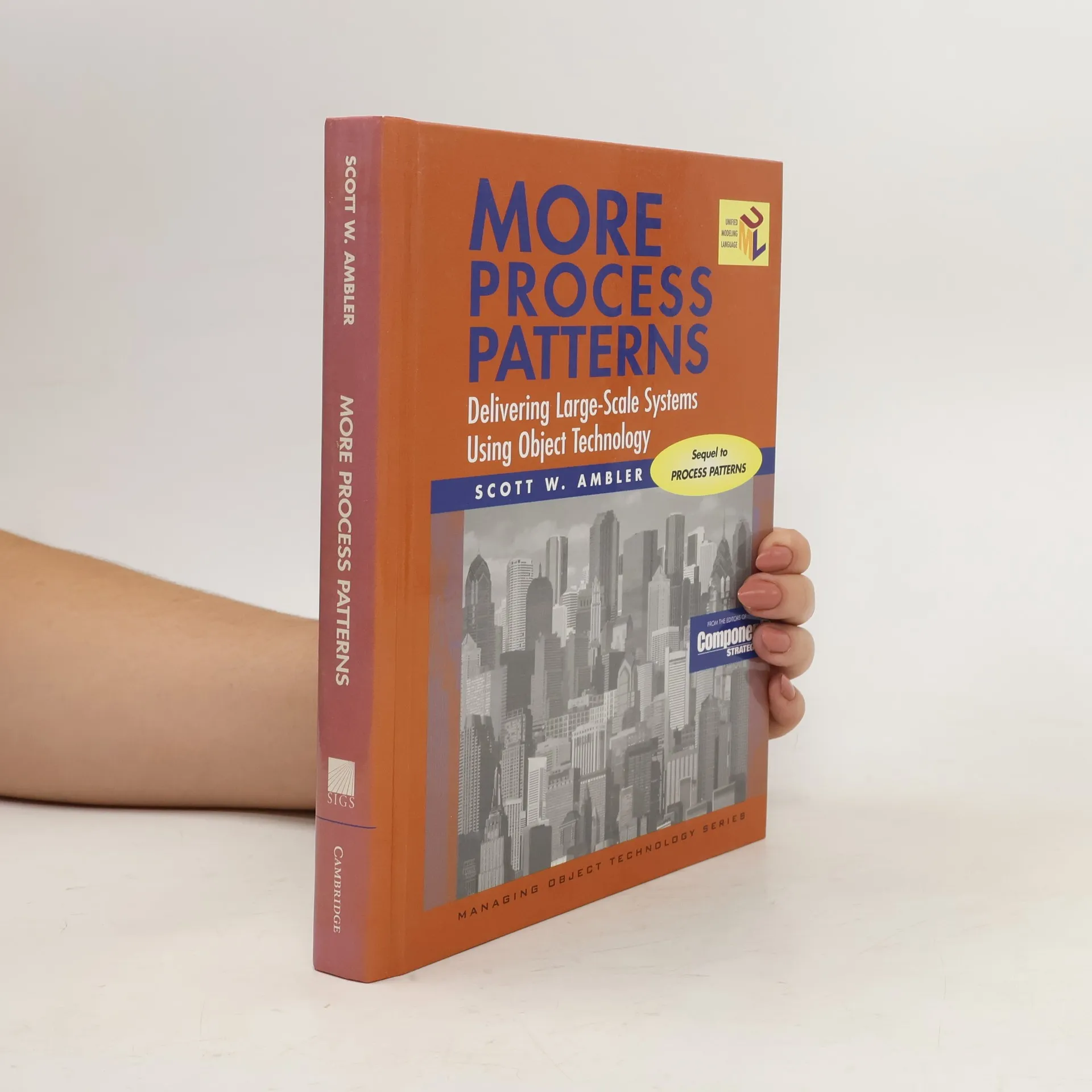
Delivering Large-Scale Systems Using Object Technology
313 Seiten
11 Lesestunden
With his new book, More Process Patterns, Scott Ambler picks up where Process Patterns left off. Here, the author presents process patterns for the second half of the development lifecycle. He covers the Deliver phase and the Maintain and Support phases of large-scale, object-oriented system development. Each presented pattern is based on proven, real-world techniques and is geared toward medium to large-size organizations that need to develop software internally to support their main line of business. The book covers major management issues, such as people and risk management, and quality assurance. The final chapter presents strategies for using process patterns to introduce and/or mature one's software process. Developers and project managers who have just taken their first OO development course will find this book essential. Ambler takes the true needs of software development and delivery into consideration, covering cross-project, maintenance, operations, and support issues. This book uses the Unified Modeling Language (UML).
Building Large-Scale Systems Using Object Technology
582 Seiten
21 Lesestunden
Written by one of the best known object-oriented practitioners in the business, Process Patterns is based on proven, real-world techniques. Scott Ambler shows readers how to successfully deliver large-scale applications using object technology and carefully describes how one develops applications that are truly easy to maintain and to enhance. He shows how such projects can be supported and points out what is necessary to ensure that one's development efforts are of the best quality. His object-oriented software process (OOSP) is geared toward medium to large-size organizations that need to internally develop software to support their main line of business. Developers and project managers who have just taken their first OO development course will find this book essential. It describes the only OOSP to take the true needs of development into consideration, including cross-project, maintenance, operations, and support issues. This book uses the Unified Modeling Language (UML).