

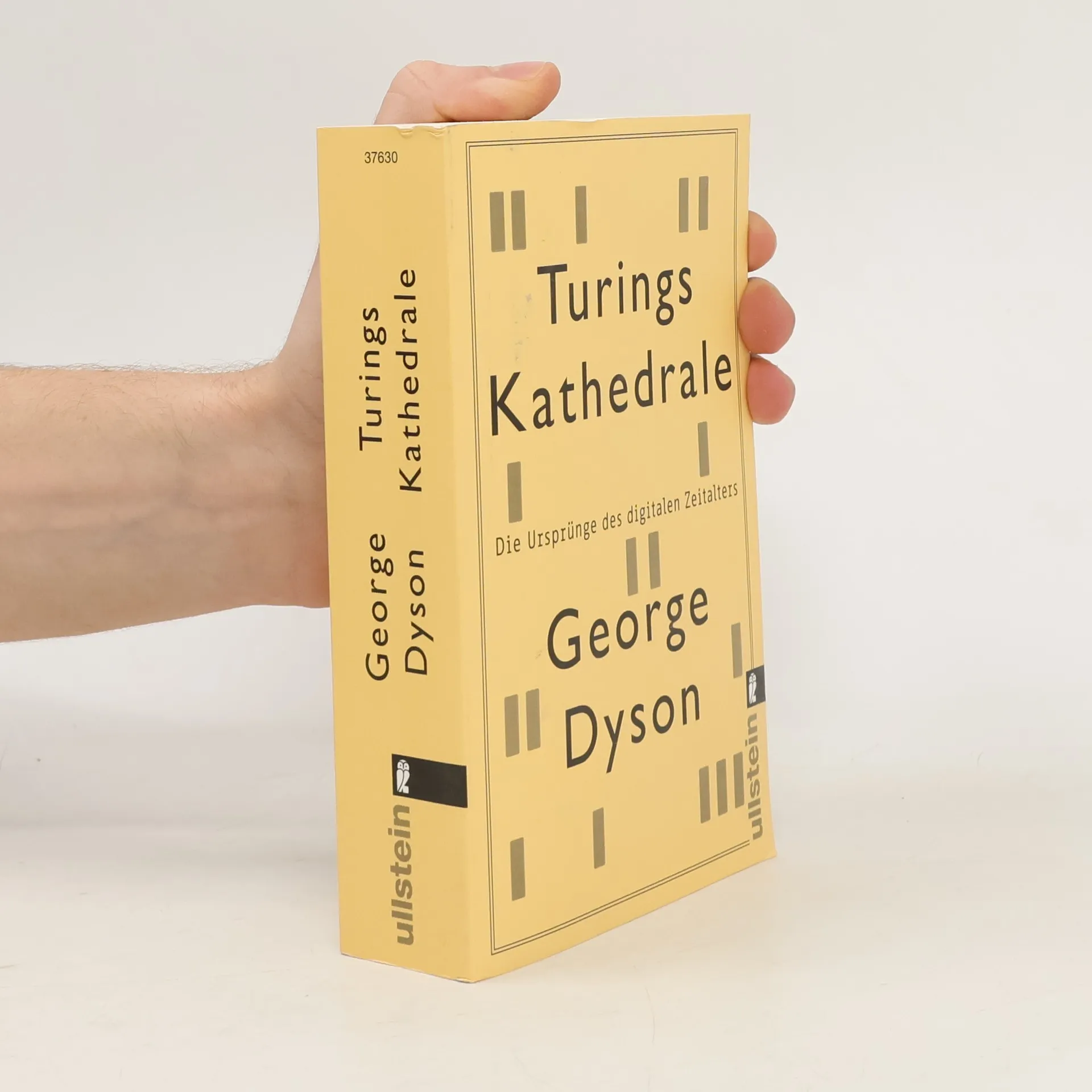
In den 1940er Jahren kam es am Institute for Advanced Study in Princeton zu einer einzigartigen Zusammenarbeit wissenschaftlicher Genies, die als Keimzelle der digitalen Welt gelten kann. Zu ihnen gehörten Albert Einstein, Robert Oppenheimer, Kurt Gödel, Alan Turing und John von Neumann. In engem Austausch arbeiteten sie an streng geheimen Projekten, darunter dem Bau der Atombombe und der Entwicklung des Computers, weitgehend finanziert vom US-Militär. Auf der Basis jahrelanger Recherchen erzählt der amerikanische Wissenschaftshistoriker George Dyson erstmals die faszinierende Geschichte dieser Anfänge des digitalen Zeitalters.
George Dyson Bücher
26. März 1953
George Dyson ist ein Wissenschaftshistoriker, dessen Werk sich mit den faszinierenden, aber oft übersehenen Aspekten des wissenschaftlichen Fortschritts und seiner gesellschaftlichen Auswirkungen befasst. Er verfügt über einen einzigartigen Schreibstil, der rigorose Forschung mit fesselnder Erzählung verbindet und den Leser in entscheidende Momente des wissenschaftlichen Denkens einführt. Durch seine Erkundungen beleuchtet Dyson die komplexe Beziehung zwischen menschlichem Erfindergeist und der sich entwickelnden technologischen Landschaft.



Paul Reps' Sammlung von Zen-Texten gehört zu den echten Klassikern des Zen und erfreut sich seit über 30 Jahren einer ungebrochenen Beliebtheit. 500 Jahre Zen-Erfahrung der großen chinesischen und japanischen Meister in einem Band bestehend aus: den 101 Zen-Geschichten, der Koan-Sammlung Mumonkan - Das torlose Tor oder Die torlose Schranke und den 10 Bildern des Ochsen, dem sogenannten Ochsengleichnis über die Stufen des Erwachens. Eine originelle Ergänzung sind die Lehrsprüche aus dem 4000 Jahre alten Sanskrit-Werk Auf die Mitte zu, das in erstaunlicher Weise bereits den Geist des Zen atmet und als Urahn aller späteren Zen-Literatur gelten könnte.
Analogia : The Entangled Destinies of Nature, Human Beings and Machines
- 304 Seiten
- 11 Lesestunden
In a world where humans coexist with technologies they no longer control or understand, who holds the future? George Dyson plots a thrilling and unexpected course through 300 years of history and science to reveal the hidden connections that underpin the digital transformation of the current age, ending with a premonition of what might follow. From an eighteenth-century Russian expedition to the furthest reaches of North America, to the mirror signals that heralded the age of digital long-range communications and invention of the vacuum tube, Analogia interweaves historical adventure wit scientific insight in a deeply personal story that frame the pursuit - and cost - of the digital revolution in a captivating new light.
Analogia
- 304 Seiten
- 11 Lesestunden
A FINANCIAL TIMES BOOK OF THE YEAR 2020How did we end up in a world where humans coexist with technologies we can no longer fully control or understand?George Dyson plots an unexpected course through the past 300 years to reveal the hidden connections that underpin our digital age, ending with a premonition of what lies ahead.From an eighteenth-century Russian voyage across the North Pacific, to the mirror signals that heralded the age of digital telecommunications and the invention of the vacuum tube, Analogia interweaves historical adventure with scientific insight in a deeply personal story that frames the pursuit - and cost - of the digital revolution in a captivating new light.