William Keith Chambers Guthrie Bücher



This volume concludes Professor Guthrie's exploration of Plato's philosophy, delving into the intricacies of his ideas and teachings. It offers a comprehensive analysis of Plato's contributions to Western thought, examining key themes and concepts that have shaped philosophical discourse. Through detailed commentary, the work highlights the relevance of Plato's insights in contemporary discussions, providing readers with a deeper understanding of his enduring legacy.
The Sophists
- 356 Seiten
- 13 Lesestunden
Focusing on the pivotal figures of the Sophists and Socrates, this volume explores a significant shift in philosophical thought during the fifth century, emphasizing the transition from natural philosophy to human-centered inquiry. It highlights the contributions of thinkers like Protagoras and Gorgias, who challenged established norms of morality, religion, and knowledge, sparking critical debates. Their ideas prompted Socrates and Plato to defend traditional values, marking a transformative period in Athenian intellectual history. Each part is self-contained with updated bibliographies and indexes.
Socrates
- 212 Seiten
- 8 Lesestunden
The book offers a comprehensive and insightful exploration of fifth-century thought, showcasing a blend of deep scholarship and broad coverage. Professor Guthrie's clear and engaging writing style makes complex ideas accessible, providing a balanced perspective that stands out in the field. It is recognized as a significant contribution to the understanding of this pivotal era in history, praised for its depth and clarity by critics such as the American Historical Review.
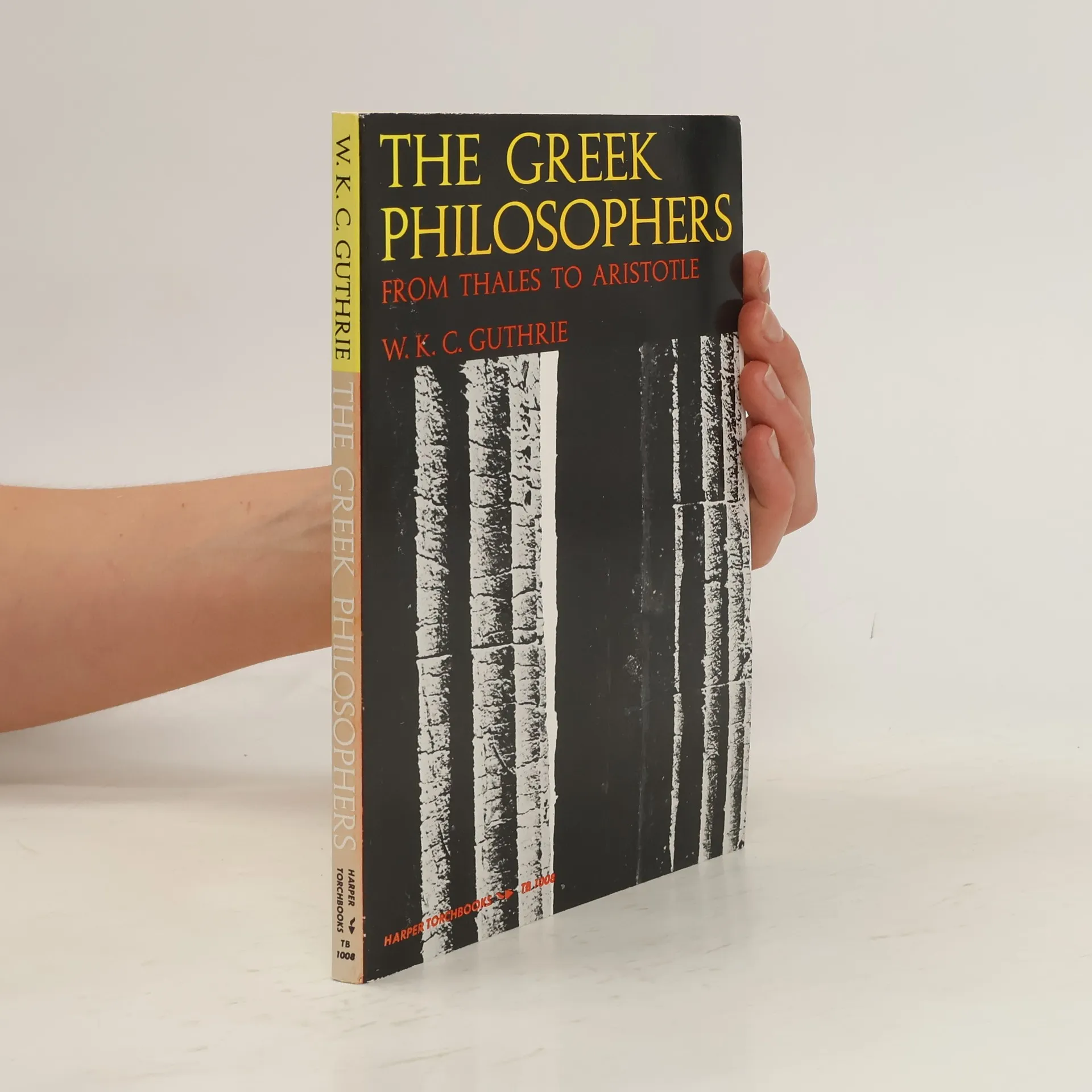
Surveys the great age of Greek philosophy from Thales to Aristotle. Explains the ideas of Plato and Aristotle in the light of their predecessors rather than their successors, and looks at the main strands of thought in Greek philosophy.
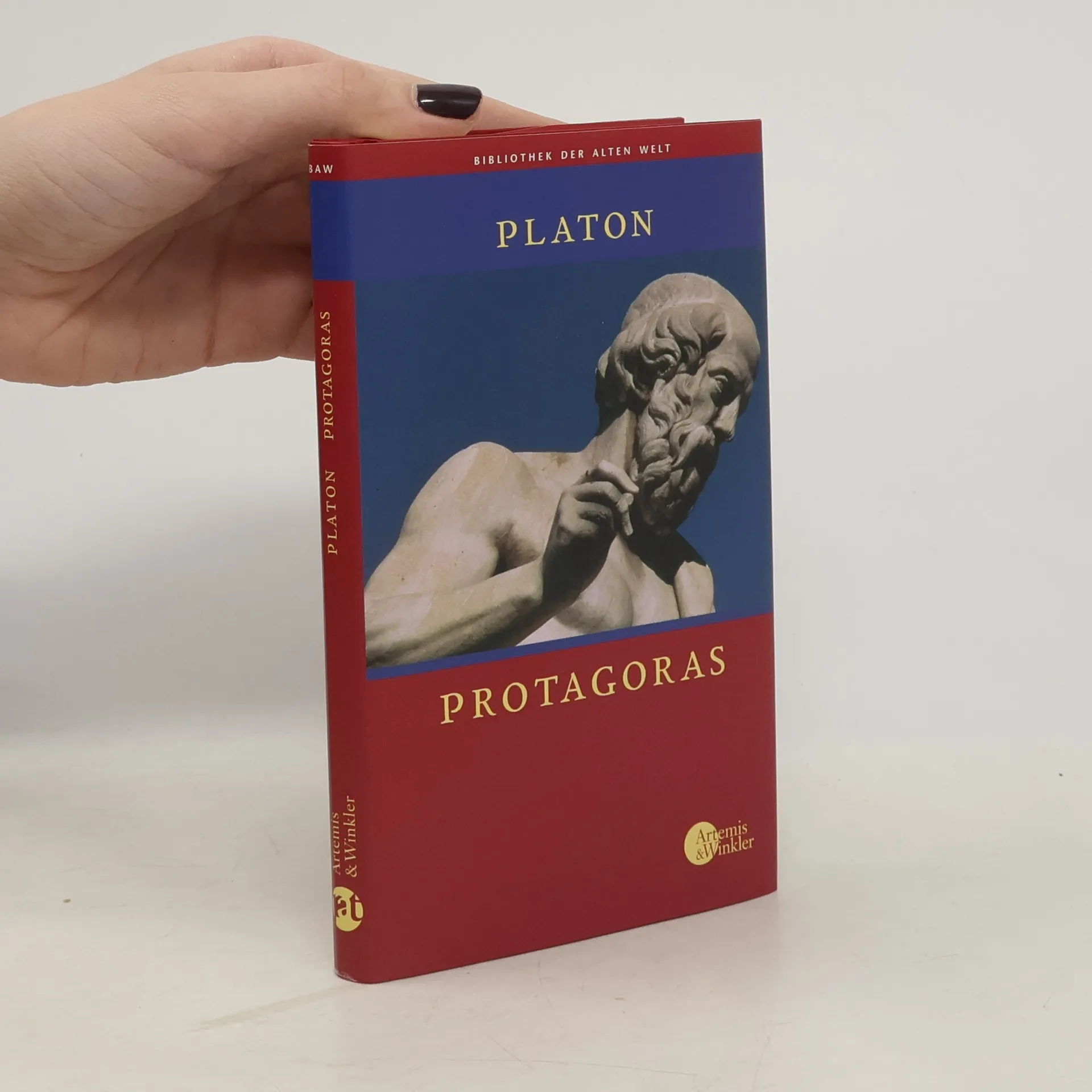
Protagoras
- 136 Seiten
- 5 Lesestunden
Philosophen und Sophisten im Wettstreit 'Protagoras' ist der berühmteste der frühen Dialoge Platons. Dies liegt an der farbigen Szenerie, den bedeutenden geschichtlichen Persönlichkeiten, die am Dialog teilnehmen, und an der Vielzahl philosophischer Themen. Der auf Durchreise befindliche Sophist Protagoras soll einen gebildeten Kreis Athener Bürger über die sophistische Weisheit unterrichten. Im Zentrum steht der Begriff der areté, der politischen Tugend, die Sokrates für gar nicht lehrbar hält. Mittels einer Kulturentstehungslehre will der Sophist das Gegenteil beweisen.
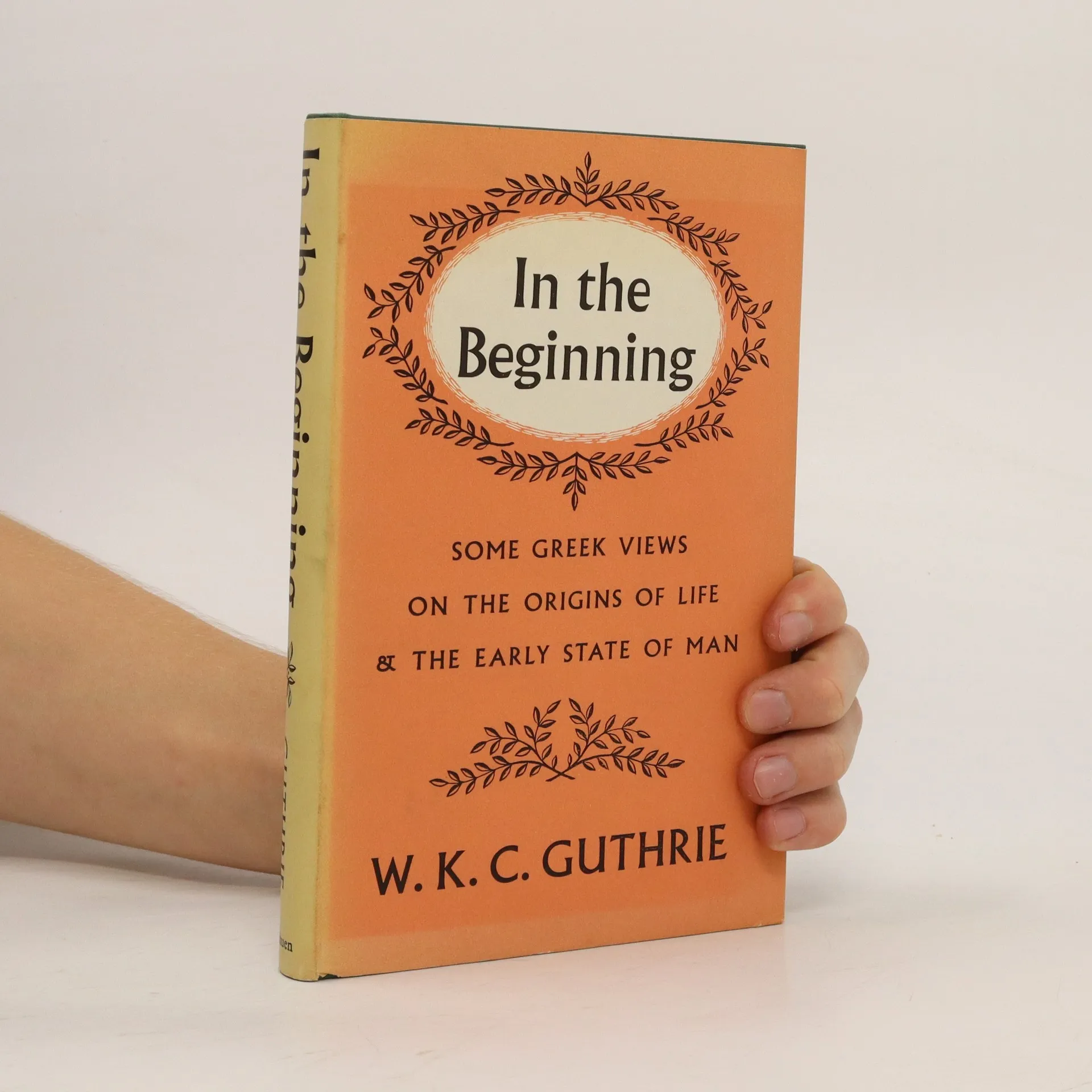
In the Beginning
Some Greek Views on The Origins of Life and The Early State of Man
The First Ranger is history, told by the men who lived it. It is the simply stated, often humorous accounts of honorable men and rugged living when job training consisted of "Go to it and good luck." The First Ranger is the biographies of Frank Liebig and his comrade Fred Herrig. Frank was the first ranger in the land that became Glacier National Park. He tells of his adventures as a ranger in that magnificent country when it was being settled. Fred Herrig was among the first rangers in Montana's Flathead Forest Reserve of 1897 and in the Kootenai Forest, and as colorful a character as ever roamed the west. He was also a lifelong friend of Theodore Roosevelt. He tells about his times as a wrangler and hunting guide for Roosevelt in the Dakota Badlands and as a Roosevelt Rough Rider. The book was written from the journals of Frank Liebig and Fred Herrig and the accounts of events as passed on to their descendants. It includes a well-researched history of life in the American Northwest. It contains photographs of rangers at work at the turn of the century, seven letters signed by Theodore Roosevelt and pen and ink sketches by E.R. Jenne. A fun, informative read.