From one of the world's most influential and cited sociologists, Everything is Obvious reveals how variable is human common sense and how, as individuals, societies and businesses, we delude ourselves into thinking we can know the future. 'Fascinating... Sparkles with counter-inuitive insights' Financial Times
Watts J. Duncan Reihenfolge der Bücher (Chronologisch)
Duncan Watts konzentriert sich auf die Dynamik sozialer Netzwerke und kollektiven Verhaltens. Seine Arbeit untersucht, wie sich Informationen und Einfluss in komplexen Systemen verbreiten und wie Einzelpersonen und Gruppen auf diese Kräfte reagieren. Watts verwendet einen datengesteuerten Ansatz, um die verborgenen Muster und Prinzipien aufzudecken, die unsere sozialen Interaktionen bestimmen. Seine Forschung liefert wertvolle Einblicke in die Natur des vernetzten Zeitalters und wie kleine Ereignisse weitreichende Folgen haben können.





The Structure and Dynamics of Networks
- 594 Seiten
- 21 Lesestunden
Exploring the pervasive concept of networks in modern society, the book delves into their various types and significance. It addresses fundamental questions about networks, drawing on insights from diverse scientific disciplines such as mathematics, physics, computer science, sociology, and biology. By compiling seminal articles, it serves as a comprehensive sourcebook that highlights key research and developments in the emerging science of networks, making it a valuable resource for understanding this intricate and impactful field.
Politics Today: Britain in the European Union Today: Third Edition
- 295 Seiten
- 11 Lesestunden
This edition is based on the original by Colin Pilkington and provides a review of how European Unity has been handled by British governments and politics. It has been updated to include all new developments including the proposed new consititution and the euro-elections of 2004. Additional material aslo considers the role of pressure groups within the Union and the approach adopted by British Lobbyists. As an up-to-date edition of a well established text, this book will be essential reading for students and teachers interested in the relationship between Britain and Europe.
Six Degrees: The Science of a Connected Age
- 368 Seiten
- 13 Lesestunden
Watts, one of the principal architects of network theory, sets out to explain the innovative research that he and other scientists are spearheading to create a blueprint of this connected planet.
Exploring the small-world phenomenon, Duncan Watts delves into the conditions that foster the emergence of interconnected networks. He examines the concept of "six degrees of separation," highlighting how seemingly distant individuals can be linked through a few mutual acquaintances. This investigation not only illuminates social connections but also offers insights into the broader implications of network theory across various fields. Watts' analysis encourages readers to reconsider the nature of relationships and connectivity in our increasingly interconnected world.
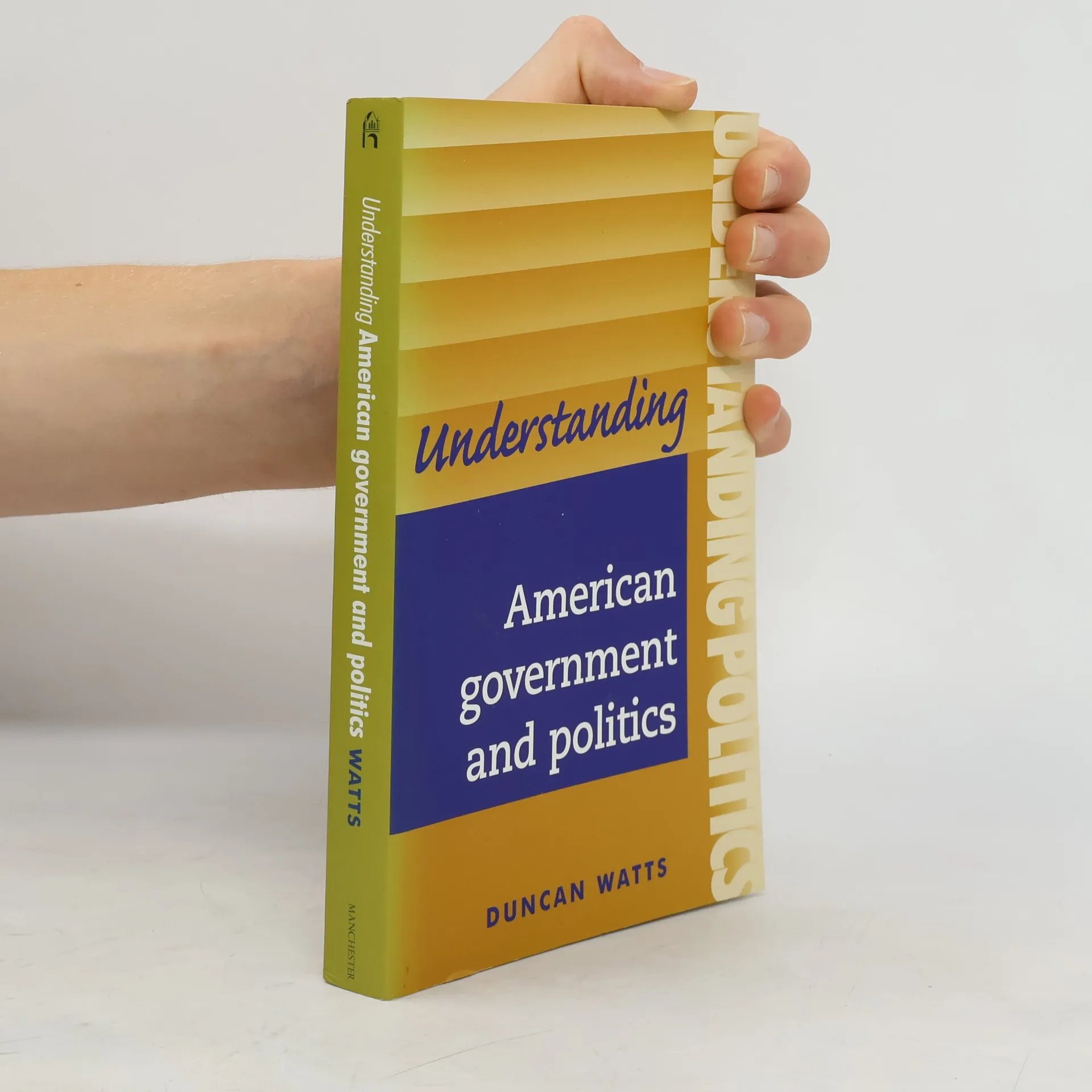
Understanding American Government and Politics covers the subject in a clear, accessible, and easy-to-understand style. After setting American politics in its social and economic context, the book provides an introduction to and analysis of the American Constitution and the distribution of power within the federal system. It considers the Executive Branch, the legislature, and the judiciary. It evaluates the role of American political parties and lobbyist groups, and the nature of elections, electioneering, and voting behavior. Coverage is given to the Clinton presidency, the 2000 election and its complicated aftermath, the early days of the Bush administration and the terrorist attacks of 9/11/01.
Stanley Baldwin and the Search for Consensus
- 144 Seiten
- 6 Lesestunden
This account of the life and career of Stanley Baldwin is thematic and issue-based. His life, career and contribution to inter-war politics in Britain are discussed along with a review of the differing views of historians of this period.