
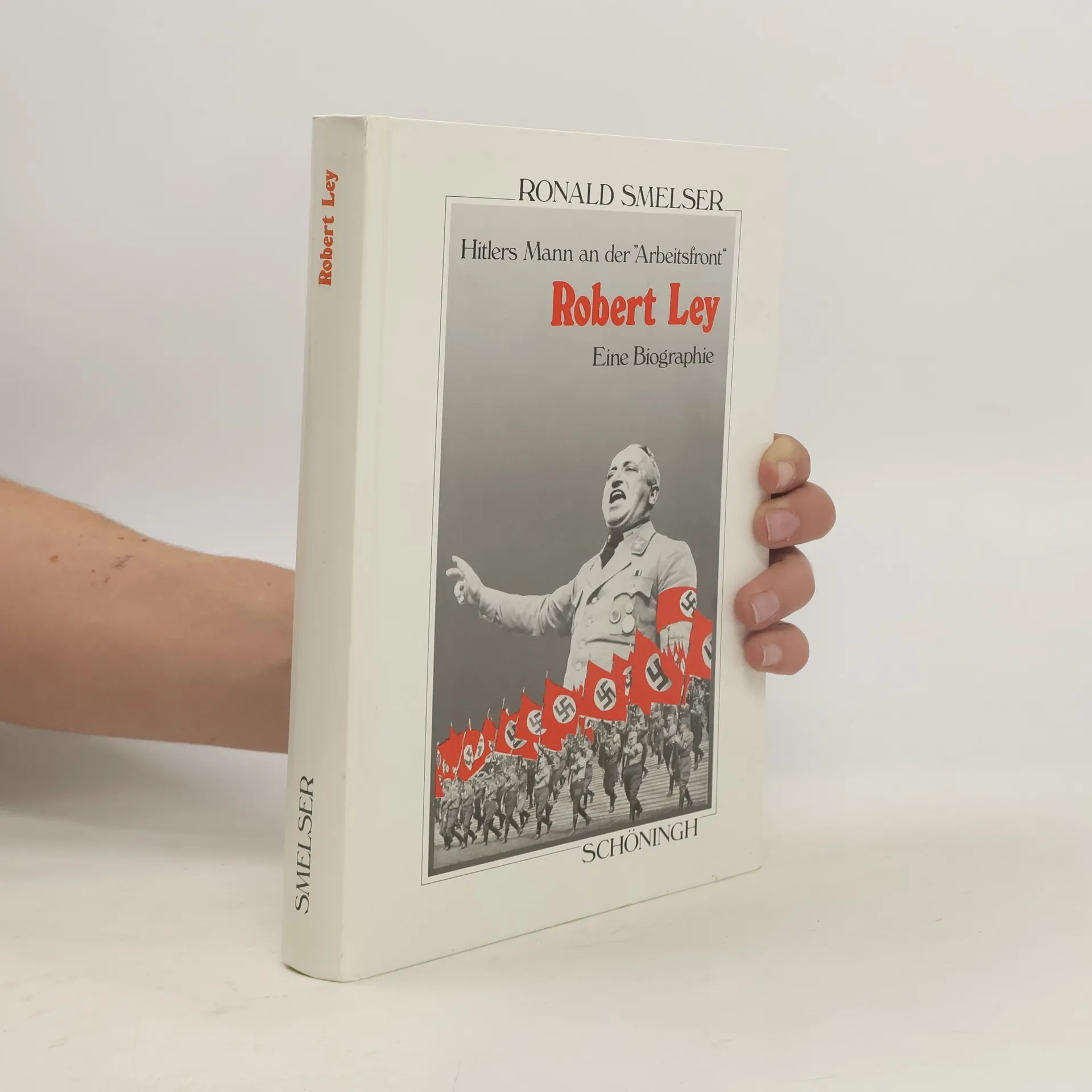
Sammlung Schöningh zur Geschichte und Gegenwart: Robert Ley. Hitlers Mann an der Arbeitsfront
Eine Biographie
- 328 Seiten
- 12 Lesestunden
A biography of the leader of the Nazi labor organization, the Deutsche Arbeitsfront. Discusses factors which led Ley, a successful chemist, to join the Nazi Party in 1924. Argues that he saw in Hitler both a father figure and a messiah and accepted Nazism as a quasi-religious ideology which promised the racial regeneration of German society. Describes Ley's role as a party activist and Gauleiter in the Rhineland area, including his attacks on local Jews and antisemitic rabble-rousing, especially in his newspaper, the "Westdeutscher Beobachter." In 1928 he published an article accusing local Jews of ritual murder. The issue was confiscated and Ley was convicted and fined for insulting the Jewish religion and incitement to violence. In 1931 he became active in party organization, and as Labor Front leader from 1933 on he had little to do with anti-Jewish policy. The outbreak of war led to a revival in his antisemitic speeches and statements, but on his arrest in 1945 Ley denied involvement in actions against Jews. He committed suicide before he could be brought to trial.