

The book introduces readers to the intellectual framework of contemporary education systems and pedagogy, making it accessible for both students and practicing teachers. It outlines fundamental principles while considering external influences, offering a systematic and socially aware perspective on teaching practices. The text is designed to build understanding without requiring prior philosophical knowledge, fostering a comprehensive grasp of educational concepts and methods.
John Ryder Bücher

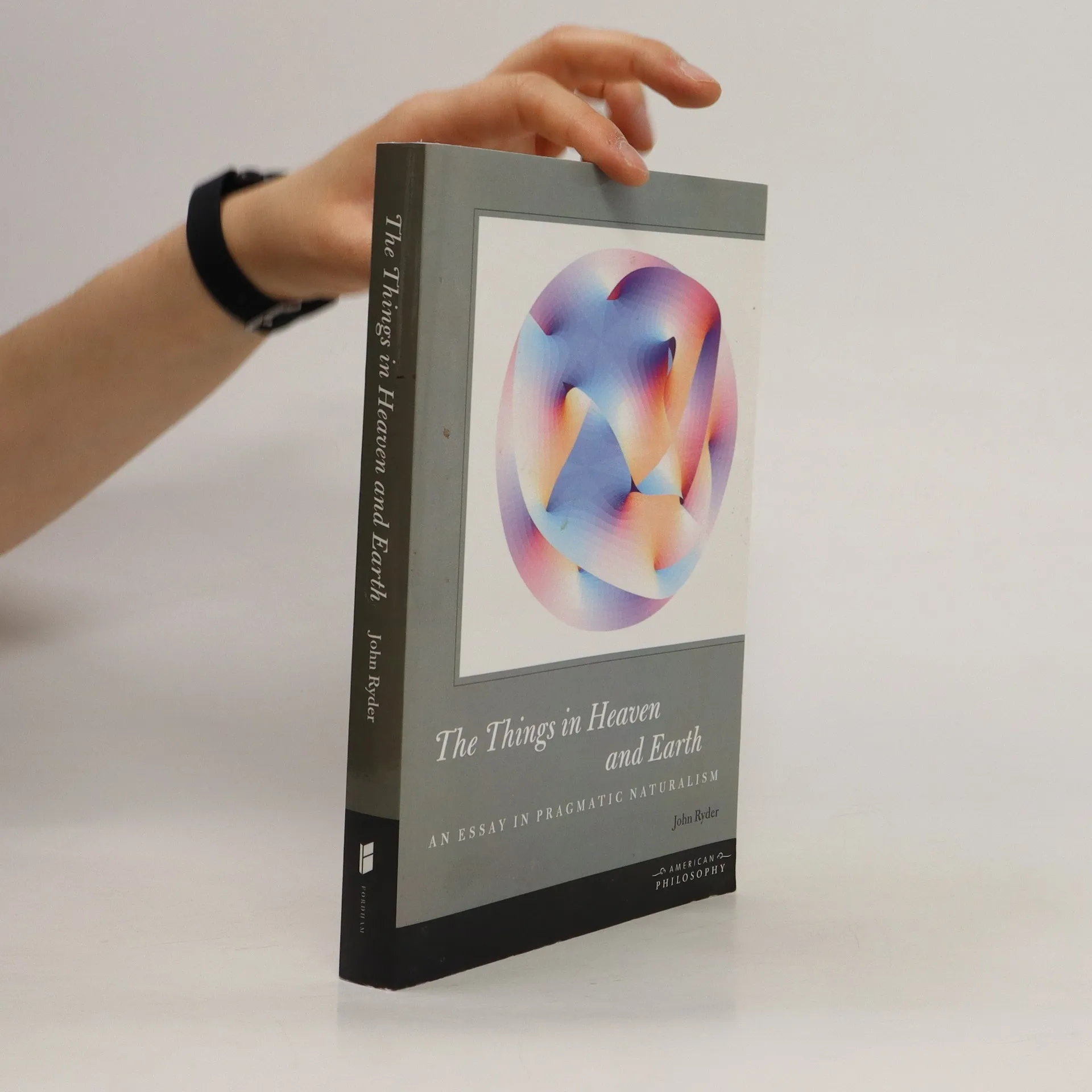
The Things in Heaven and Earth develops and applies the American philosophical naturalist tradition of the mid–20th century, specifically the work of three of the most prominent figures of what is called Columbia John Dewey, John Herman Randall Jr., and Justus Buchler. The book argues for the philosophical value and usefulness of this underappreciated tradition for a number of contemporary theoretical and practical issues, such as the modernist/postmodernist divide and debates over philosophical constructivism.Pragmatic naturalism offers a distinctive ontology of constitutive relations. Relying on Buchler’s ordinal ontology and on the relationality implicit in Dewey’s instrumentalism, the book gives a detailed account of this approach in chapters that deal with issues in systematic ontology, epistemology, constructivism and objectivity, philosophical theology, art, democratic theory, foreign policy, education, humanism, and cosmopolitanism.
Education for a Democratic Society
Central European Pragmatist Forum, Volume Three
- 228 Seiten
- 8 Lesestunden
In this collection of 17 papers presented in June 2004, international specialists in American philosophy focus on pragmatist education theory, its philosophical foundations, and its consequences for social, political and educational reconstruction. Topics, gathered under categories relating education to democracy, values, social reconstruction and the self, include the necessity for criticism of democratic education today, Dewey and the necessity for a democratic civil education, Rorty's considerations of philosophy and education, education in the age of cognitive science, education for ethical seriousness, Dewey's post-traditional notions of community and aesthetic experience, art as education, education as reconstruction, Germany's take on Dewey, the question of whether pragmatic political technology is a reasonable possibility, "pragmatism lite," Dewey through Socrates and Buber, pluralism and individualism, ecological consciousness, and the interplay of identity and intersectional selves. Annotation ©2007 Book News, Inc., Portland, OR (booknews.com)