

Network to Freedom plunges the reader back to the dark and harrowing days of 1943. In this theater of hell where the captive population of France lives in silent revolt against the ruthless Nazi domination, the story recounts the daring escape of General Reginald Miles and James Hargest, who, captured by Rommel at the disastrous battle of Tobruk, flee imprisonment in Italy to reach the haven of Switzerland. They are determined to rejoin England and continue the fight, but they still have to cross France which is occupied by hundreds of thousands of German troops and seething with scores of Gestapo agents and their surrogates. They enlist the help of Allied Intelligence, led by Allen Dulles, Chief of American Intelligence in Europe, who arranges the next leg of their evasion. To lead this mission, George Brantès, a young French medical student in Toulouse, is selected.
Gabriel Nahas Reihenfolge der Bücher (Chronologisch)

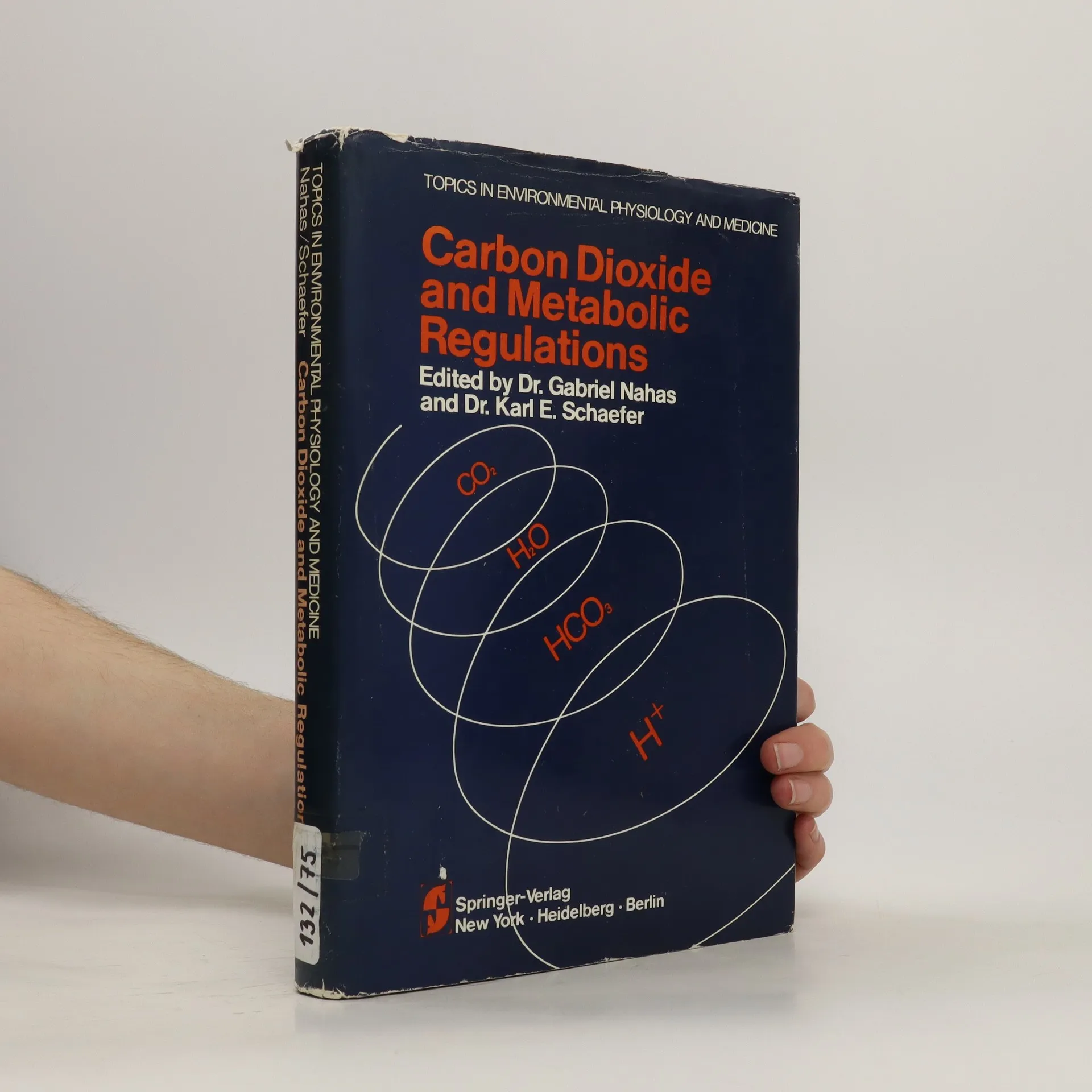
Carbon dioxide and metabolic regulations
- 372 Seiten
- 14 Lesestunden
Wallace O. Fenn (1893-1971) The proceedings of the satellite sym encompass the whole of physiology. His con posium of the XXV International Congress tributions over 50 years covered four main of Physiology on "C0 and Metabolic eras in the development of 2 Regulations" are dedicated to Wallace muscle, electrolyte, respiratory, and hyper Osgood Fenn. Dr. Fenn had agreed to be baric study. honorary conference chairman of this meet The study of muscle contraction started ing, but was unable to attend because of the in 1922 when Fenn became the first American to work in A. V. Hill's laboratory. Fenn illness from which he died two months later concluded this work by saying, " ... There on September 20, 1971. Wallace O. Fenn was born of an old is a fairly good quantitative relation between New England family in Lanesboro, Massa the heat production of muscles and the work chusetts on August 27, 1893. His father was which they perform; and a muscle which does dean of the Divinity School at Harvard ~ork liberates, ipso facto, an extra supply of University. It was at Harvard that Fenn energy which does not appear in an isometric received his A.B. (1914) and his M.S. (1916). contraction." (Fenn [1923]). A. V. Hill referred to this as the "Fenn effect," and so He then started his Ph.D. thesis there under the plant physiologist W. J. V. Osterhout, it has been known ever since.