

Manfred M. Fischer Bücher



Advances in Spatial Science: Knowledge, Complexity and Innovation Systems
- 494 Seiten
- 18 Lesestunden
Recent scientific interest has focused on the triangular relationship between knowledge, complexity, and innovation systems. The concept of innovation systems suggests that innovations arise not as isolated events but through interactions among various actors or agents. These interactions exhibit specific characteristics that tend to persist over time and are common across national, regional, sectoral, and technological systems. These systems can be visualized as networks of institutional actors and interactions aimed at producing and diffusing knowledge. A key theoretical and policy challenge is recognizing that knowledge is generated not only by individuals and organizations but also through the complex interactions among them. Understanding how organizations develop new products, production techniques, and organizational forms is crucial. Equally important is grasping how organizations create new knowledge, particularly when this creation involves mobilizing and converting tacit knowledge. While much has been discussed regarding the significance of knowledge in management, there has been limited exploration of how knowledge is generated and how the knowledge creation process is effectively managed. The third element of this research triangle is complexity.
Spatial Dynamics of European Integration
- 384 Seiten
- 14 Lesestunden
Although it is agreed that the dual development of monetary integration and territorial enlargement are likely to generate profound effects on European spatial structure, in both West and East, much uncertainty centres around the question of what changes will be brought about. This book furthers our economic understanding of the opportunities and challenges offered by these developments. The emphasis is primarily on the economic agenda associated with European integration. Part A reviews the debate on European monetary unification. Economic integration raises many issues, one which is dealt in depth is the issue of convergence versus divergence. Part B centres around the dynamics of cohesion in the EU and the associated regional policies, reflecting on experience from the past and challenges for the future. Part C sheds some light on the complexities of transition and integration of Central and Eastern European countries, the second major challenge being faced by the EU at the turn of the century.
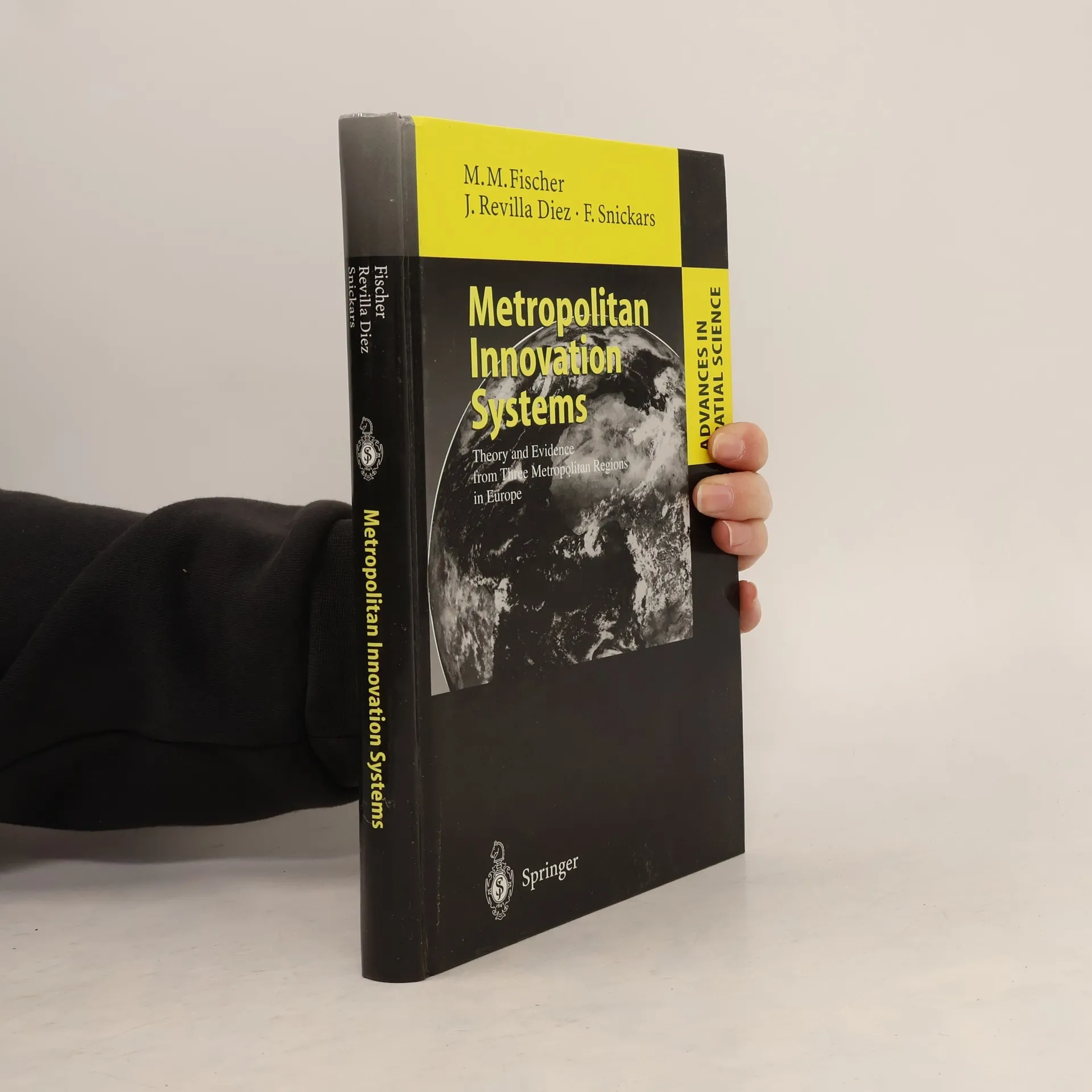
Metropolitan Innovation Systems
Theory and Evidence From Three Metropolitan Regions In Europe
- 270 Seiten
- 10 Lesestunden
This book presents the fmdings of a comparative study of three European metropolitan regions: Vienna, Barcelona and Stockholm. The heart of the work consists of empirical studies carefully designed and developed in order to identify the main actors and mechanisms supporting technological innovation in each of the metropolitan regions. The authors have also highlighted the similarities and differences across regions and countries, investigating how these came to be, and discussing the possible implications. The introductory as well as the concluding Chapter was written by Manfred M. Fischer who, assisted by Attila Varga, was also responsible for Chapter 2 on the Metropolitan Region of Vienna. Javier Revilla Diez contributed Chapter 3 on the Barcelona Metropolitan Region. Folke Snickars has provided Chapter 4 which examines the Metropolitan Region of Stockholm and. All authors have reviewed and commented on the whole contents so that the volume represents a collective endeavour which has been rendered as homogeneous as possible. A particular effort has been made to ensure that the study is based on a common conceptual framework.