

Aloysius Martinich Bücher




Blackwell Companions to Philosophy: A Companion to Analytic Philosophy
- 497 Seiten
- 18 Lesestunden
A Companion to Analytic Philosophy is a comprehensive guide to many significant analytic philosophers and concepts of the last hundred years. Provides a comprehensive guide to many of the most significant analytic philosophers of the last one hundred years.Offers clear and extensive analysis of profound concepts such as truth, goodness, knowledge, and beauty.Written by some of the most distinguished philosophers alive, some of whom have entries in the book devoted to them.
This superlative introduction introduces Hobbes' main doctrines and arguments, covering all of Hobbes' philosophy.
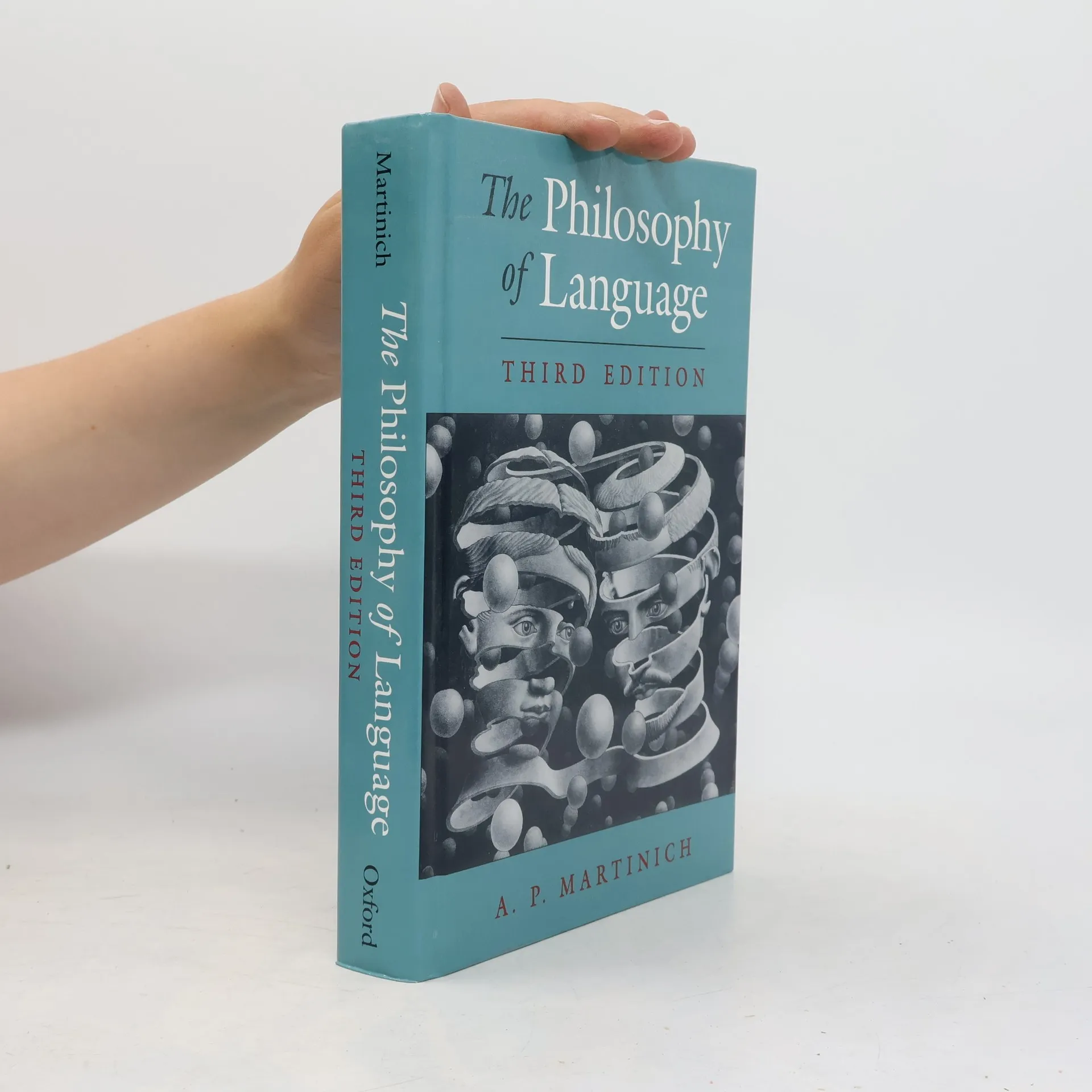
What is meaning? How is linguistic communication possible? What is the nature of language? This essential text serves as an excellent introduction to these fundamental questions. The revised edition compiles 39 pivotal articles, making it the most comprehensive volume in the field. New contributions from influential thinkers like W.V. Quine, Donald Davidson, and John Searle are included, along with a new section on interpretation and translation. Classic works by renowned philosophers such as Gottlob Frege, Bertrand Russell, P.F. Strawson, J.L. Austin, Hilary Putnam, and David Kaplan are also featured. The articles are organized chronologically, showcasing evolving approaches to the philosophy of language, with many building on or critically engaging with earlier discussions. Eight sections address central issues: Truth and Meaning, Speech Acts, Reference Descriptions, Names and Demonstratives, Propositional Attitudes, Metaphor, Interpretation and Translation, and the Nature of Language. The introduction has been significantly expanded to provide students with a better understanding of the issues and their interconnections, complemented by a bibliography of suggested further readings for each section. This text is the most comprehensive and up-to-date resource for students of the philosophy of language.
As well as being considered the greatest English political philosopher, Hobbes has traditionally been thought of as a purely secular thinker, highly critical of all religion. In this provocative new study, Professor Martinich argues that conventional wisdom has been misled. In fact, he shows that religious concerns pervade Leviathan and that Hobbes was really intent on providing a rational defense of the Calvinistic Church of England that flourished under the reign of James I. Professor Martinich presents a close reading of Leviathan in which he shows that, for Hobbes, Christian doctrine is not politically destabilizing and is consistent with modern science.