
Gratis Versand ab € 14,99. Mehr Infos.
Bookbot

Michael Zürn

    14. Februar 1959
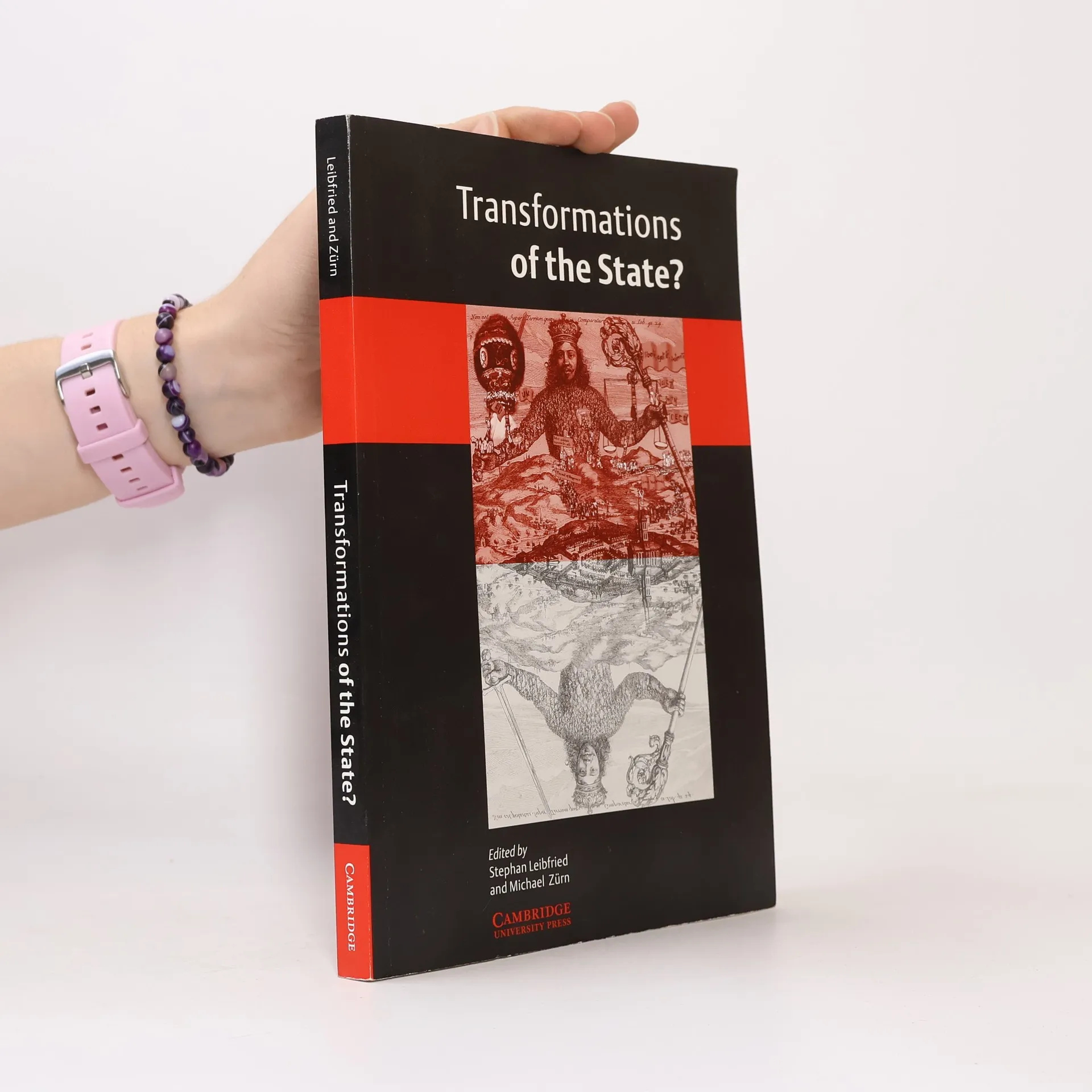
    Transformations of the State?
    The Democratic Regression
    Regieren jenseits des Nationalstaates - Edition Zweite Moderne
    Weltpolitik im 21. Jahrhundert: Die neuen Internationalen Beziehungen
    • The Democratic Regression

      • 225 Seiten
      • 8 Lesestunden

      There is a tendency in public debate to downplay the significance of populism by attributing its rise to the inadequacies of those who vote for populist leaders and parties. But this way of thinking prevents us from seeing that the rise of populism may be linked to problems and shortcomings in the way our democracies work. In this important book, Armin Schäfer and Michael Zürn argue that the rise of authoritarian populism is rooted in two developments that are specifically political in character: first, the unequal responsiveness of parliaments towards less privileged citizens; and second, the growing political role of non-majoritarian institutions, like central banks and international institutions, that remove decisions from public debate and entrust them to experts. Contemporary democracy is increasingly perceived as lacking openness and representativeness. More and more citizens come to feel that politics is made by a closed political class oblivious to the concerns of ordinary people, and those who share this view are more likely to vote for authoritarian populists. Although contemporary populists keep rubbing salt into the wound of liberal democracy, their responses fail to solve the problems of democratic politics. On the contrary, wherever authoritarian-populist parties have come to power, they have damaged democracy rather than expanding it or reducing existing inequalities.

      The Democratic Regression2023
      3,4
    • Transformations of the State?

      • 232 Seiten
      • 9 Lesestunden

      The influence of the state on human lives is more comprehensive and sustained than that of any other organizational construct. It steers the economy, fights crime, provides education, sustains democracy, enters wars, guarantees social welfare, collects taxes, and deploys some forty percent of the gross national product. Transformations of the State? defines the multi-faceted modern state in four intersecting resources, or control of the use of force and revenues; law, or jurisdiction and the courts; legitimacy, or the acceptance of political rule by the populace; and welfare, or the facilitation of economic growth and social equality. The twentieth-century nation-state blended those dimensions and turned the post-WWII era into the golden age of the state. What has become of that state and its functions and what is its future? Political scientists, lawyers, economists and sociologists have examined a sample of OECD nation-states in the search for answers to these questions.

      Transformations of the State?2005
    • Das Werk legt eine Bestandsaufnahme der Leistungsfähigkeit der politikwissenschaftlichen Teildisziplin der Internationalen Beziehungen (IB) vor. Es wird gefragt, inwieweit im deutschsprachigen Raum eigenständige Forschungsakzente entwickelt wurden, zu welchen Erträgen diese geführt haben und inwieweit das Fachgebiet in der Lage ist, die realen Veränderungen konzeptionell und theoretisch so zu erfassen, dass sich daraus ein besseres Verständnis der sich noch immer entfaltenden Umbruchsprozesse ergibt. Es zeigt sich, dass sich so etwas wie die »neuen« IB entwickelt haben. Im Vordergrund der Analyse stehen Prozesse wie Verrechtlichung, Sozialisierung und Globalisierung und weniger Strukturen wie Machtverteilung, Abhängigkeit oder Interdependenz. Führende AutorInnen stellen die »neuen« IB vor und reflektieren diese kritisch. Der Band ist unverzichtbar für die wissenschaftliche Selbstreflexion im Fach und bietet für Studierende einen perfekten Einstieg in gegenwärtige Debatten. Der Band enthält Beiträge von Michael Zürn, Peter Mayer, Thomas Risse, Antje Wiener, Christopher Daase, Harald Müller, Detlef F. Sprinz, Joachim Betz, Sebastian Harnisch, Martin List und Bernhard Zangl, Frank Schimmelfennig, Philipp Genschel, Christoph Scherrer, Markus Jachtenfuchs, Andreas Nölke, Mathias Albert, Klaus Dieter Wolf und Gunther Hellmann.

      Weltpolitik im 21. Jahrhundert: Die neuen Internationalen Beziehungen2003
      3,0
    • Michael Zürn, geboren 1959, leitet die Abteilung für »Global Governance« am Wissenschaftszentrum Berlin und ist Professor für Internationale Beziehungen an der Freien Universität. Ulrich Beck, ein international anerkannter Soziologe, prägte mit seinem 1986 veröffentlichten Werk das Konzept der Risikogesellschaft, das weit über akademische Kreise hinaus Wirkung zeigte. Zwei Jahrzehnte später erweiterte er seine Analysen in Weltrisikogesellschaft und thematisierte die Suche nach Sicherheit angesichts von Terrorismus, Klimakatastrophen und Finanzkrisen. Beck war von 1997 bis 2002 Herausgeber der Reihe Edition Zweite Moderne im Suhrkamp Verlag und von 1992 bis 2009 Professor für Soziologie an der Ludwig-Maximilians-Universität München. Zwischen 1999 und 2009 leitete er den Sonderforschungsbereich Reflexive Modernisierung, gefördert von der Deutschen Forschungsgemeinschaft. 2012 erhielt er vom Europäischen Forschungsrat eine fünfjährige Förderung für ein Projekt über Methodologischen Kosmopolitismus im Kontext des Klimawandels. 2014 wurde ihm beim Weltkongress für Soziologie in Yokohama der Lifetime Achievement Award der International Sociological Association verliehen. Beck, geboren am 15. Mai 1944 in Stolp, promovierte 1972 in München und habilitierte sich 1979. Sein Hauptinteresse galt den grundlegenden Veränderungen moderner Gesellschaften, die er mit Konzepten wie Reflexiver Modernisierung und Kosmopolitismus analysierte. Er s

      Regieren jenseits des Nationalstaates - Edition Zweite Moderne1998
      2,0