


Gratis Versand ab € 14,99. Mehr Infos.
Bookbot

Marc Wittmann

    1. Jänner 1966

    Marc Wittmann beschäftigt sich mit der Psychologie der Zeitwahrnehmung und erforscht, wie unser subjektives Zeitempfinden unsere Realität prägt. Seine Arbeit untersucht die unbewussten Prozesse und physiologischen Mechanismen, die unser Zeitbewusstsein formen. Wittmann bietet faszinierende Einblicke, wie unsere Emotionen und Sinneseindrücke unsere Gegenwart, Vergangenheit und Zukunft gestalten. Seine Forschung eröffnet neue Perspektiven für das Verständnis der menschlichen Psyche und Subjektivität.

    Altered States of Consciousness
    Felt Time
    Die GeWinner-Diät
    Gefühlte Zeit
    • Gefühlte Zeit

      Kleine Psychologie des Zeitempfindens

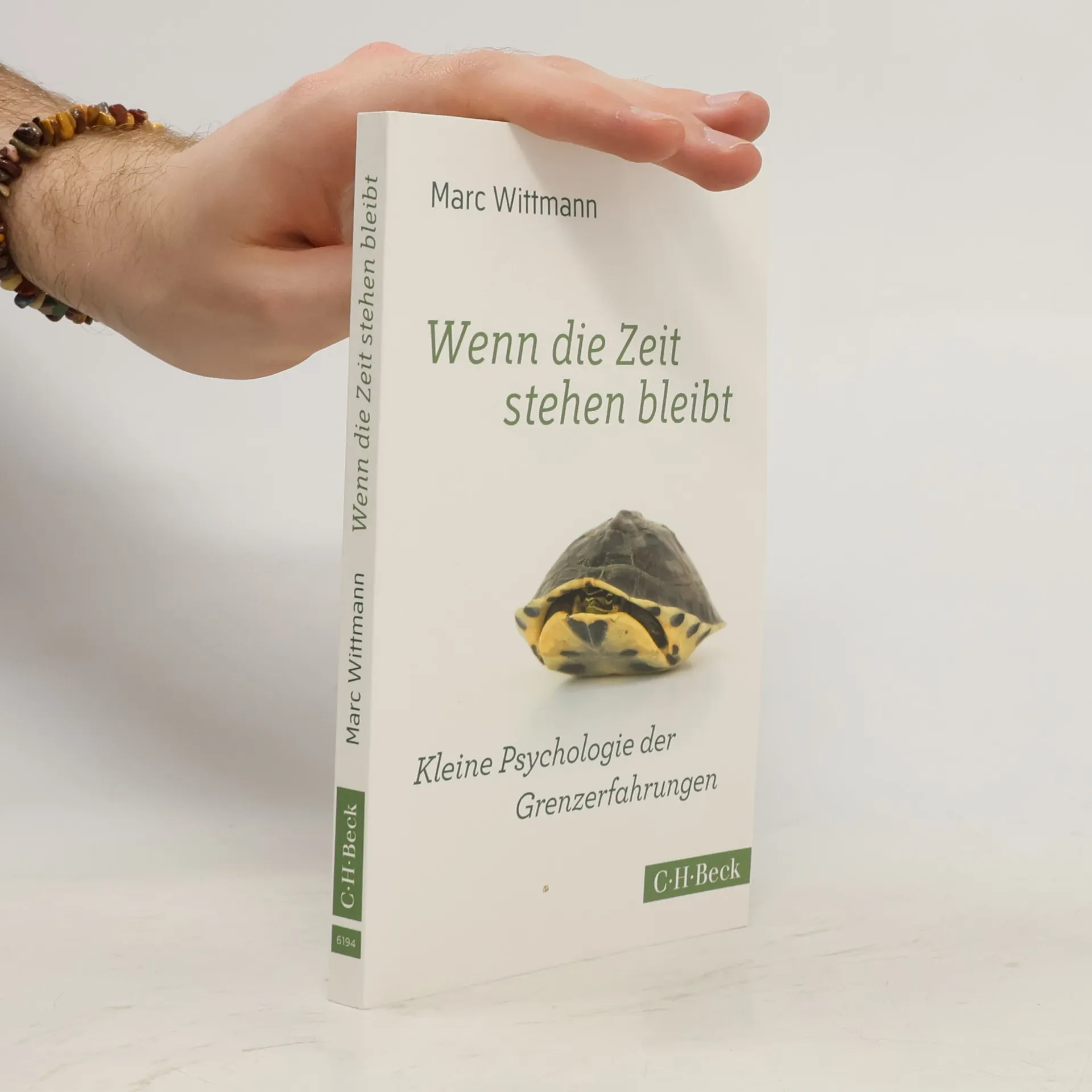
      Psychologie und Hirnforschung ist es in den letzten Jahren gelungen, unseren Zeitsinn zu enträtseln. Der Leser des Buches erfährt, wie unser Gehirn wirklich tickt und wie wir zu unserem Gefühl von zeitlicher Dauer kommen. Er lernt, dass der Umgang mit der Zeit für Erfolg im Leben wichtiger ist als etwa der IQ. Wir sind unserem Zeitgefühl nicht hilflos ausgeliefert, sondern können es durch Achtsamkeit beeinflussen. Gefühlte Zeit bestimmt unsere Entscheidungen im Alltag: Sollen wir auf den Aufzug warten oder die Treppen nehmen, stelle ich mich jetzt in die Schlange oder komme ich später wieder? Ökonomische Fragen sind zeitabhängig: Soll ich mein Geld langfristig anlegen oder für mein Traumauto ausgeben? Gefühlte Zeit bestimmt aber auch unser Verhältnis zum Älterwerden: Auf einmal spüren wir, dass wir nicht mehr der junge Mensch sind, für den wir uns immer hielten. Mit Erschrecken bemerken wir, dass mit zunehmendem Alter die Zeit immer schneller vergeht. Unsere Erfahrung von Zeit sagt etwas über uns selbst aus. Wir sind gewissermaßen die Zeit, unser Zeitgefühl reflektiert unsere Lebensweise und unser Selbst. Zum geglückten Leben gehört ein reifer Umgang mit der gefühlten Zeit - im Augenblick wie aufs Ganze des Lebens gesehen.

      Gefühlte Zeit
    • Felt Time

      The Science of How We Experience Time

      • 167 Seiten
      • 6 Lesestunden

      An expert delves into the riddle of subjective time, examining why it seems to speed up as we age and its connection to consciousness. Our perceptions of time vary greatly; children often struggle with waiting, while boredom can distort our sense of time's passage. As we grow older, the years seem to slip away more quickly. In this exploration, Marc Wittmann investigates how we perceive time, whether in fleeting moments or throughout our lives. Utilizing insights from psychology and neuroscience, he offers a fresh perspective on our time experiences. Wittmann discusses the balance between savoring moments and deferring gratification, the impulsivity that leads to boredom, and whether individuals have a unique "personal speed" or brain rhythm. He suggests that our sense of duration acts as an "error signal," alerting us when we are waiting too long. The practice of mindfulness is considered in relation to slowing down life’s pace, potentially allowing us to feel as if we have more time. Wittmann also notes that as we age, routine can accelerate our perception of time, while a rich and varied life can extend our subjective experience. He highlights the role of bodily processes, particularly the heartbeat, as an internal clock, and discusses ongoing research linking time to consciousness, which may deepen our understanding of the self.

      Felt Time
      3,7
    • What altered states of consciousness can reveal about the mystery of consciousness is explored through extraordinary experiences such as shock, meditation, mystical revelations, out-of-body experiences, and drug intoxication. These moments often lead to a dissolution of our senses of time and self, which have historically been dismissed by mainstream science. Recent research has begun to uncover the neural mechanisms behind these altered states. Neuropsychologist Marc Wittmann delves into how these experiences can illuminate the nature of consciousness. He highlights the close relationship between our consciousness of time and self, noting that in extreme situations, our perceptions of space and self can intensify or weaken together. Wittmann examines the emergence of self in both waking life and dreams, how extreme circumstances distort our sense of time, and the loss of time and self in conditions like depression, schizophrenia, and epilepsy. He references Dostoyevsky's experiences during seizures and the current neurological investigations into epileptic auras. Additionally, he discusses new studies on psychedelics and their potential for treating severe mental health issues. Wittmann argues that to truly understand consciousness and subjectivity, we must explore altered states, which are central to the concepts of time and self.

      Altered States of Consciousness
      3,7