





Iconic perspective on the human behaviour from evolutionary psychology perspective
Ausverkauft, aber heiß begehrt!
Parameter
- 224 Seiten
- 8 Lesestunden
Mehr zum Buch
Inheriting the mantle of revolutionary biologist from Darwin, Watson, and Crick, Richard Dawkins forced an enormous change in the way we see ourselves and the world with the publication of The Selfish Gene . Suppose, instead of thinking about organisms using genes to reproduce themselves, as we had since Mendel's work was rediscovered, we turn it around and imagine that "our" genes build and maintain us in order to make more genes. That simple reversal seems to answer many puzzlers which had stumped scientists for years, and we haven't thought of evolution in the same way since. Drawing fascinating examples from every field of biology, he paved the way for a serious re-evaluation of evolution. He also introduced the concept of self-reproducing ideas, or memes, which (seemingly) use humans exclusively for their propagation. If we are puppets, he says, at least we can try to understand our strings.
Buchkauf
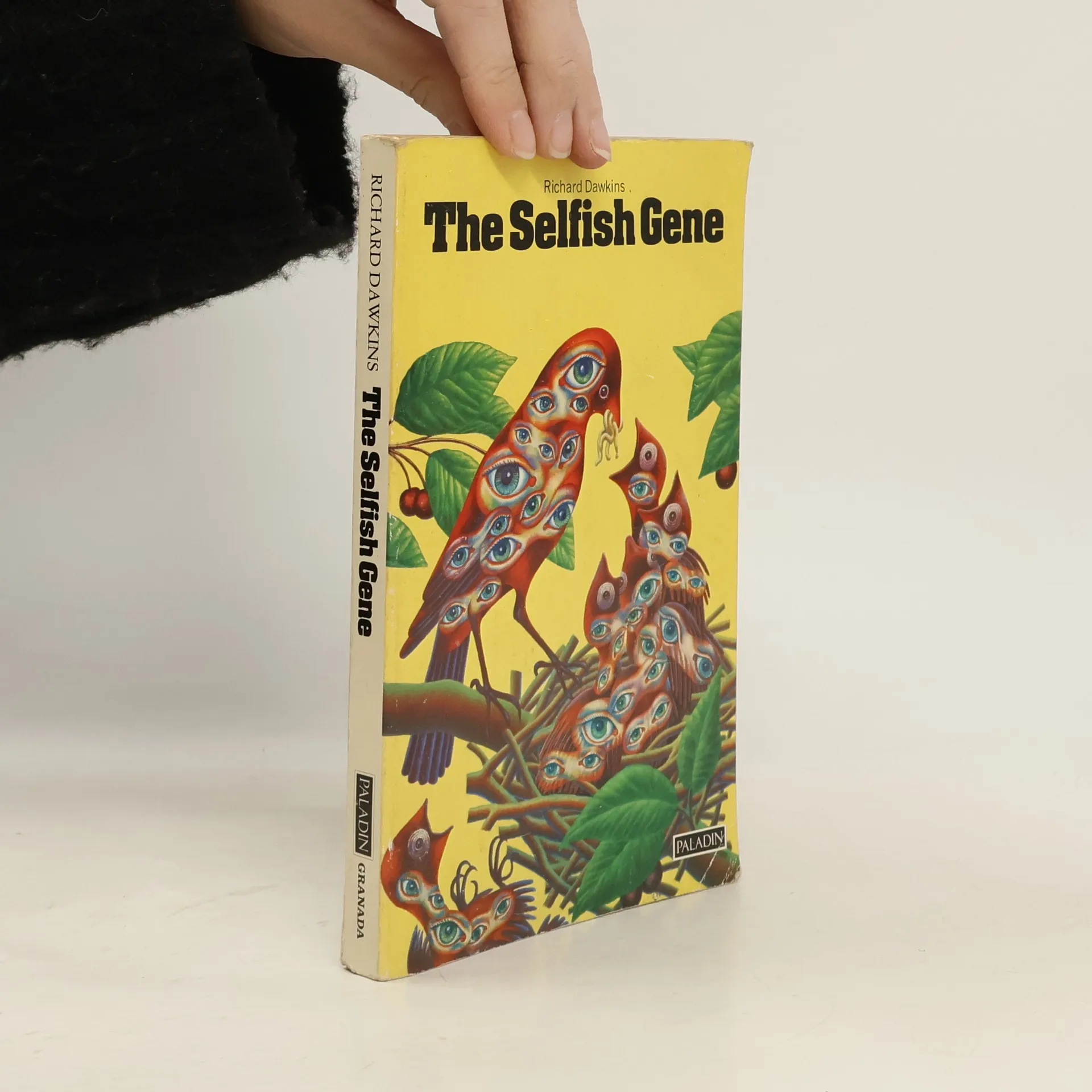
The Selfish Gene, Richard Dawkins
- Sprache

- Erscheinungsdatum
- 1976
- product-detail.submit-box.info.binding
- (Paperback)
- Titel
- The Selfish Gene
- Sprache
- Englisch
- Autor*innen
- Richard Dawkins
- Verlag
- Paladin/Granada
- Erscheinungsdatum
- 1976
- Einband
- Paperback
- Seitenzahl
- 224
- ISBN10
- 0586083162
- ISBN13
- 9780586083161
- Reihe
- Schlagwörter
- Sachbücher, Sozialwissenschaften, Wissenschaft & Mathematik, Naturwissenschaften, Philosophie, Psychologie, Biologie, Wissenschaft, Fachliteratur, Evolution, Genetik, Spieltheorie, Darwinismus, Biologen
- Erstveröffentlichung
- 1976
- Originaltitel
- The Selfish Gene
- Bewertung
- 4,15 von 5 Sternen
- Beschreibung
- Inheriting the mantle of revolutionary biologist from Darwin, Watson, and Crick, Richard Dawkins forced an enormous change in the way we see ourselves and the world with the publication of The Selfish Gene . Suppose, instead of thinking about organisms using genes to reproduce themselves, as we had since Mendel's work was rediscovered, we turn it around and imagine that "our" genes build and maintain us in order to make more genes. That simple reversal seems to answer many puzzlers which had stumped scientists for years, and we haven't thought of evolution in the same way since. Drawing fascinating examples from every field of biology, he paved the way for a serious re-evaluation of evolution. He also introduced the concept of self-reproducing ideas, or memes, which (seemingly) use humans exclusively for their propagation. If we are puppets, he says, at least we can try to understand our strings.