


Parameter
- 240 Seiten
- 9 Lesestunden
Mehr zum Buch
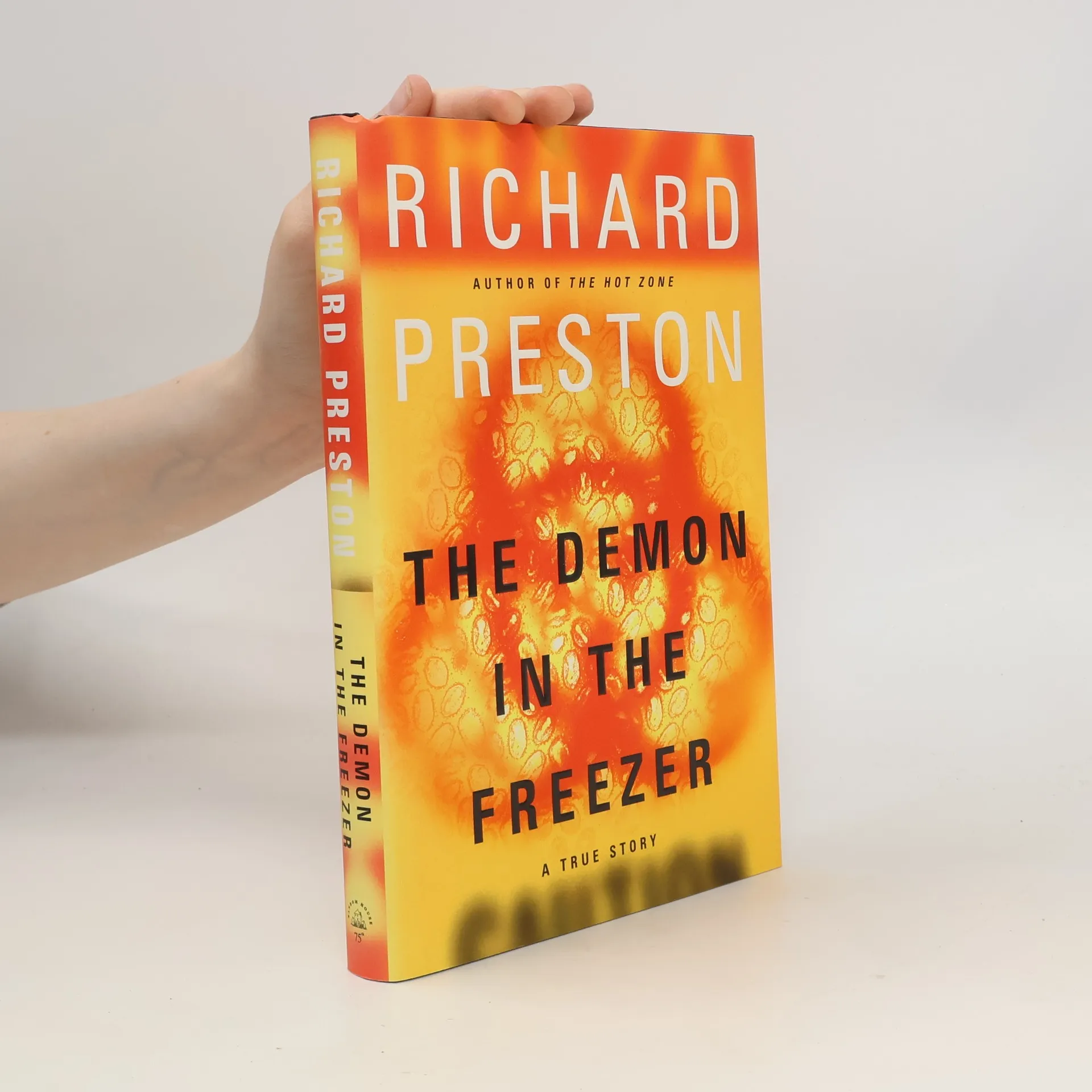
The anthrax attacks in October 2001 marked the first major bioterror event in the U.S., prompting scientists working with dangerous pathogens to enhance civilian protection against biological threats. In this gripping narrative, Richard Preston explores the U.S. Army Medical Research Institute of Infectious Diseases at Fort Detrick, Maryland, once the hub of the U.S. biological weapons program and now central to national biodefense. The story centers on Peter Jahrling, a leading virologist with ORCON security clearance, who is focused on developing a drug to combat smallpox. Though eradicated in 1979, smallpox virus remains stored in high-security facilities, and Jahrling fears that illegal stocks may exist in hostile nations like Iraq and North Korea. He worries that genetic engineering could lead to the creation of a new, vaccine-resistant superpox virus. Following the September 11 attacks, Usamriid activated emergency response teams as anthrax letters were discovered in New York and Washington, D.C. Preston provides an in-depth look at the government's response and ongoing FBI investigations, drawing from interviews with top agents and Dr. Steven Hatfill. Jahrling's controversial experiments with live smallpox virus at the CDC raise critical questions about the potential consequences of his bold research.



Buchkauf
The Demon in the Freezer, Richard Preston
- Sprache

- Erscheinungsdatum
- 2002,
- Buchzustand
- Gebraucht - Sehr gut
- Preis
- € 8,99
Hier könnte deine Bewertung stehen.
- Untertitel
- A True Story
- Sprache
- Englisch
- Autor*innen
- Richard Preston
- Verlag
- Random House
- Erscheinungsdatum
- 2002
- Seitenzahl
- 240
- ISBN10
- 0375508562
- ISBN13
- 9780375508561
- Reihe
- Schlagwörter
- Sachbücher, Historisches Thema, Medizin & Gesundheit, Geschichte, Wissenschaft & Mathematik, Naturwissenschaften, Medizin, Biologie, Wissenschaft, Medizin
- Originaltitel
- The demon in the freezer
- Bewertung
- 4,1 von 5 Sternen
- Beschreibung
- The anthrax attacks in October 2001 marked the first major bioterror event in the U.S., prompting scientists working with dangerous pathogens to enhance civilian protection against biological threats. In this gripping narrative, Richard Preston explores the U.S. Army Medical Research Institute of Infectious Diseases at Fort Detrick, Maryland, once the hub of the U.S. biological weapons program and now central to national biodefense. The story centers on Peter Jahrling, a leading virologist with ORCON security clearance, who is focused on developing a drug to combat smallpox. Though eradicated in 1979, smallpox virus remains stored in high-security facilities, and Jahrling fears that illegal stocks may exist in hostile nations like Iraq and North Korea. He worries that genetic engineering could lead to the creation of a new, vaccine-resistant superpox virus. Following the September 11 attacks, Usamriid activated emergency response teams as anthrax letters were discovered in New York and Washington, D.C. Preston provides an in-depth look at the government's response and ongoing FBI investigations, drawing from interviews with top agents and Dr. Steven Hatfill. Jahrling's controversial experiments with live smallpox virus at the CDC raise critical questions about the potential consequences of his bold research.