



Parameter
- 704 Seiten
- 25 Lesestunden
Mehr zum Buch
For generations, our ancestors have been portrayed as primitive, either as innocent free spirits or as violent warriors. Civilization, it is said, could only emerge by sacrificing these original freedoms or controlling our instincts. This major bestseller fundamentally challenges these views and reshapes our understanding of human history. Drawing on groundbreaking research in archaeology and anthropology, the authors reveal that history becomes much more intriguing when we discard our conceptual limitations. If humans did not spend 95 percent of their evolutionary past as hunter-gatherers, what were they doing? If agriculture and cities did not necessarily lead to hierarchy and domination, what alternative social and economic structures emerged? The answers are often surprising, suggesting that human history is less predetermined and more open to creative possibilities than commonly believed. This work signals a paradigm shift, transforming our perception of the past and allowing us to envision new forms of freedom and societal organization. It is a monumental book with significant intellectual and political depth, driven by curiosity, moral vision, and a belief in the power of direct action.




Buchkauf
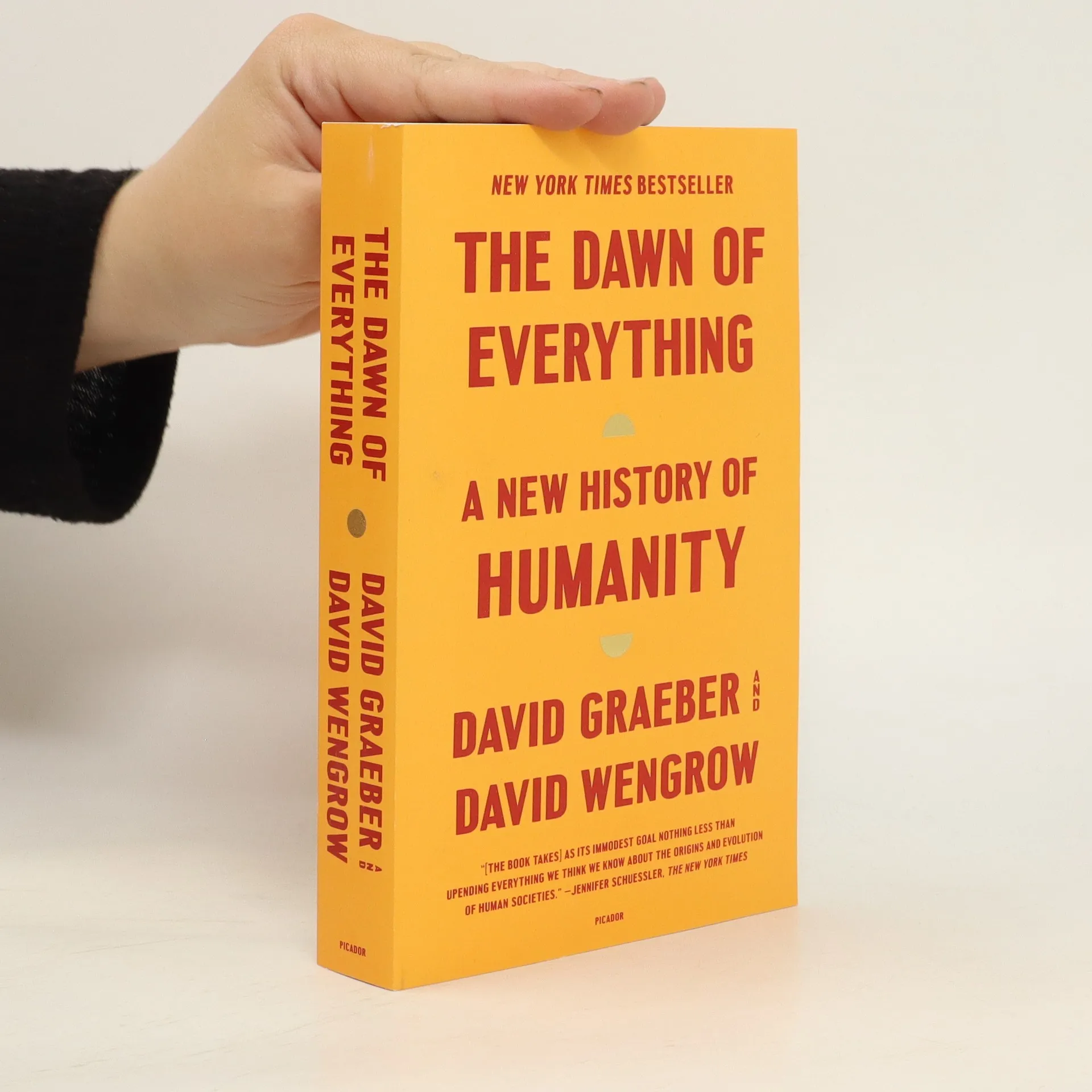
The Dawn of Everything, David Graeber, D. Wengrow
- Sprache

- Erscheinungsdatum
- 2023
- Einband
- (Paperback)
Hier könnte deine Bewertung stehen.
- Sprache
- Englisch
- Autor*innen
- David Graeber, D. Wengrow
- Verlag
- Picador USA
- Erscheinungsdatum
- 2023
- Einband
- Paperback
- Seitenzahl
- 704
- ISBN10
- 1250858801
- ISBN13
- 9781250858801
- Reihe
- Kategorien
- Schlagwörter
- Sachbücher, Sozialwissenschaften, Historisches Thema, Geschichte, Politikwissenschaft, Philosophisches Thema, Philosophie, Politik, Wissenschaft, Soziologie, Geschenke für Opa, Anthropologie
- Erstveröffentlichung
- 2021
- Originaltitel
- The Dawn of Everything
- Bewertung
- 4,2 von 5 Sternen
- Beschreibung
- For generations, our ancestors have been portrayed as primitive, either as innocent free spirits or as violent warriors. Civilization, it is said, could only emerge by sacrificing these original freedoms or controlling our instincts. This major bestseller fundamentally challenges these views and reshapes our understanding of human history. Drawing on groundbreaking research in archaeology and anthropology, the authors reveal that history becomes much more intriguing when we discard our conceptual limitations. If humans did not spend 95 percent of their evolutionary past as hunter-gatherers, what were they doing? If agriculture and cities did not necessarily lead to hierarchy and domination, what alternative social and economic structures emerged? The answers are often surprising, suggesting that human history is less predetermined and more open to creative possibilities than commonly believed. This work signals a paradigm shift, transforming our perception of the past and allowing us to envision new forms of freedom and societal organization. It is a monumental book with significant intellectual and political depth, driven by curiosity, moral vision, and a belief in the power of direct action.