

Mehr zum Buch
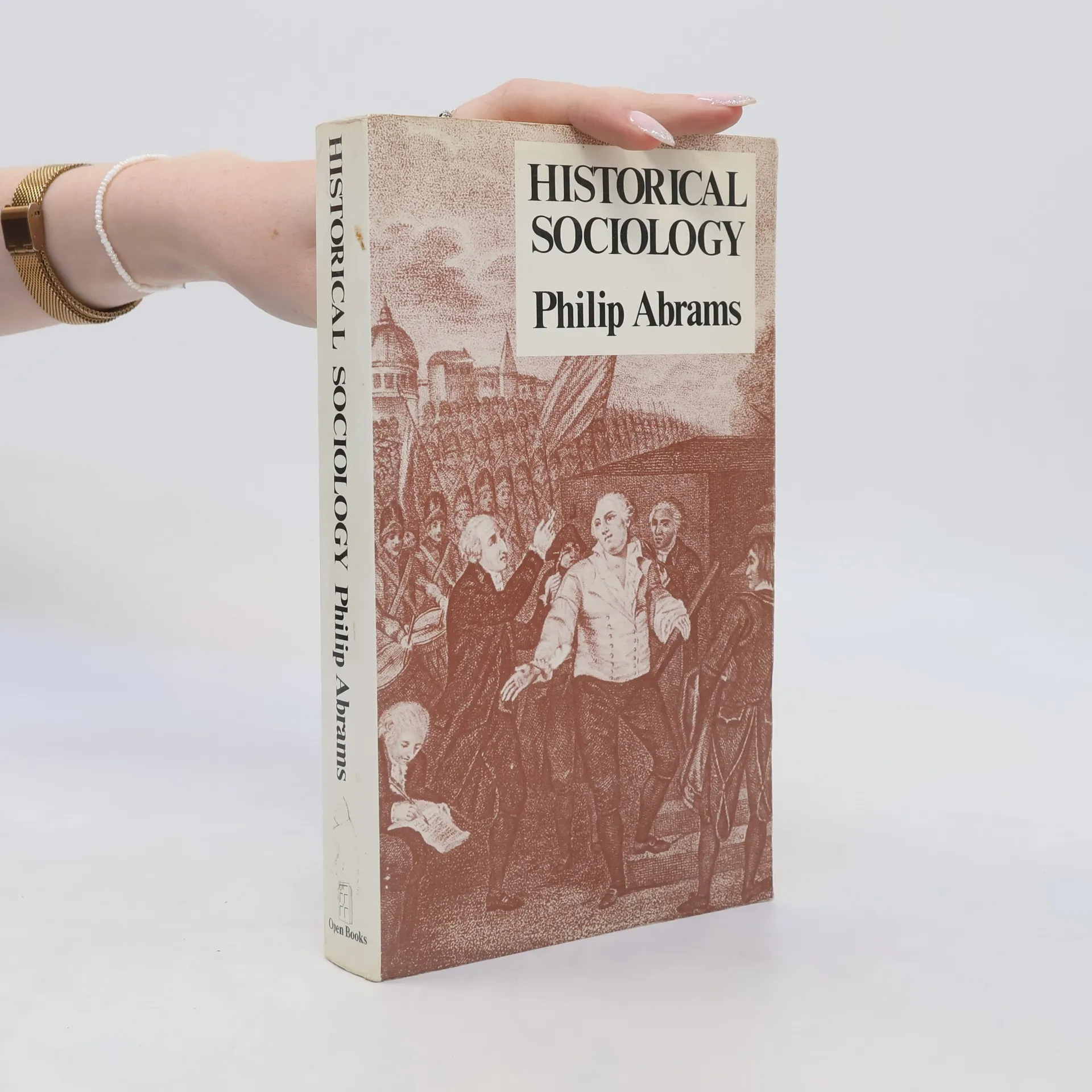
This book argues that history and sociology share the same vital preoccupation: the desire to unravel the puzzle of human agency. How do large-scale social transformations occur, and what is the role of the individual in them? Phil Abrams devotes three chapters to the development of industrialism and scrutinizes, in that connection, the theories of Marx, Weber, and Durkheim. Subsequent chapters consider Talcott Parsons and the debate on convergence; the formation of states; the idea of the event as a legitimate concern of history and sociology; individuals and sociological generations; deviancy and revolution; and a final chapter on the limits of historical sociology. --Steven Lukes, Balliol College, Oxford


Buchkauf
Historical sociology, Philip Abrams
- Sprache

- Erscheinungsdatum
- 1982
- product-detail.submit-box.info.binding
- (Paperback)
Hier könnte deine Bewertung stehen.
- Titel
- Historical sociology
- Sprache
- Englisch
- Autor*innen
- Philip Abrams
- Verlag
- Open Books
- Erscheinungsdatum
- 1982
- Einband
- Paperback
- Seitenzahl
- 372
- ISBN10
- 0729101061
- ISBN13
- 9780729101066
- Reihe
- Schlagwörter
- Sachbücher, Sozialwissenschaften, Soziologie
- Bewertung
- 5 von 5 Sternen
- Beschreibung
- This book argues that history and sociology share the same vital preoccupation: the desire to unravel the puzzle of human agency. How do large-scale social transformations occur, and what is the role of the individual in them? Phil Abrams devotes three chapters to the development of industrialism and scrutinizes, in that connection, the theories of Marx, Weber, and Durkheim. Subsequent chapters consider Talcott Parsons and the debate on convergence; the formation of states; the idea of the event as a legitimate concern of history and sociology; individuals and sociological generations; deviancy and revolution; and a final chapter on the limits of historical sociology. --Steven Lukes, Balliol College, Oxford