



Parameter
Mehr zum Buch
As Christianity adopted ancient sculpture, it was already in decline. By the end of the 2nd century, reproductions of earlier types had become mere repetitions, and the treatment of details had deteriorated. The preference for colossal forms and hard stones diverted artistic skill from higher purposes. The decline of pagan religion further impacted the art form. The sculpture of the Constantinian era could not produce Christian types that could compare with earlier deities. The Arch of Constantine exemplifies the exhausted and empty formal language of antiquity, showing no signs of new development. Perhaps aware of this impotence, or out of respect for the cherished statuary of paganism and the Mosaic law, the church largely ceased the creation of statues. Rare examples like the two small statues of the Good Shepherd in the Lateran's Museo Cristiano and the bronze statue of St. Peter from the 5th century are notable exceptions, the latter attempting to mimic seated toga figures of pagan times. Few secular honorific statues survived into the 5th century, and Italy retains only the formless bronze colossus of Emperor Heraclius in Barletta. Busts also became extremely rare, with the Amal asunt a bust in the Capitol collection being one of the few remaining. Thus, the development of sacred types, akin to those given to pagan gods, was virtually absent in sculpture, as figures like Christ and the Apostles were initially unsuitable
Buchkauf
Der Cicerone, Burkhard Jacob
- Sprache

- Erscheinungsdatum
- 1978
- Einband
- (Hardcover)
Keiner hat bisher bewertet.
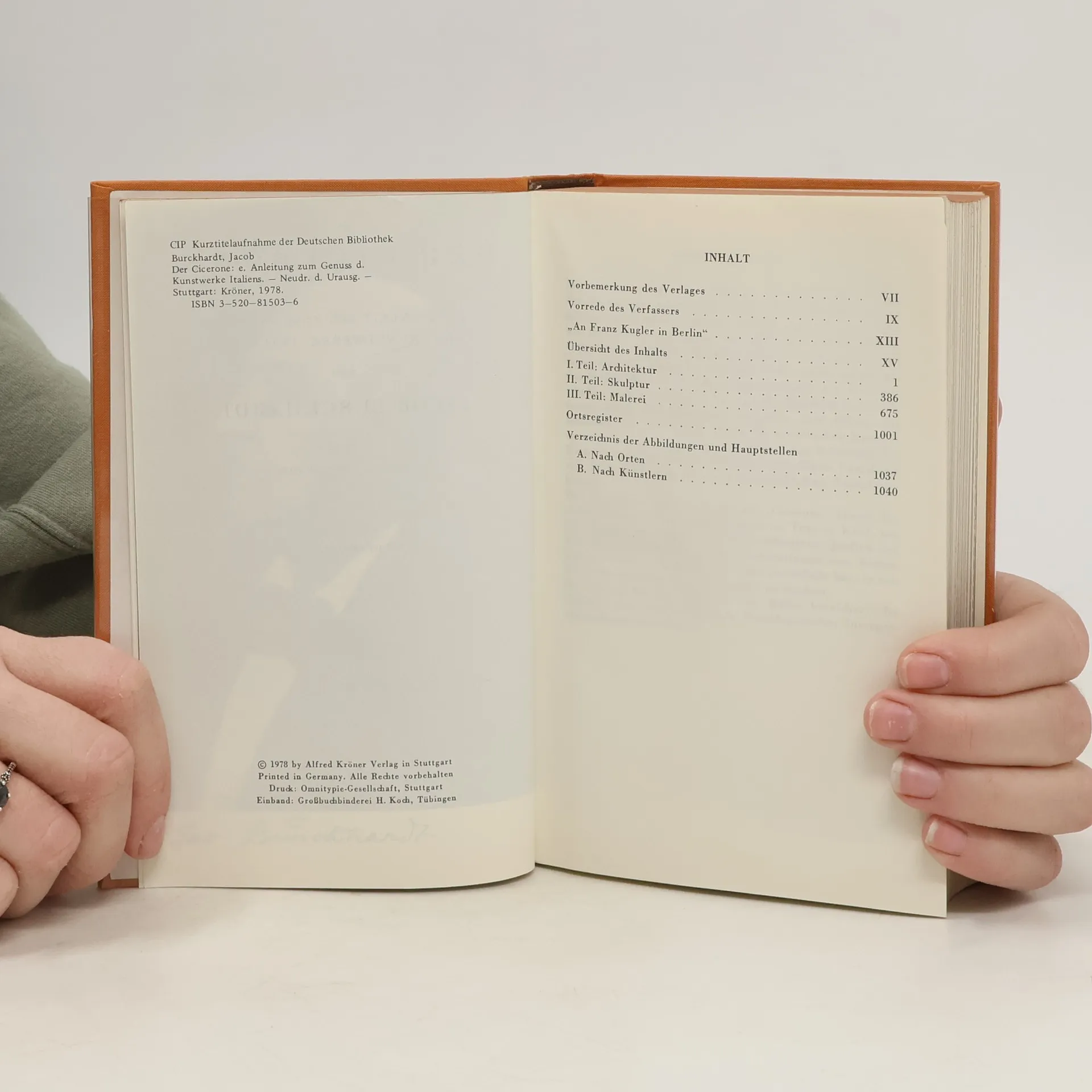
- Titel
- Der Cicerone
- Sprache
- Deutsch
- Autor*innen
- Burkhard Jacob
- Verlag
- Kröner
- Erscheinungsdatum
- 1978
- Einband
- Hardcover
- ISBN10
- 3520815036
- ISBN13
- 9783520815033
- Reihe
- Schlagwörter
- Historisches Thema, Persönlichkeiten
- Beschreibung
- As Christianity adopted ancient sculpture, it was already in decline. By the end of the 2nd century, reproductions of earlier types had become mere repetitions, and the treatment of details had deteriorated. The preference for colossal forms and hard stones diverted artistic skill from higher purposes. The decline of pagan religion further impacted the art form. The sculpture of the Constantinian era could not produce Christian types that could compare with earlier deities. The Arch of Constantine exemplifies the exhausted and empty formal language of antiquity, showing no signs of new development. Perhaps aware of this impotence, or out of respect for the cherished statuary of paganism and the Mosaic law, the church largely ceased the creation of statues. Rare examples like the two small statues of the Good Shepherd in the Lateran's Museo Cristiano and the bronze statue of St. Peter from the 5th century are notable exceptions, the latter attempting to mimic seated toga figures of pagan times. Few secular honorific statues survived into the 5th century, and Italy retains only the formless bronze colossus of Emperor Heraclius in Barletta. Busts also became extremely rare, with the Amal asunt a bust in the Capitol collection being one of the few remaining. Thus, the development of sacred types, akin to those given to pagan gods, was virtually absent in sculpture, as figures like Christ and the Apostles were initially unsuitable