

Mehr zum Buch
Practical and up-to-date, Structural Equation Modeling includes chapters on major aspects of the structural equation modeling approach to research design and data analysis. Written by internationally recognized leaders in structural equation modeling, this book targets graduate students and seasoned researchers in the social and behavioral sciences who wish to understand the basic concepts and issues associated with the structural equation modeling approach and applications to research problems. Though technically sound, the chapters are primarily nontechnical in content and stylemaking the volume an excellent introduction to the structural equation modeling approach for readers studied in traditional inferential statistics. Early chapters are devoted to fundamental concepts such as estimation, fit, assumptions, power, and inference. Later chapters address such practical issues as the use of computer programs for applying the approach to research questions in the social and behavioral sciences.
Buchkauf
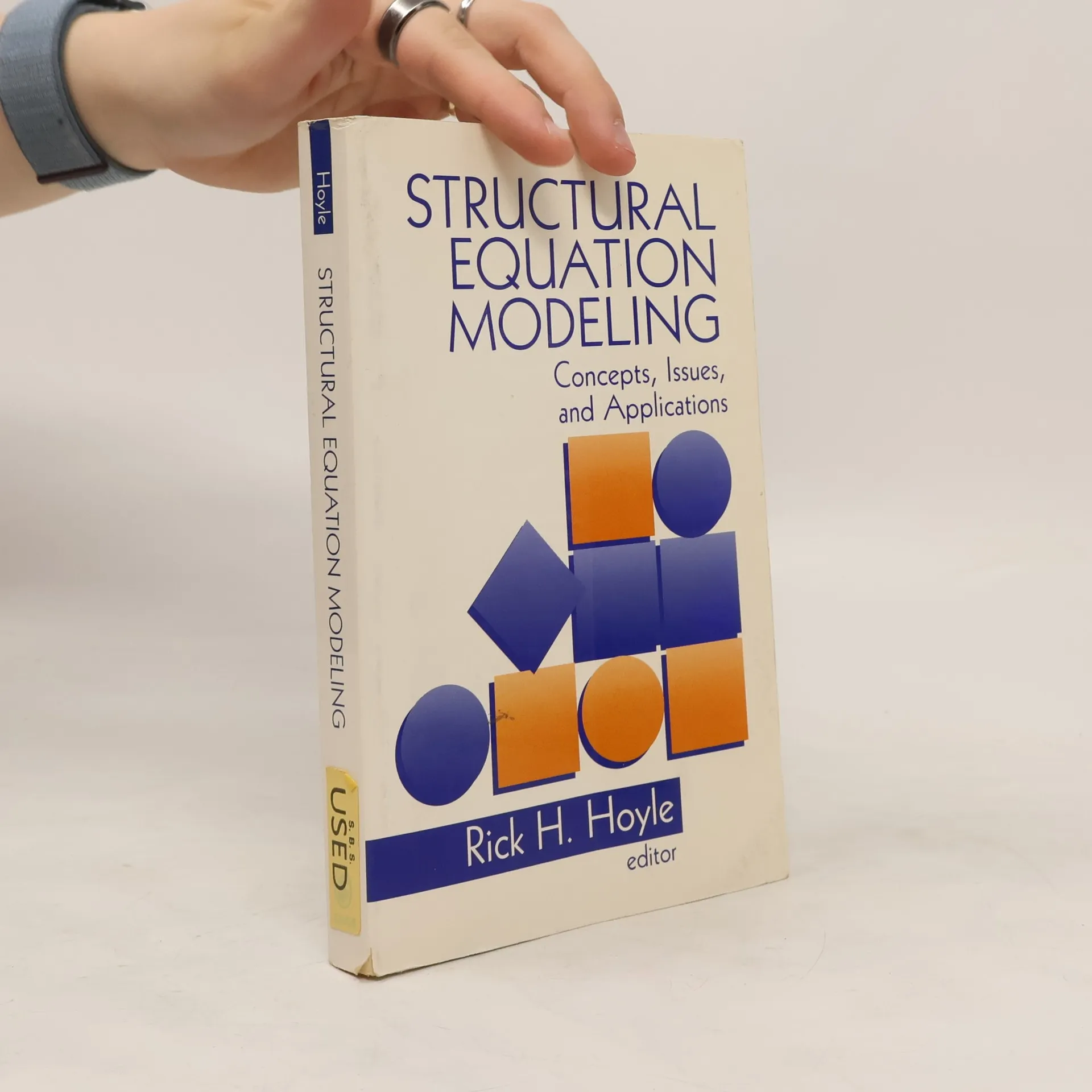
Structural Equation Modeling, Rick H. Hoyle
- Sprache

- Erscheinungsdatum
- 1995
- Einband
- (Paperback)
Hier könnte deine Bewertung stehen.
- Titel
- Structural Equation Modeling
- Untertitel
- Concepts, Issues, and Applications
- Sprache
- Englisch
- Autor*innen
- Rick H. Hoyle
- Verlag
- Sage
- Erscheinungsdatum
- 1995
- Einband
- Paperback
- Seitenzahl
- 316
- ISBN10
- 0803953186
- ISBN13
- 9780803953185
- Reihe
- Schlagwörter
- Universitätslehrbücher, Forschung, Statistik, Modellierung
- Bewertung
- 3,6 von 5 Sternen
- Beschreibung
- Practical and up-to-date, Structural Equation Modeling includes chapters on major aspects of the structural equation modeling approach to research design and data analysis. Written by internationally recognized leaders in structural equation modeling, this book targets graduate students and seasoned researchers in the social and behavioral sciences who wish to understand the basic concepts and issues associated with the structural equation modeling approach and applications to research problems. Though technically sound, the chapters are primarily nontechnical in content and stylemaking the volume an excellent introduction to the structural equation modeling approach for readers studied in traditional inferential statistics. Early chapters are devoted to fundamental concepts such as estimation, fit, assumptions, power, and inference. Later chapters address such practical issues as the use of computer programs for applying the approach to research questions in the social and behavioral sciences.