

Buchbewertung
Parameter
- 348 Seiten
- 13 Lesestunden
Mehr zum Buch
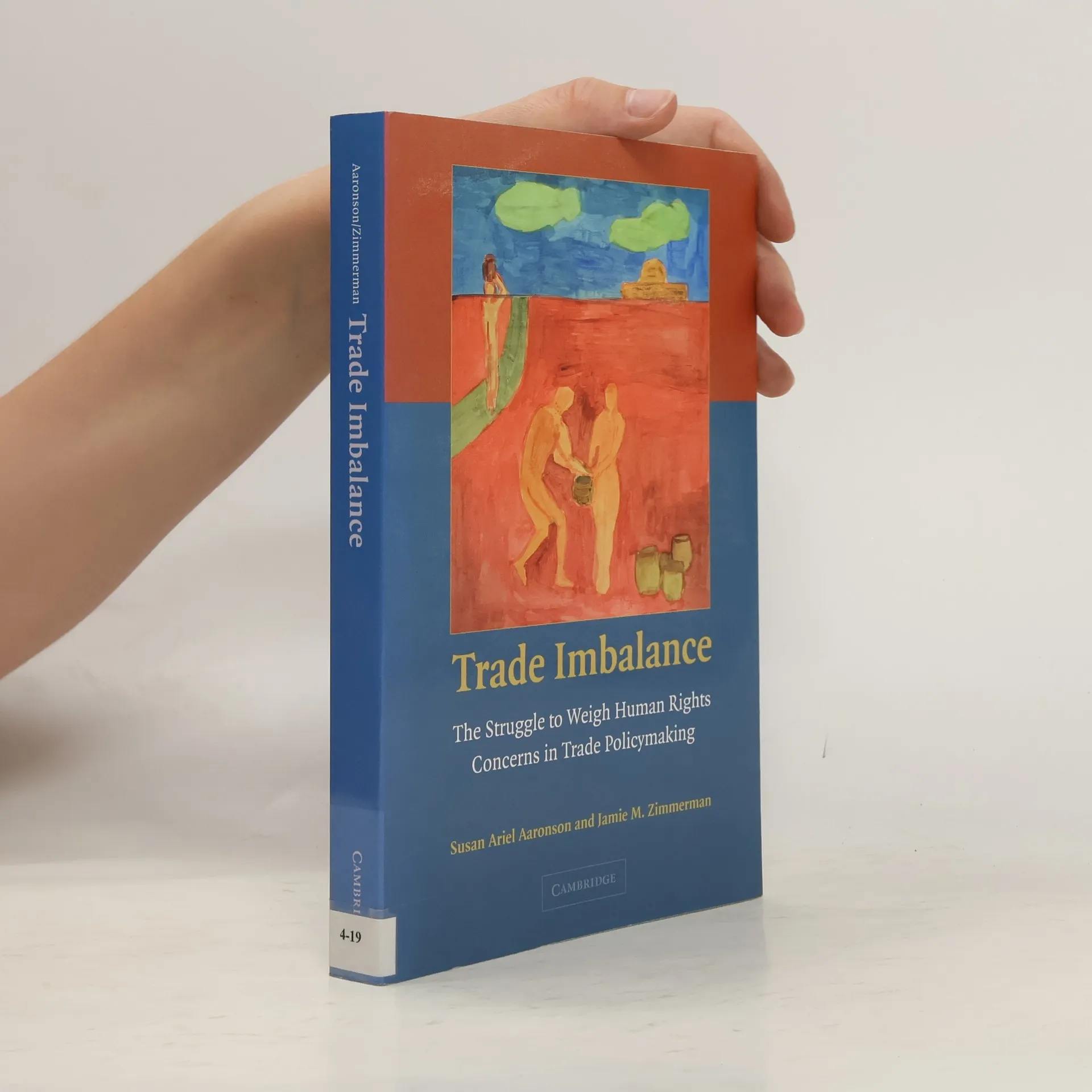
In many countries, citizens allege that trade policies undermine specific rights such as labor rights, the right to health, or the right to political participation. However, in some countries, policy makers use trade policies to promote human rights. Although scholars, policy makers, and activists have long debated this relationship, in truth we know very little about it. This book enters this murky territory with three goals. First, it aims to provide readers with greater insights into the relationship between human rights and trade. Second, it includes the first study of how South Africa, Brazil, the United States, and the European Union coordinate trade and human rights objectives and resolve conflicts. It also looks at how human rights issues are seeping into the WTO. Finally, it provides suggestions to policy makers for making their trade and human rights policies more coherent.
Buchkauf
Trade Imbalance, Susan Ariel Aaronson, Jamie M. Zimmerman
- Sprache

- Erscheinungsdatum
- 2007
- Einband
- (Paperback)
Hier könnte deine Bewertung stehen.
- Titel
- Trade Imbalance
- Untertitel
- The Struggle to Weigh Human Rights Concerns in Trade Policymaking
- Sprache
- Englisch
- Autor*innen
- Susan Ariel Aaronson, Jamie M. Zimmerman
- Erscheinungsdatum
- 2007
- Einband
- Paperback
- Seitenzahl
- 348
- ISBN10
- 0521694205
- ISBN13
- 9780521694209
- Reihe
- Schlagwörter
- Handel, Internationale Beziehungen, Menschenrechte
- Bewertung
- 4 von 5 Sternen
- Beschreibung
- In many countries, citizens allege that trade policies undermine specific rights such as labor rights, the right to health, or the right to political participation. However, in some countries, policy makers use trade policies to promote human rights. Although scholars, policy makers, and activists have long debated this relationship, in truth we know very little about it. This book enters this murky territory with three goals. First, it aims to provide readers with greater insights into the relationship between human rights and trade. Second, it includes the first study of how South Africa, Brazil, the United States, and the European Union coordinate trade and human rights objectives and resolve conflicts. It also looks at how human rights issues are seeping into the WTO. Finally, it provides suggestions to policy makers for making their trade and human rights policies more coherent.