

Parameter
- 307 Seiten
- 11 Lesestunden
Mehr zum Buch
Marcel Duchamp is a pivotal figure in twentieth-century art, often noted for the contradictions and discontinuities in his career. Jerrold Seigel presents a fresh perspective, revealing interconnected themes that unify Duchamp's work with his life. Central to this exploration is a reinterpretation of his famous "readymades," particularly the urinal "Fountain" and the altered Mona Lisa, which, while playful, conceal deeper meanings linked to Duchamp's other works, especially the "Large Glass," which Seigel examines in detail. This analysis frames Duchamp's career as a complex puzzle, with underlying modernist themes of isolation, desire, and the dissolution of self. These themes were influenced by Duchamp's social and cultural surroundings, as well as his family experiences, shaping the patterns of his work and relationships. Duchamp emerges as a coherent personality whose eccentricities reflect vital aspects of modern experience. As a mythic figure in contemporary culture, his story offers valuable lessons, prompting us to reconsider the nature and meaning of art. Seigel challenges us to engage with the questions Duchamp raised and the responses from his successors.
Buchkauf
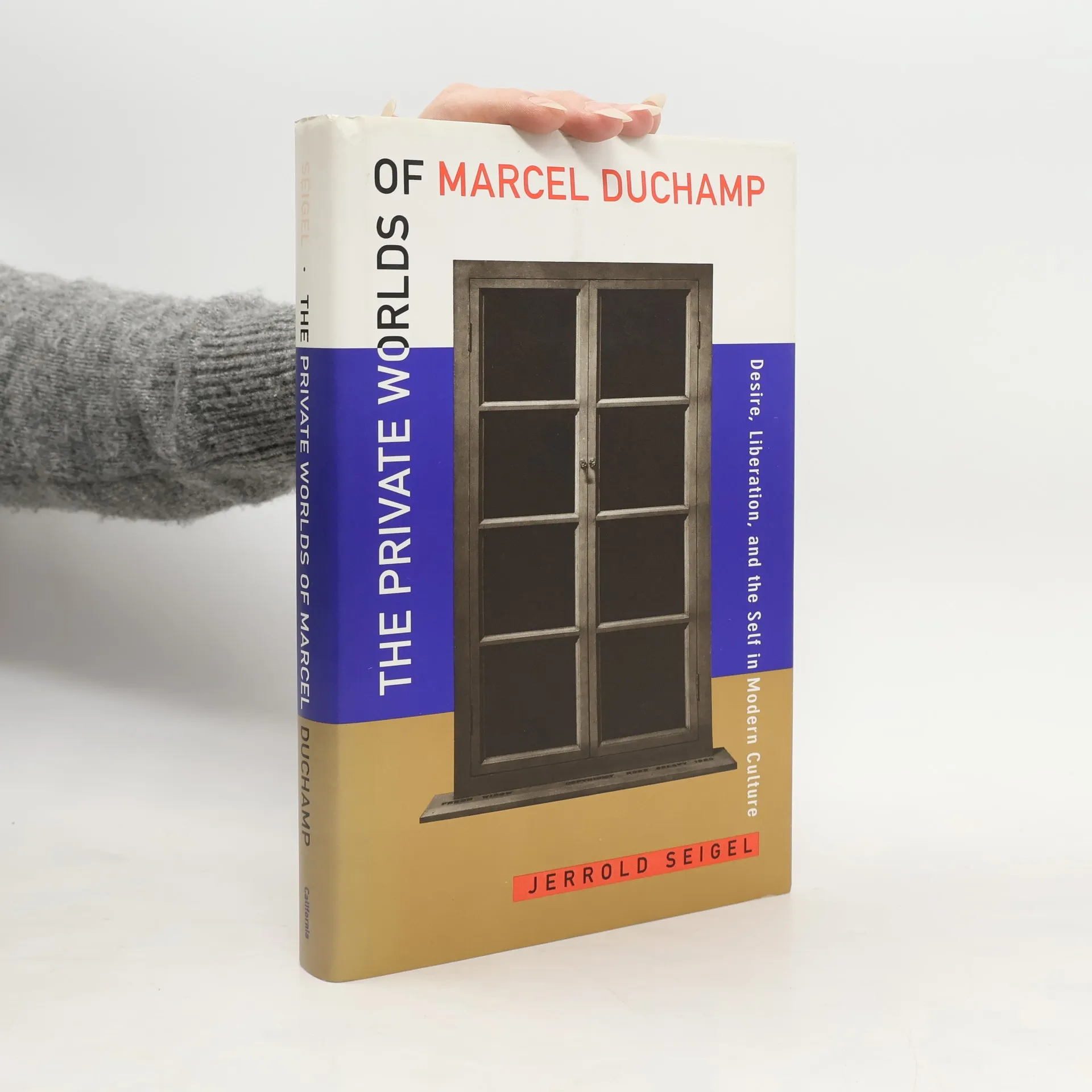
The Private Worlds of Marcel Duchamp, Jerrold E. Seigel
- Sprache

- Erscheinungsdatum
- 1995
- Einband
- (Hardcover)
Keiner hat bisher bewertet.
- Titel
- The Private Worlds of Marcel Duchamp
- Untertitel
- Desire, Liberation, and the Self in Modern Culture
- Sprache
- Englisch
- Autor*innen
- Jerrold E. Seigel
- Erscheinungsdatum
- 1995
- Einband
- Hardcover
- Seitenzahl
- 307
- ISBN10
- 0520200381
- ISBN13
- 9780520200388
- Reihe
- Kategorien
- Schlagwörter
- Historisches Thema, Kunst, USA, Frankreich, Amerikanische Literatur, Kultur und Gesellschaft, Kunstgeschichte, Westeuropa, Popkultur, Surrealismus
- Beschreibung
- Marcel Duchamp is a pivotal figure in twentieth-century art, often noted for the contradictions and discontinuities in his career. Jerrold Seigel presents a fresh perspective, revealing interconnected themes that unify Duchamp's work with his life. Central to this exploration is a reinterpretation of his famous "readymades," particularly the urinal "Fountain" and the altered Mona Lisa, which, while playful, conceal deeper meanings linked to Duchamp's other works, especially the "Large Glass," which Seigel examines in detail. This analysis frames Duchamp's career as a complex puzzle, with underlying modernist themes of isolation, desire, and the dissolution of self. These themes were influenced by Duchamp's social and cultural surroundings, as well as his family experiences, shaping the patterns of his work and relationships. Duchamp emerges as a coherent personality whose eccentricities reflect vital aspects of modern experience. As a mythic figure in contemporary culture, his story offers valuable lessons, prompting us to reconsider the nature and meaning of art. Seigel challenges us to engage with the questions Duchamp raised and the responses from his successors.