





Parameter
- 558 Seiten
- 20 Lesestunden
Mehr zum Buch
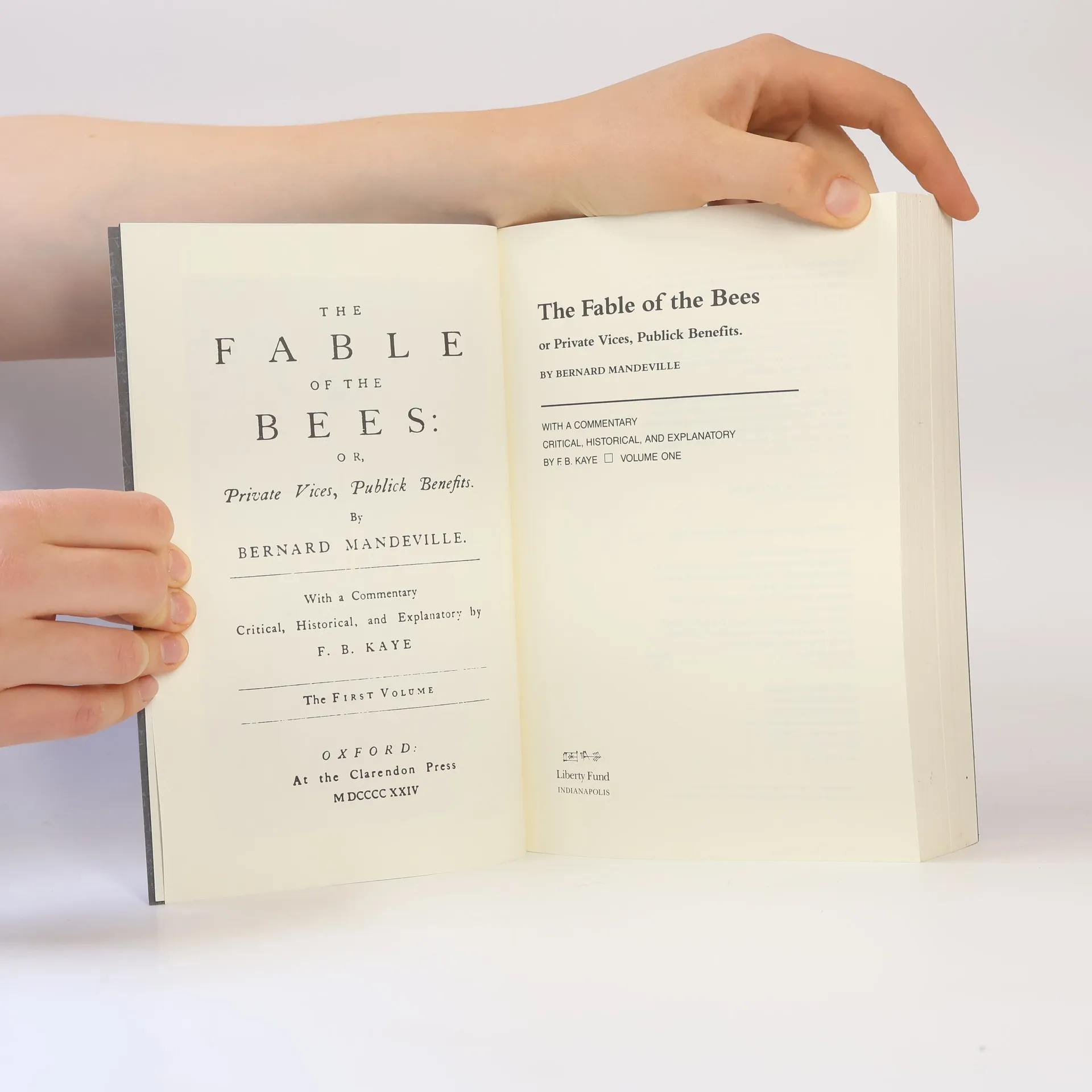
Mandeville is the wittiest and shrewdest philosopher ever to make a significant impact upon economics. He anticipated Oscar Wilde in choosing his enemies with great care, and within his own century they included David Hume, Adam Smith, and Francis Hutcheson. He could afford even such enemies because his friends and admirers have been legion. — George J. Stigler, University of Chicago It used to be that everyone read the "notorious" Bernard Mandeville (1670–1733). He was a great satirist and came to have a profound impact on economics, ethics, and social philosophy. The Fable begins with a poem and continues with a number of essays and dialogues. It is all tied together by the startling and original idea that "private vices" (self-interest) lead to "publick benefits" (the development and operation of society). From that simple beginning, Mandeville saw that orderly social structures (such as law, language, the market, and even the growth of knowledge) were a spontaneous growth developing out of individual human actions.
Buchkauf
F. B. Kaye Edition - 1: The Fable of the Bees, Bernard Mandeville, F. B. Kaye
- Sprache

- Erscheinungsdatum
- 1924
- product-detail.submit-box.info.binding
- (Paperback),
- Buchzustand
- Beschädigt
- Preis
- € 7,79
Keiner hat bisher bewertet.
- Untertitel
- Or Private Vices, Publick Benefits
- Sprache
- Englisch
- Autor*innen
- Bernard Mandeville, F. B. Kaye
- Verlag
- Liberty Fund Inc.
- Erscheinungsdatum
- 1924
- Einband
- Paperback
- Seitenzahl
- 558
- ISBN10
- 0865970769
- ISBN13
- 9780865970762
- Reihe
- Schlagwörter
- Sachbücher, Sozialwissenschaften, Handel, Wirtschaft & Management, Philosophisches Thema, Rechtsthematik, Philosophie, Ökonomie, Ethik
- Beschreibung
- Mandeville is the wittiest and shrewdest philosopher ever to make a significant impact upon economics. He anticipated Oscar Wilde in choosing his enemies with great care, and within his own century they included David Hume, Adam Smith, and Francis Hutcheson. He could afford even such enemies because his friends and admirers have been legion. — George J. Stigler, University of Chicago It used to be that everyone read the "notorious" Bernard Mandeville (1670–1733). He was a great satirist and came to have a profound impact on economics, ethics, and social philosophy. The Fable begins with a poem and continues with a number of essays and dialogues. It is all tied together by the startling and original idea that "private vices" (self-interest) lead to "publick benefits" (the development and operation of society). From that simple beginning, Mandeville saw that orderly social structures (such as law, language, the market, and even the growth of knowledge) were a spontaneous growth developing out of individual human actions.