

Untersucht die soziale und wirtschaftliche Rolle der deutschen Armee in den inneren Angelegenheiten des Landes während des Ersten Weltkriegs.
Das Erbe des Großen Krieges Reihe
Diese Reihe bietet eine umfassende Auseinandersetzung mit dem Großen Krieg, indem sie originäre wissenschaftliche Arbeiten neben wichtigen Memoiren und Augenzeugenberichten präsentiert. Sie zielt darauf ab, den Lesern eine breite Palette von Perspektiven auf diese entscheidende historische Periode zu vermitteln. Viele dieser essentiellen europäischen Werke werden erstmals auf Englisch zugänglich gemacht, um das globale Verständnis des Konflikts zu vertiefen.

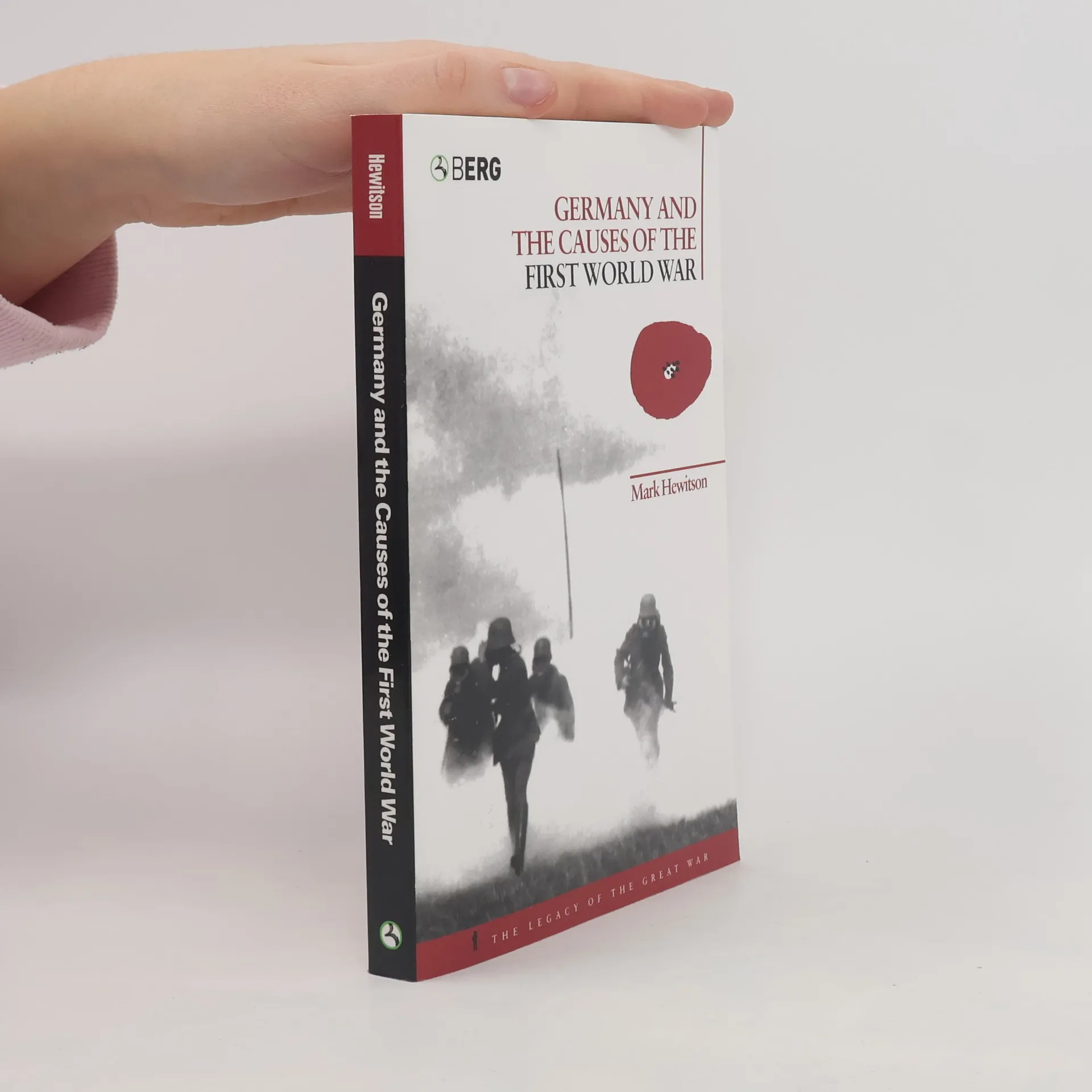

Legacy of the Great War: Germany and the Causes of the First World War
- 280 Seiten
- 10 Lesestunden
How can we understand the causes of World War I and Germany's role in it? This book prompts a re-evaluation of the events leading to the global conflict in 1914. Recent historical interpretations suggest that German leaders acted defensively in response to a deteriorating military and diplomatic situation. However, this work challenges that view, emphasizing that the German Chancellor, Foreign Office, and Great General Staff believed in their ability to win a continental war. This confidence stemmed from an assumption of French decline and Russian weakness prior to the war. Consequently, German policymakers pursued aggressive strategies, risking conflict during critical moments in the early 20th century. The author examines how enemy states were stereotyped, the portrayal of war during peacetime, and the evolving perceptions of international relations. He highlights the influence of ruling elites, political parties, big business, and the press, arguing that significant shifts in German foreign policy occurred in the decade leading up to the war. By the July crisis of 1914, perceptions had shifted, with Russia emerging as the primary adversary. Under these new circumstances, German leaders could adopt a strategy of brinkmanship, using war as a policy tool to its fullest extent.
The Legacy of the Great War: Men at War 1914-1918
National Sentiment and Trench Journalism in France During the First World War
- 207 Seiten
- 8 Lesestunden
This study is based on the extraordinarily rich and varied range of trench journalism that brings to life - in the vivid language of the soldiers themselves - not only their suffering but also their vulgarity, sentimentality and idealism.