

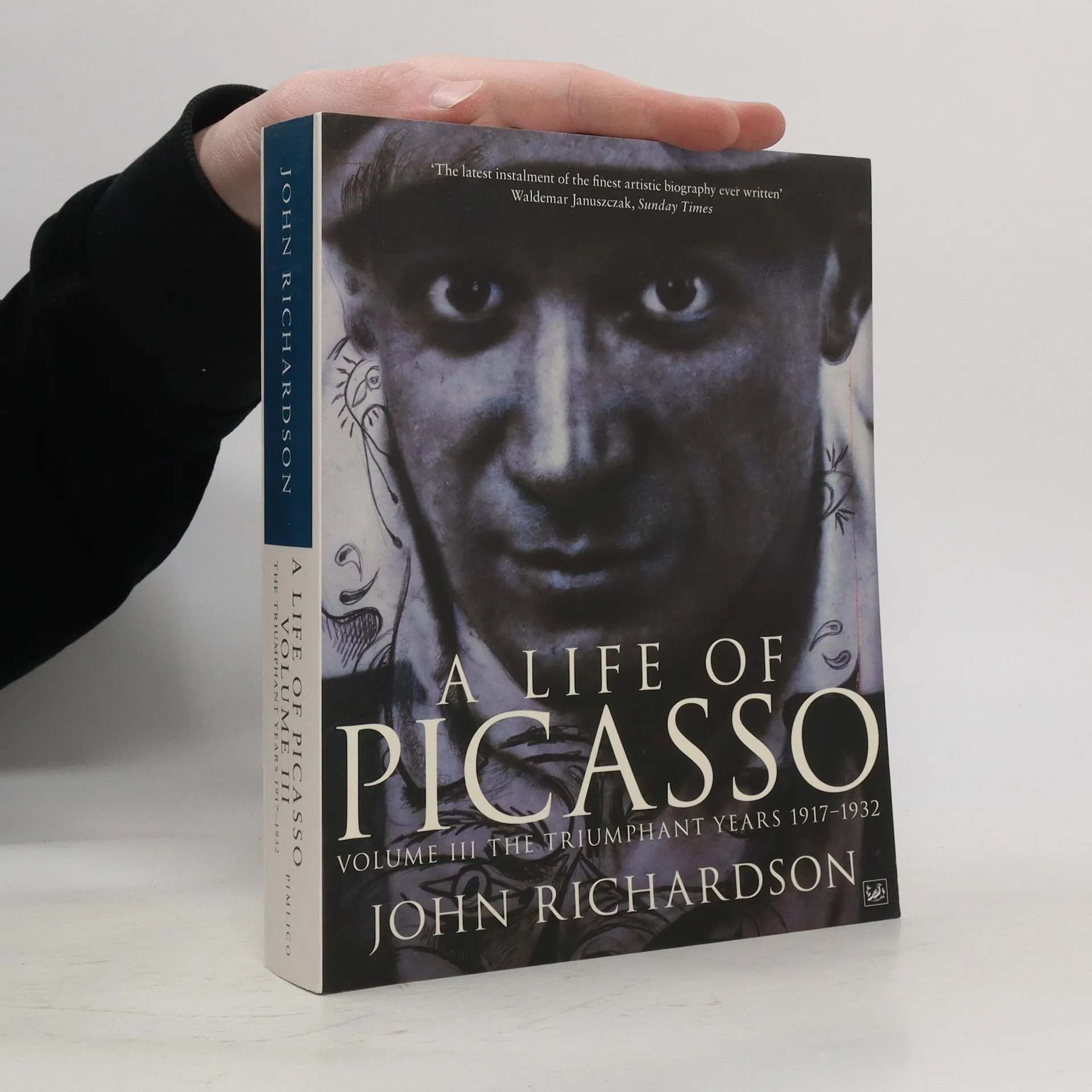
From 1950 to 1962, John Richardson lived near Picasso in France and was a friend of the artist. After Picasso's death, his widow Jacqueline collaborated in the preparation of this work, giving Richardson access to Picasso's studio and papers.
Picasso: Sein Leben Reihe
Diese umfassende Biografie taucht tief in das Leben und Werk eines der einflussreichsten Künstler des 20. Jahrhunderts ein. Mit einem beispiellosen Zugang zum persönlichen Leben, Atelier und den Unterlagen des Künstlers bietet der Autor eine intime und detaillierte Erkundung seiner kreativen Reise. Die Reihe verwebt aufschlussreiche Kunstanalysen mit persönlichen Anekdoten und präsentiert so ein facettenreiches Porträt des Mannes hinter den ikonischen Meisterwerken. Ein Muss für jeden, der sich für Kunstgeschichte, Kreativität und die fesselnde Geschichte künstlerischen Genies interessiert.



Empfohlene Lesereihenfolge
"My work is like a diary," Picasso once told John Richardson, who lived near the artist in Provence for a decade and became a trusted friend. This relationship allowed Richardson to observe and document how Picasso's art mirrored his life. With continued access to the artist's studios and archives through Picasso's widow, Richardson is uniquely positioned to write an insightful biography that transcends sensationalism and delves into the traumas and obsessions fueling Picasso's genius. He adeptly navigates the contradictions surrounding the artist, highlighting themes of ambivalence. Richardson reveals how Picasso's courage and terror, misogyny and tenderness, generosity and thrift, superstition and skepticism, cynicism and sentiment are reflected in his work's conflicts and paradoxes. His keen eye for the complexities of Picasso's art, combined with extensive cultural knowledge, illustrates how the artist drew from the past and the imaginations of his poet friends to forge a revolutionary synthesis. This first volume of Richardson's detailed four-volume study covers Picasso's life up to age twenty-five, detailing his struggle against his father's artistic legacy, his early successes in Barcelona and Paris, and the subsequent despair. It culminates in Picasso's realization of his role as the modern movement's messiah, supported by around nine hundred illustrations that vividly trace his artistic evolution.
A Life of Picasso
- 512 Seiten
- 18 Lesestunden
The first volume of this biography emphasized Picasso's Spanish roots from Malaga to Barcelona. This second volume covers ten pivotal years of Picasso's life. It describes his relationship with Cocteau, his affair with Fernande Olivier, and the influence of women on his art.
The author introduces material on the artist's early training in religious art, and establishes his passion for Barcelona and Catalan "modernisme". There are also portraits of Apollinaire, Max Jacob and Gertrude Stein who made up "The Picasso Gang". The book won the 1991 Whitbread biography award.