



Perspectives on Conservation; Essays on America's Natural Resources
- 274 Seiten
- 10 Lesestunden
John Kenneth Galbraith war ein prominenter kanadisch-amerikanischer Ökonom, der als führende Stimme des amerikanischen Liberalismus und demokratischen Sozialismus des 20. Jahrhunderts galt. Seine Schriften boten scharfe Einblicke in wirtschaftliche Angelegenheiten, die durch einen unverwechselbaren Stil geprägt waren und seine Bücher zu Bestsellern machten. Als produktiver Autor erforschten seine Essays und Bücher die Dynamik des modernen Kapitalismus und wohlhabender Gesellschaften. Galbraith's Werk informiert und beeinflusst weiterhin Diskussionen über wirtschaftliche Gerechtigkeit und gesellschaftlichen Fortschritt.


This work has been selected by scholars as being culturally important and is part of the knowledge base of civilization as we know it. This work is in the public domain in the United States of America, and possibly other nations. Within the United States, you may freely copy and distribute this work, as no entity (individual or corporate) has a copyright on the body of the work. Scholars believe, and we concur, that this work is important enough to be preserved, reproduced, and made generally available to the public. To ensure a quality reading experience, this work has been proofread and republished using a format that seamlessly blends the original graphical elements with text in an easy-to-read typeface. We appreciate your support of the preservation process, and thank you for being an important part of keeping this knowledge alive and relevant.
Die Psychologie hinter vier Jahrhunderten Gier und Panik an der Börse
Eigentlich sind wir alle ziemlich schlau. Nur das mit dem Geld klappt nicht so recht … und manchmal geht es sogar richtig schief. Doch warum nur? Mit „Die Geschichte der Spekulationsblasen“ macht sich John Kenneth Galbraith, einer der ganz großen Ökonomen des 20. Jahrhunderts, auf die Suche nach der Antwort. Und er sucht an den richtigen Stellen – den Finanzkatastrophen der letzten vier Jahrhunderte: der Tulpenmanie des 17. Jahrhunderts, der Südseeblase im 18. Jahrhundert, den Hochrisiko-Anleihen im 20. Jahrhundert. Mit Geist und Witz erklärt Galbraith die psychologischen Mechanismen hinter diesen Blasen … damit der Leser sie durchschaut und sich dagegen wappnen kann. Dieses Meisterwerk zum Thema Finanzpsychologie war vergriffen und wird nun im Börsenbuchverlag wieder aufgelegt.

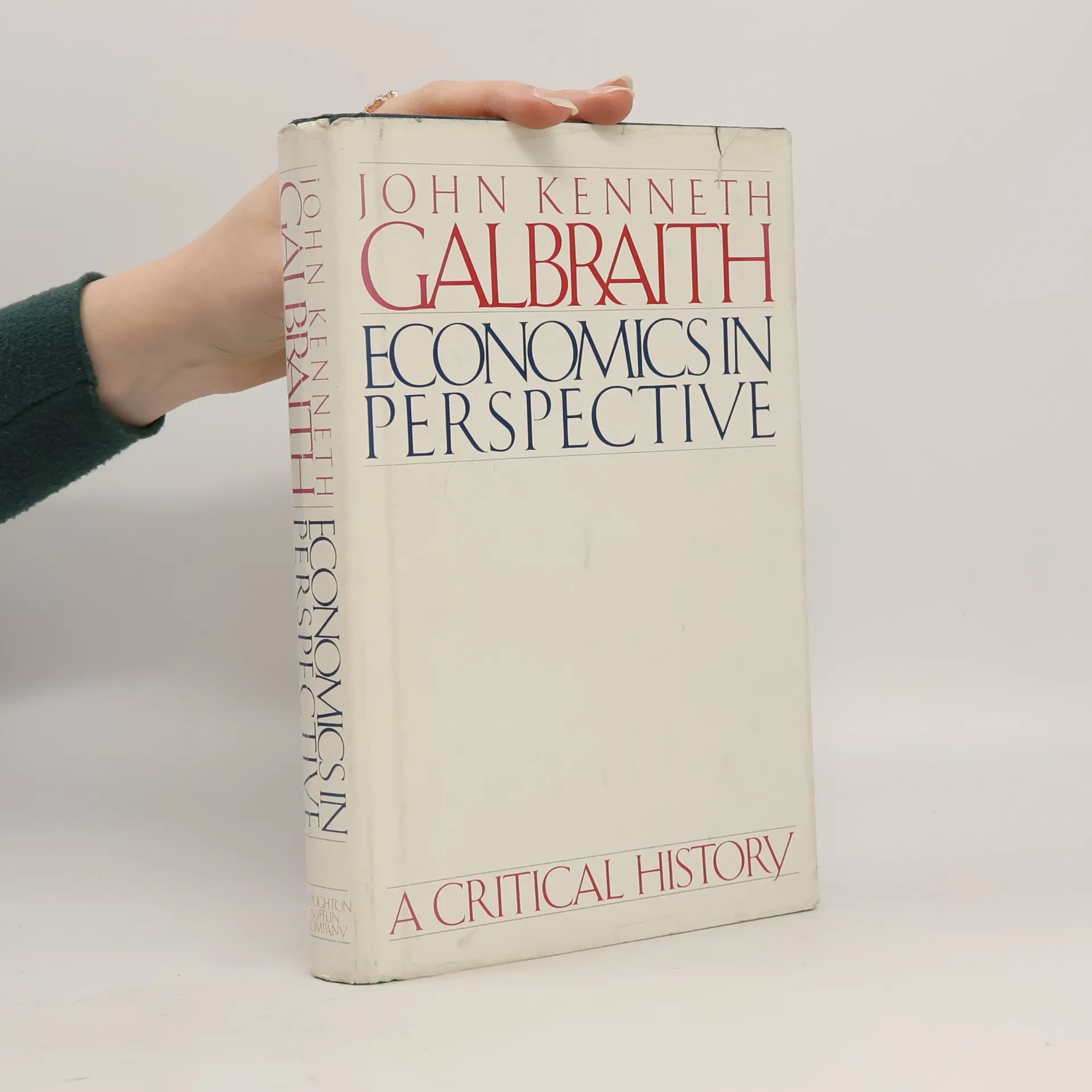
In Economics in Perspective, renowned economist John Kenneth Galbraith presents a compelling and accessible history of economic ideas, from Aristotle through the twentieth century. Examining theories of the past that have a continuing modern resonance, he shows that economics is not a timeless, objective science, but is continually evolving as it is shaped by specific times and places. From Adam Smith's theories during the Industrial Revolution to those of John Maynard Keynes after the Great Depression, Galbraith demonstrates that if economic ideas are to remain relevant, they must continually adapt to the world they inhabit. A lively examination of economic thought in historical context, Economics in Perspective shows how the field has evolved across the centuries.
The world has become increasingly separated into the haves and have-nots. In The Culture of Contentment, renowned economist John Kenneth Galbraith shows how a contented class—not the privileged few but the socially and economically advantaged majority—defend their comfortable status at a cost. Middle-class voting against regulation and increased taxation that would remedy pressing social ills has created a culture of immediate gratification, leading to complacency and hampering long-term progress. Only economic disaster, military action, or the eruption of an angry underclass seem capable of changing the status quo. A groundbreaking critique, The Culture of Contentment shows how the complacent majority captures the political process and determines economic policy.
El libro traza con ingenio y claridad los episodios más significativos de su historia, desde sus orígenes hasta el nacimiento de la banca y las primeras fiebres especulativas en Europa y Estados Unidos. Asimismo, aborda acontecimientos de suma relevancia como la creación de la Reserva Federal y otros bancos centrales, el crash de 1929, el advenimiento de la economía keynesiana, los dilemas financieros de la época contemporánea y no pocas de las locuras que han marcado el devenir de los asuntos monetarios. Según palabras del propio autor, “hay muchas cosas fascinantes en la historia del dinero. Y hay muchas más que ilustran con elocuencia el comportamiento y la locura de los seres humanos”.
Focusing on the concept of "Countervailing Power," this economics book explores its significance in addressing market failures. Galbraith examines how firms, unions, and government can collectively influence prices and wage rates, emphasizing that such power is essential for protecting the public and vulnerable individuals from exploitation. He argues that without this balance, unchecked private decisions could lead to detrimental consequences, making a case for the necessity of state intervention when countervailing power is insufficient.
Die Marktwirtschaft, wie sie an den Universitäten gelehrt wird, existiert nur im Lehrbuch. Der Hinweis auf den Unterschied zwischen reiner Lehre und der Wirklichkeit ist zwar nicht neu, doch populär. Auch der Ökonom und ehemalige Kennedy-Berater John K. Galbraith haut wortgewaltig in diese Kerbe, doch sprühen keine Funken. Seine Erkenntnisse sind, nicht zuletzt seit Enron und WorldCom, inzwischen zu bekannt, um zu überraschen: Aktionäre haben kaum Kontrolle über Manager, ganze Branchen leben vom "Rent-seeking" und damit von der Ausbeutung des Steuerzahlers, große Unternehmen sind genauso bürokratieanfällig wie staatliche Behörden, und der Konsument ist ein durch Werbung manipuliertes Wesen und somit kein freies Individuum. Mittlerweile gibt es auch in der ökonomischen Theorie Ansätze, diese Entwicklungen zu erklären und Korrekturmechanismen zu analysieren. Galbraith fordert schlicht mehr staatliche Kontrolle für die Konzerne; auf die Schwierigkeiten der Regulierungsmodelle in der Praxis geht er nicht ein. getAbstract.com empfiehlt diese streitbare Schrift allen Lesern, die sich an der kritischen Debatte um Manager und Konzernmacht beteiligen möchten