

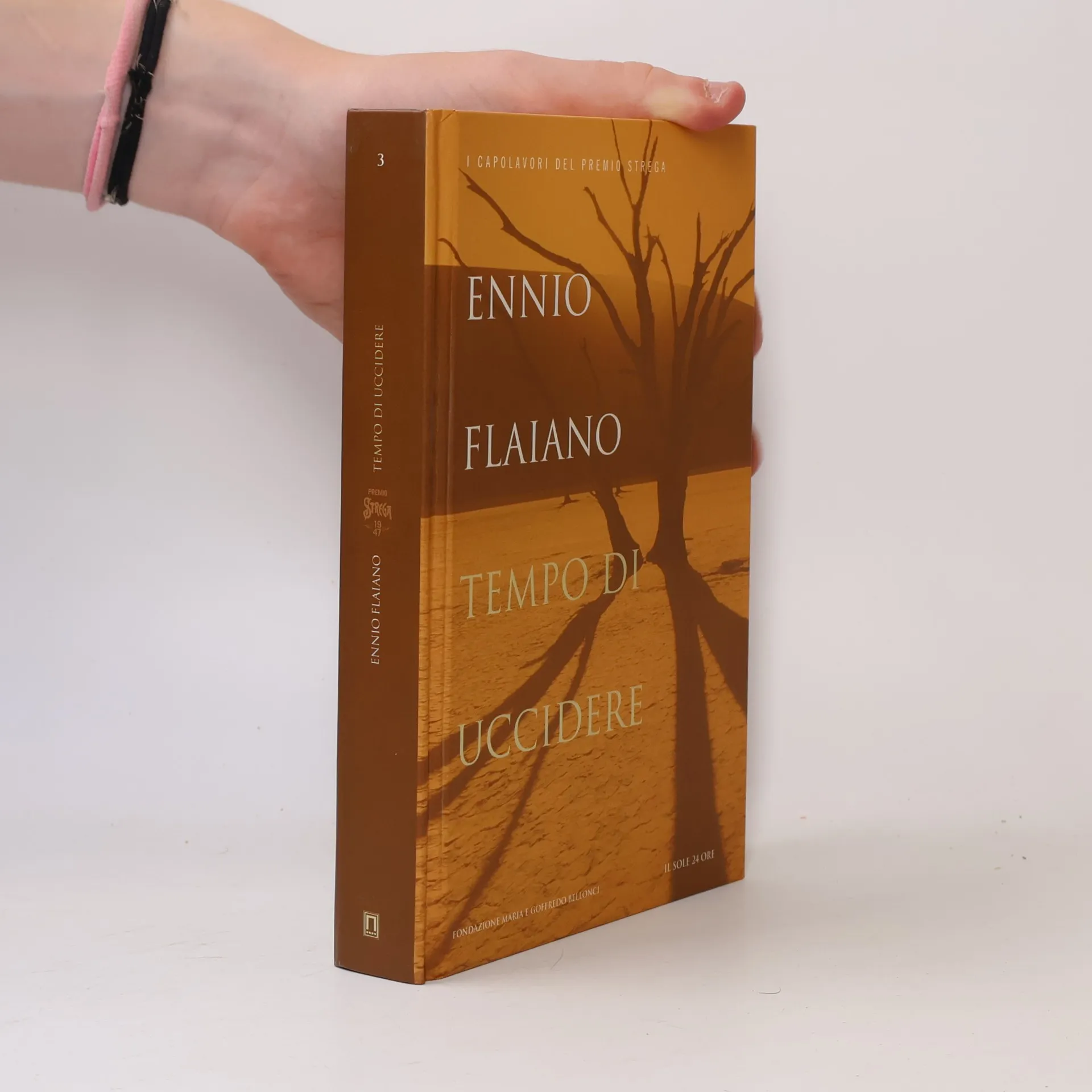
Wir senden dir das abgebildete Buch
Mehr zum Buch
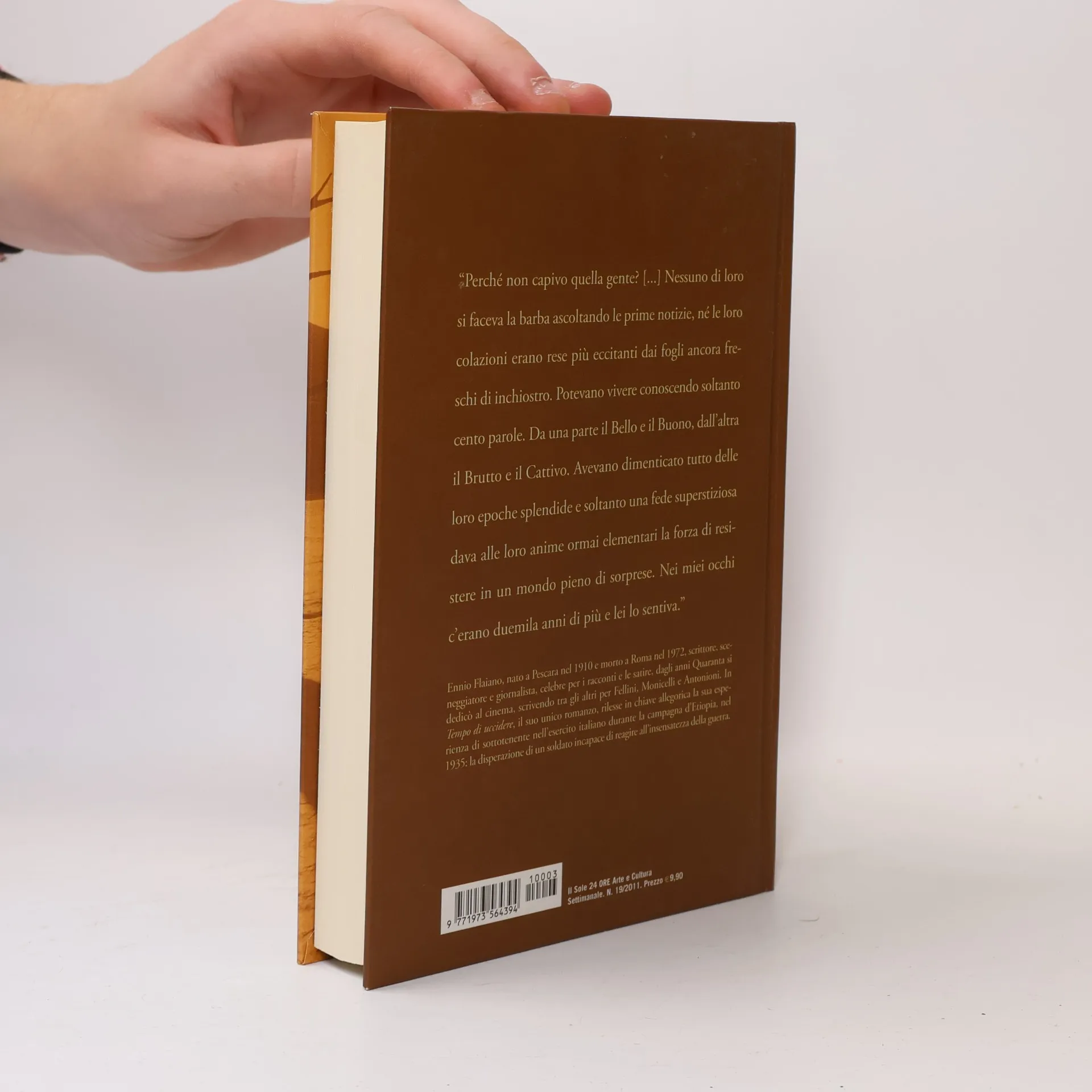
Sullo sfondo della guerra di conquista dell'Etiopia (1935-1936), il dramma intimo di un tenente, colpevole dell'uccisione di una ragazza indigena. Un eroe solitario, un uomo senza qualità che si lascia vivere tra amori, omicidi, stregonerie e lo spettro della lebbra. "Tempo di uccidere" coglie originalmente un clima morale e mentale, offrendo una rappresentazione profana, laica, ironica e amara dell'Africa e della vita militare. Tutto secondo la penna acre e tragica di un moralista che ha saputo cogliere gli aspetti più paradossali della storia e della realtà contemporanea.




Buchkauf
Tempo di Uccidere, Ennio Flaiano
- Sprache

- Erscheinungsdatum
- 2008
- Einband
- (Hardcover),
- Buchzustand
- Gebraucht - Gut
- Preis
- € 7,39
Hier könnte deine Bewertung stehen.
- Titel
- Tempo di Uccidere
- Sprache
- Italienisch
- Autor*innen
- Ennio Flaiano
- Erscheinungsdatum
- 2008
- Einband
- Hardcover
- Reihe
- Kategorien
- Schlagwörter
- Kriegsliteratur, Italien, Südeuropa, Italienische Literatur, Faschismus, Äthiopien, Sünden, Lepra
- Erstveröffentlichung
- 1947
- Originaltitel
- Tempo di uccidere
- Bewertung
- 3,75 von 5 Sternen
- Beschreibung
- Sullo sfondo della guerra di conquista dell'Etiopia (1935-1936), il dramma intimo di un tenente, colpevole dell'uccisione di una ragazza indigena. Un eroe solitario, un uomo senza qualità che si lascia vivere tra amori, omicidi, stregonerie e lo spettro della lebbra. "Tempo di uccidere" coglie originalmente un clima morale e mentale, offrendo una rappresentazione profana, laica, ironica e amara dell'Africa e della vita militare. Tutto secondo la penna acre e tragica di un moralista che ha saputo cogliere gli aspetti più paradossali della storia e della realtà contemporanea.