





Top Zustand!
Ausverkauft, aber heiß begehrt!
Mehr zum Buch
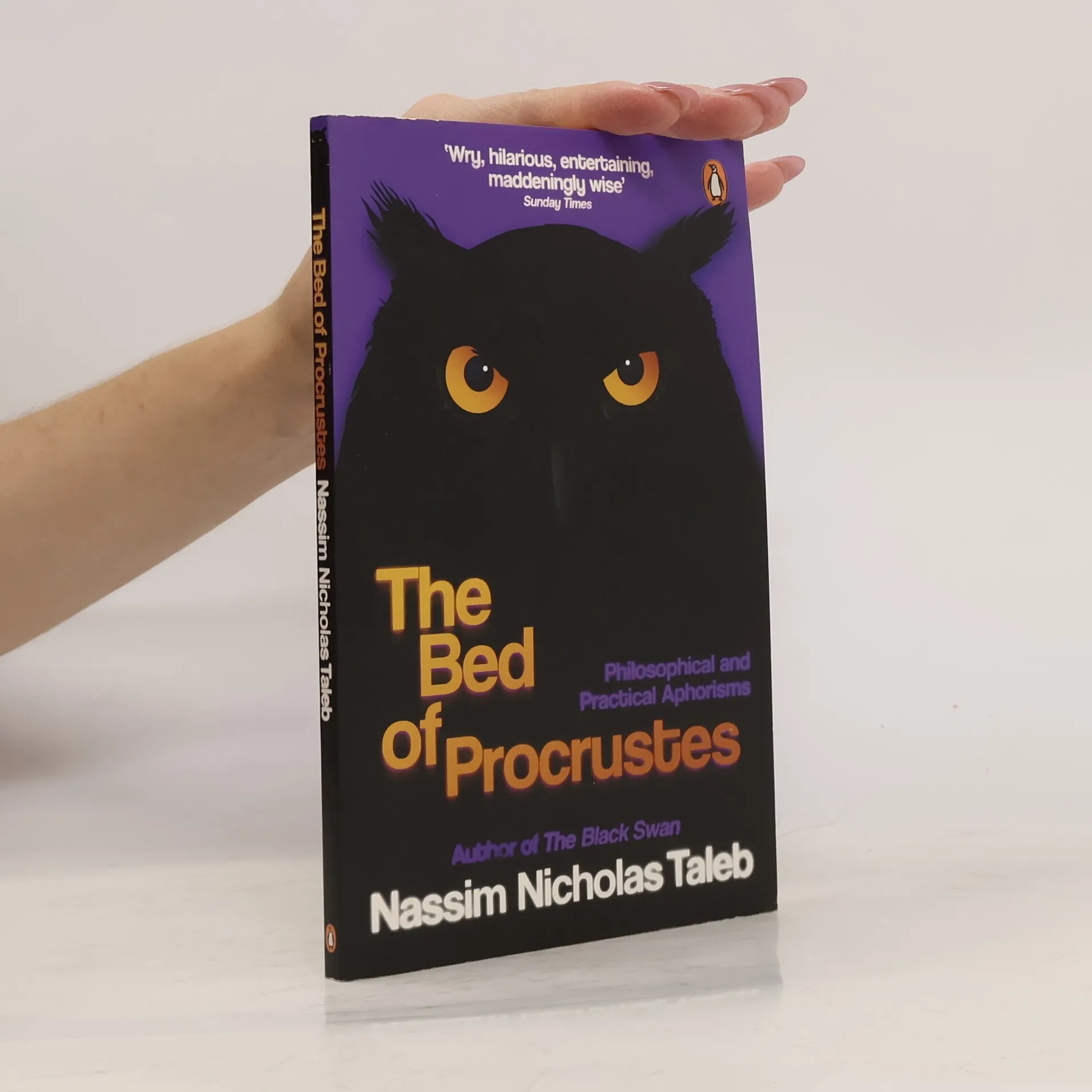
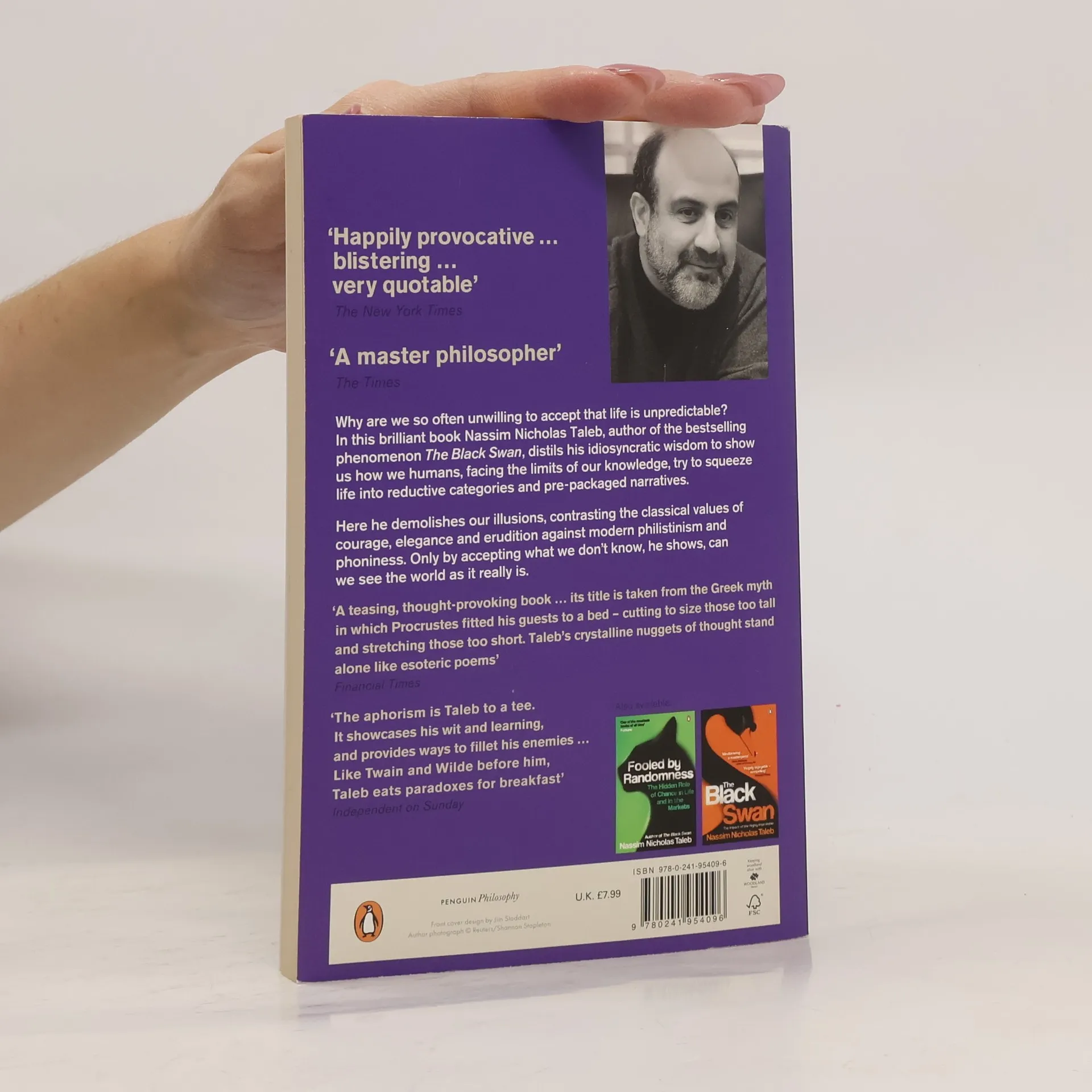
In this profound and playful book, Nassim Nicholas Taleb presents his ideas about life in the form of aphorisms, the world’s earliest - and most memorable - literary form. Procrustes was a character from Greek mythology who abducted travellers and invited them to spend the night in a special bed, which they had to fit to perfection. They never did. Those who were too tall had their legs chopped off; those who were too short were stretched. Every aphorism here is about a Procrustean bed of sorts – we humans, facing the limits of our knowledge, the unseen and the unknown, resolve the tension by squeezing life and the world into crisp commoditized ideas, reductive categories, specific vocabularies and pre-packaged narratives. Only by embracing the unexpected – and accepting what we don’t know – can we see the world as it really is.
Buchkauf
The Bed of Procrustes, Nassim Nicholas Taleb
- Sprache

- Erscheinungsdatum
- 2011
- Einband
- (Paperback)
Wir benachrichtigen dich per E-Mail.
- Sprache
- Englisch
- Autor*innen
- Nassim Nicholas Taleb
- Verlag
- Penguin Books
- Erscheinungsdatum
- 2011
- Einband
- Paperback
- Seitenzahl
- 128
- ISBN10
- 0241954096
- ISBN13
- 9780241954096
- Reihe
- Die Inkerto-Reihe
- Schlagwörter
- Sachbücher, Sozialwissenschaften, Wahre Geschichten, Handel, Wirtschaft & Management, Psychologische Thematik, Philosophisches Thema, Philosophie, Psychologie, Wissenschaft, Ökonomie, Meinungsjournalismus, Finanzen, Aphorismen
- Erstveröffentlichung
- 2010
- Originaltitel
- The Bed of Procrustes: Philosophical and Practical Aphorisms
- Bewertung
- 3,75 von 5 Sternen
- Beschreibung
- In this profound and playful book, Nassim Nicholas Taleb presents his ideas about life in the form of aphorisms, the world’s earliest - and most memorable - literary form. Procrustes was a character from Greek mythology who abducted travellers and invited them to spend the night in a special bed, which they had to fit to perfection. They never did. Those who were too tall had their legs chopped off; those who were too short were stretched. Every aphorism here is about a Procrustean bed of sorts – we humans, facing the limits of our knowledge, the unseen and the unknown, resolve the tension by squeezing life and the world into crisp commoditized ideas, reductive categories, specific vocabularies and pre-packaged narratives. Only by embracing the unexpected – and accepting what we don’t know – can we see the world as it really is.