

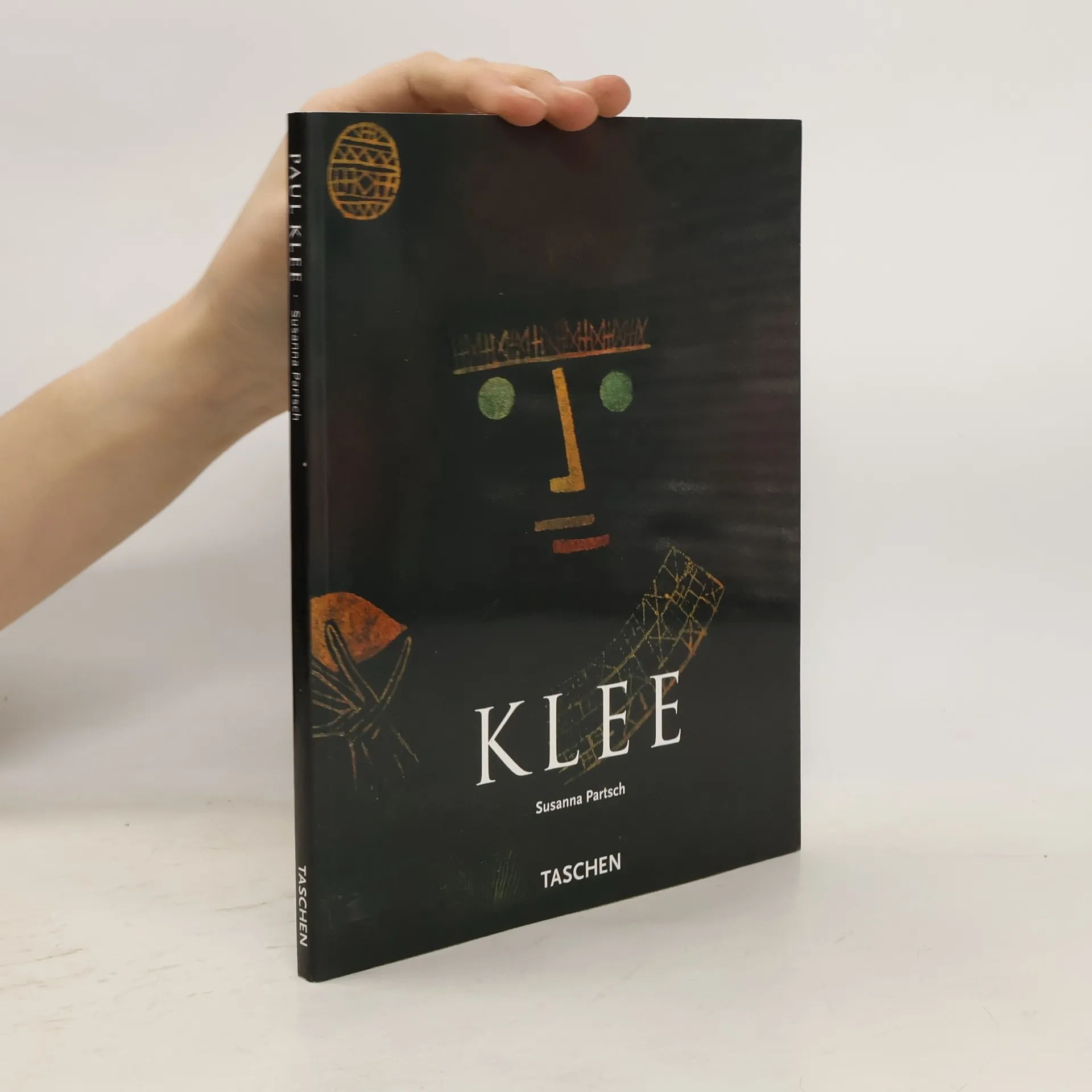


Mehr zum Buch
Designated as "degenerate" by the Nazis, Paul Klee (1879-1940) is today considered one of the most important artists of the 20th century. His works stand out for the variety in their forms of artistic expression. His Tunisian water-colours depicting landscape, architecture and, above all, the North African light of this Mediterranean land constitute the true beginning of Klee's painting career. Although these paintings still fall under the heading of "objective", they already exhibit indications of his tendency toward abstraction and a language of forms. Geometrical figures and hieroglyphic elements characterize the majority of these works, which for this reason seem reminiscent of "naive" and playful children's painting. In reality, however, his paintings have their roots in theoretical considerations, their recurrent symbols conveying personal and at times political content.




Buchkauf
Paul Klee, Susanna Partsch
- Sprache

- Erscheinungsdatum
- 2003
- product-detail.submit-box.info.binding
- (Paperback)
Hier könnte deine Bewertung stehen.
- Titel
- Paul Klee
- Sprache
- Englisch
- Autor*innen
- Susanna Partsch
- Verlag
- Taschen
- Erscheinungsdatum
- 2003
- Einband
- Paperback
- Seitenzahl
- 96
- ISBN10
- 3822859818
- ISBN13
- 9783822859810
- Reihe
- Schlagwörter
- Sachbücher, Kunst & Kultur, Historisches Thema, Geschichte, Wahre Geschichten, Biografien, Bildende Kunst, Malerei & Bildhauerei, Kunst, Deutschland, Kunstgeschichte & -theorie, Kunstgeschichte, Malerei (Kunst), Künstler, Modernismus, Künstlermonografie, Taschen
- Originaltitel
- Paul Klee
- Bewertung
- 3,9 von 5 Sternen
- Beschreibung
- Designated as "degenerate" by the Nazis, Paul Klee (1879-1940) is today considered one of the most important artists of the 20th century. His works stand out for the variety in their forms of artistic expression. His Tunisian water-colours depicting landscape, architecture and, above all, the North African light of this Mediterranean land constitute the true beginning of Klee's painting career. Although these paintings still fall under the heading of "objective", they already exhibit indications of his tendency toward abstraction and a language of forms. Geometrical figures and hieroglyphic elements characterize the majority of these works, which for this reason seem reminiscent of "naive" and playful children's painting. In reality, however, his paintings have their roots in theoretical considerations, their recurrent symbols conveying personal and at times political content.