


Mehr zum Buch
Patients often exhibit indifference despite opposition, with some displaying a permanent euphoric state while resisting gestures like handshakes through bites and scratches, treating their defense as a playful sport. More frequently, their behavior resembles flirtation; women patients may watch the physician, seemingly waiting for an invitation to engage, only to negate it, akin to a maiden teasing her suitor while pretending to keep him at bay. This negativism can have an erotic undertone, manifesting in both playful and aversive ways. Alongside external negativism, there is also an internal aspect that predominantly affects the will. Patients may struggle to act on their desires due to inhibitions or conflicting impulses that hinder their actions. For instance, a patient might reach for a piece of food but stop midway, ultimately refusing it. This pattern of behavior is consistent across various actions; even when attempting to shake hands, the movement may abruptly halt, or the hand might be moved behind the back due to contrary impulses.
Buchkauf
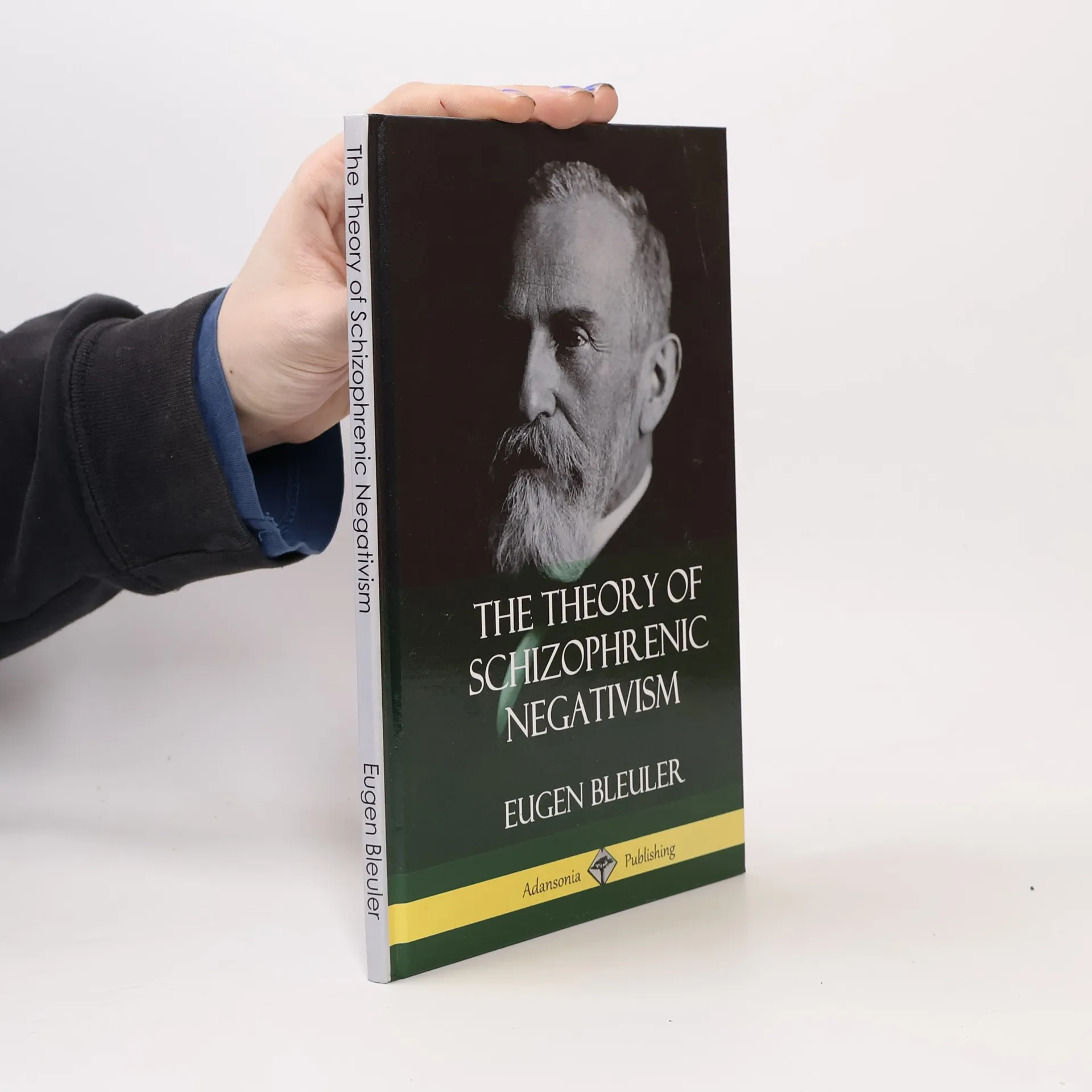
The Theory of Schizophrenic Negativism, Eugen Bleuler, William A. White
- Sprache

- Erscheinungsdatum
- 2019
- Einband
- (Hardcover)
Hier könnte deine Bewertung stehen.
- Titel
- The Theory of Schizophrenic Negativism
- Sprache
- Englisch
- Autor*innen
- Eugen Bleuler, William A. White
- Verlag
- Lulu.com
- Erscheinungsdatum
- 2019
- Einband
- Hardcover
- Seitenzahl
- 48
- ISBN10
- 0359749100
- ISBN13
- 9780359749102
- Reihe
- Schlagwörter
- Psychologische Thematik, Wissenschaft, Psychoanalyse, Psychische Störungen, Schizophrenie
- Bewertung
- 1 von 5 Sternen
- Beschreibung
- Patients often exhibit indifference despite opposition, with some displaying a permanent euphoric state while resisting gestures like handshakes through bites and scratches, treating their defense as a playful sport. More frequently, their behavior resembles flirtation; women patients may watch the physician, seemingly waiting for an invitation to engage, only to negate it, akin to a maiden teasing her suitor while pretending to keep him at bay. This negativism can have an erotic undertone, manifesting in both playful and aversive ways. Alongside external negativism, there is also an internal aspect that predominantly affects the will. Patients may struggle to act on their desires due to inhibitions or conflicting impulses that hinder their actions. For instance, a patient might reach for a piece of food but stop midway, ultimately refusing it. This pattern of behavior is consistent across various actions; even when attempting to shake hands, the movement may abruptly halt, or the hand might be moved behind the back due to contrary impulses.