



Mehr zum Buch
Boethius composed <i>De Consolation Philosophiae</i> in the 6th century while awaiting death by torture, condemned on a charge of plotting against Gothic rule, which he protested as manifestly unjust. Though a Christian, Boethius details the true end of life as the soul's knowledge of God, and consoles himself with the tenets of Greek philosophy, not with Christian precepts. Written in a form called Meippean Satire that alternates between prose & verse, Boethius' work often consists of a story told by Ovid or Horace to illustrate the philosophy being expounded. <i>The Consolation of Philosophy</i> dominated the intellectual world of the Middle Ages. It inspired writers as diverse Thomas Aquinas, Jean de Meun & Dante. In England it was rendered into Old English by Alfred the Great, into Middle English by Geoffrey Chaucer. Later Queen Elizabeth I made her own translation. The circumstances of composition, the heroic demeanor of the author, and the Meippean texture of part prose, part verse have been a fascination for students of philosophy, literature and religion ever since.
Buchkauf
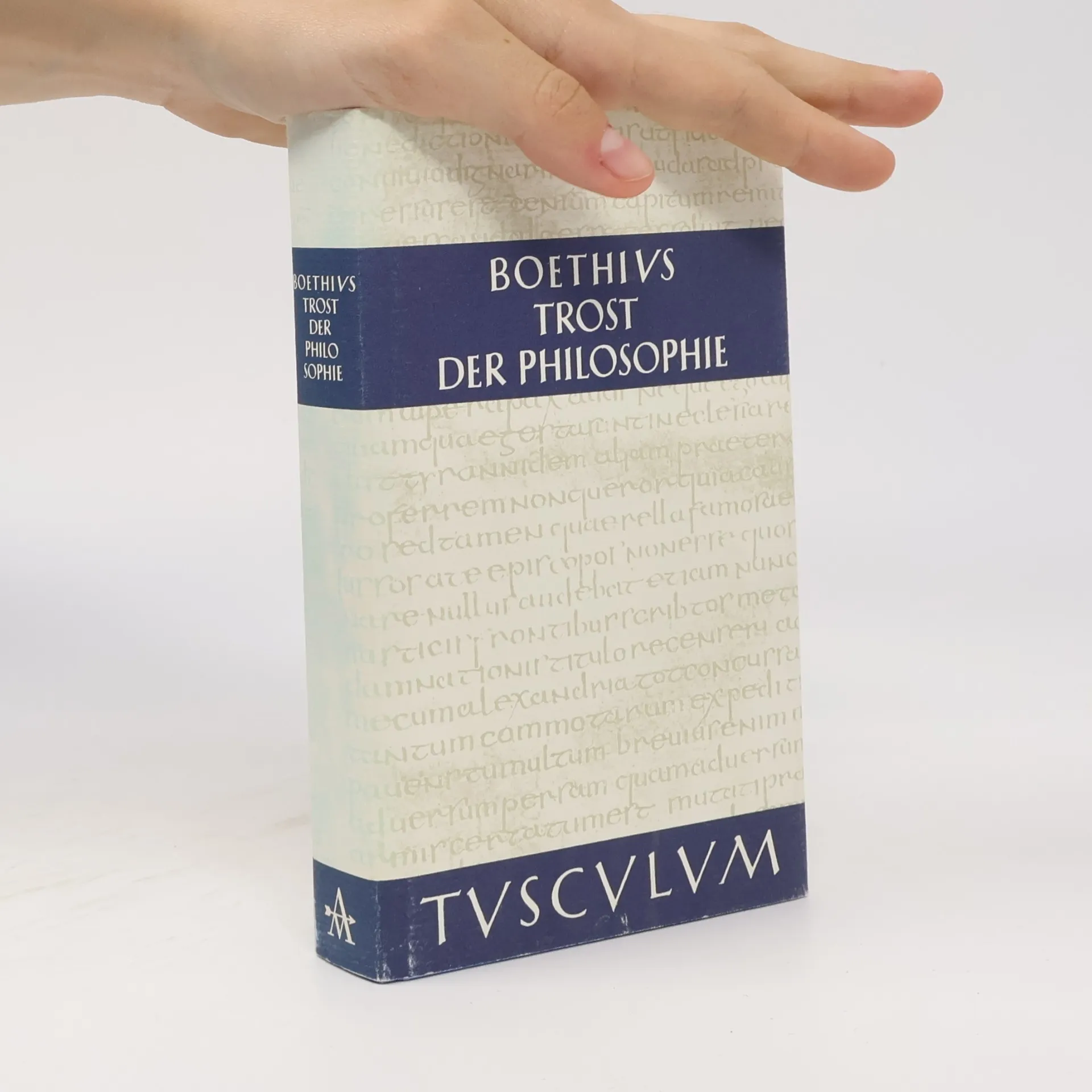
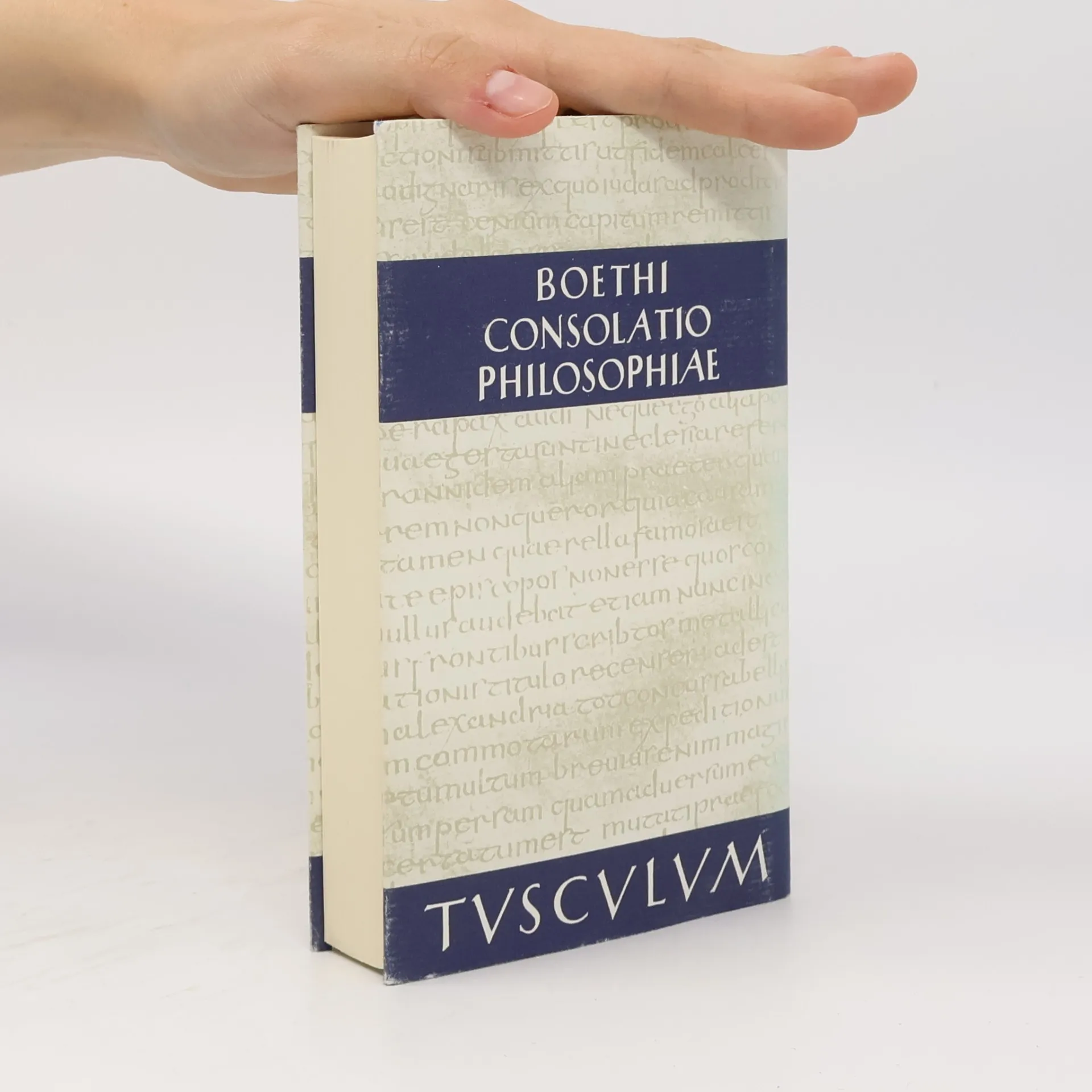
Tusculum: Trost der Philosophie, Anitius Manlius Torquatus Severinus Boëthius, Ernst Gegenschatz, Olof Gigon
- Sprache

- Erscheinungsdatum
- 1990
- product-detail.submit-box.info.binding
- (Hardcover),
- Buchzustand
- Gebraucht - Gut
- Preis
- € 11,49
Keiner hat bisher bewertet.
- Titel
- Tusculum: Trost der Philosophie
- Sprache
- Deutsch
- Verlag
- Artemis & Winkler
- Erscheinungsdatum
- 1990
- Einband
- Hardcover
- Seitenzahl
- 371
- ISBN10
- 3760816622
- ISBN13
- 9783760816623
- Reihe
- Schlagwörter
- Sachbücher, Historisches Thema, Geschichte, Esoterik & Religion, Poesie, Religiöse Themen, Philosophisches Thema, Religion, Philosophie, Spiritualität, Klassiker, Christliche Themen, Christentum, Theologie, Mittelalter, Altertum, Ethik, Philosophie und Religion, Trost, Antike Literatur, Dialog, Frühes Mittelalter, Philosophie der Antike, Scholastik
- Beschreibung
- Boethius composed <i>De Consolation Philosophiae</i> in the 6th century while awaiting death by torture, condemned on a charge of plotting against Gothic rule, which he protested as manifestly unjust. Though a Christian, Boethius details the true end of life as the soul's knowledge of God, and consoles himself with the tenets of Greek philosophy, not with Christian precepts. Written in a form called Meippean Satire that alternates between prose & verse, Boethius' work often consists of a story told by Ovid or Horace to illustrate the philosophy being expounded. <i>The Consolation of Philosophy</i> dominated the intellectual world of the Middle Ages. It inspired writers as diverse Thomas Aquinas, Jean de Meun & Dante. In England it was rendered into Old English by Alfred the Great, into Middle English by Geoffrey Chaucer. Later Queen Elizabeth I made her own translation. The circumstances of composition, the heroic demeanor of the author, and the Meippean texture of part prose, part verse have been a fascination for students of philosophy, literature and religion ever since.