


Mehr zum Buch
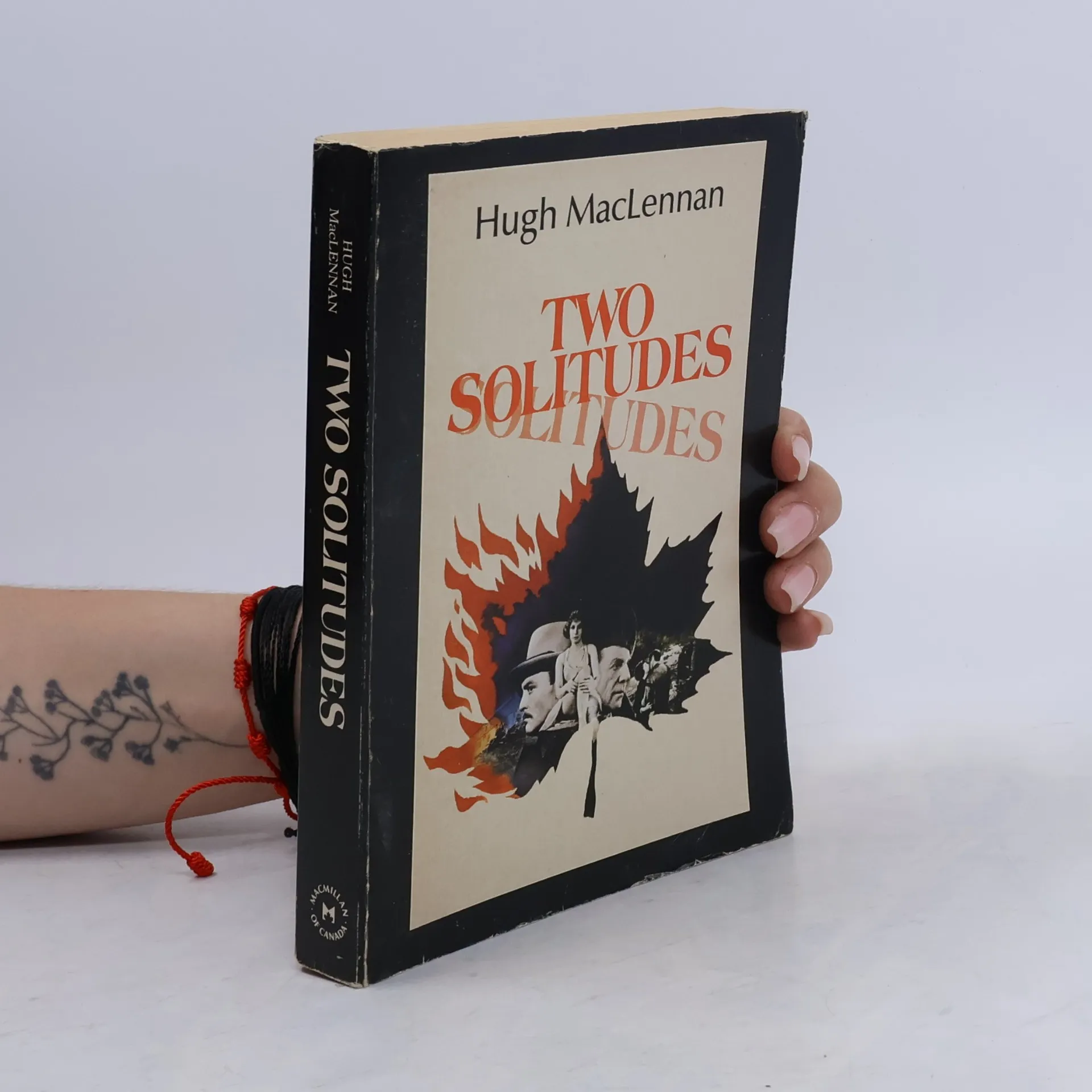
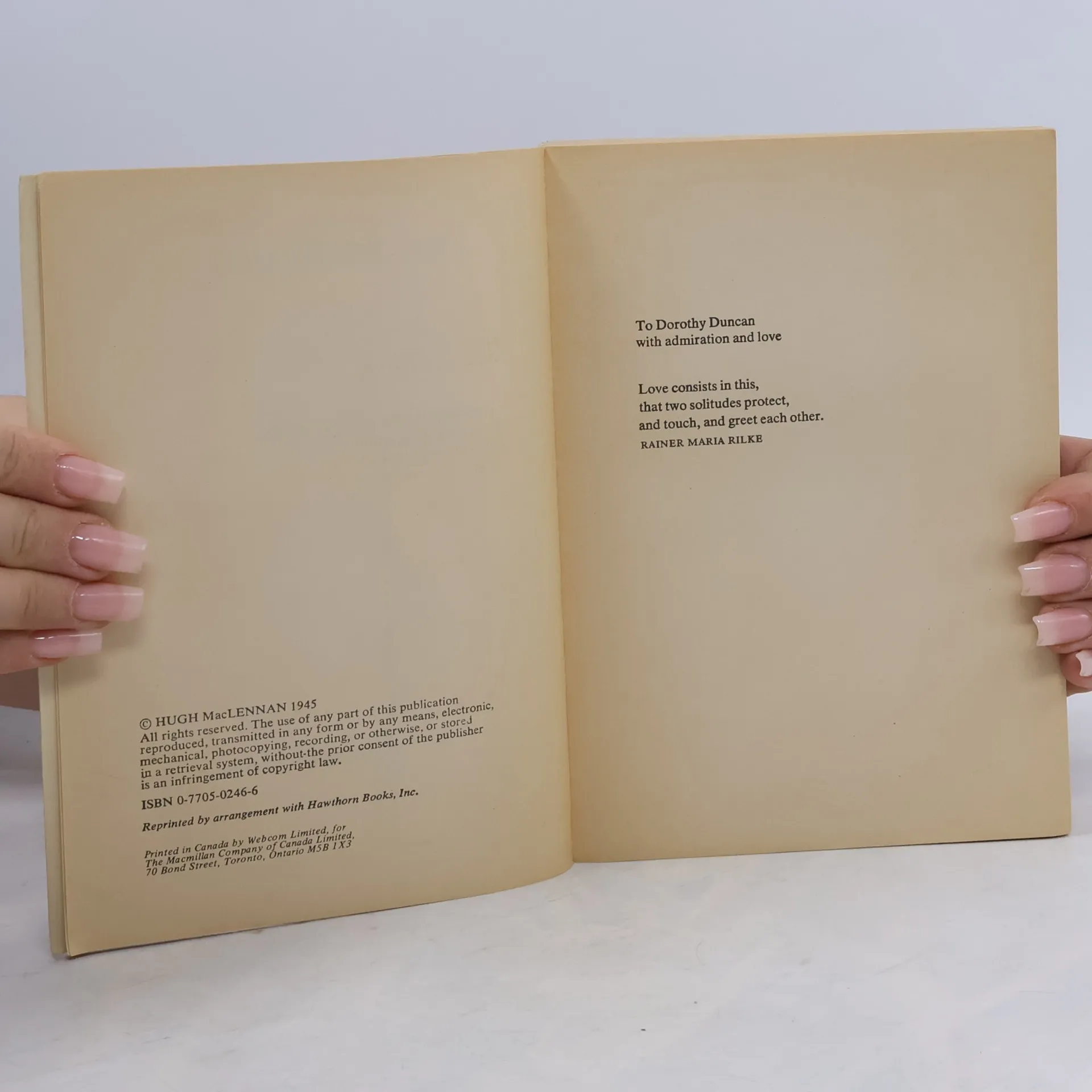
Since its publication in 1945, Hugh MacLennan's novel <i>Two Solitudes</i> has been eclipsed by "Two Solitudes" the cliché, a political ready-made used to deflect Canada's aspirations to national unity. This bastardization of MacLennan's too-catchy title (taken not from a political theorist but from Rilke) does <i>Two Solitudes</i> a grave disservice. It is a far more sophisticated novel than one might think. <p> Beginning in the last days of the First World War, with the introduction of nationwide conscription (a measure that was extremely unpopular in Quebec), and pressing on to the outbreak of the Second World War, <i>Two Solitudes</i> tries to offer a panorama of Quebec's culture and politics. The first half of <i>Two Solitudes</i> transpires in the imaginary parish of Saint-Marc-des-Érables, an insular farming region down the river from Montreal, in which life has changed little since the 18th century. The two pillars of the community, Athanase Tallard and Father Beaubien, are engaged in an escalating struggle over the parish's future. Tallard is keen to bring in English-Canadian money and industrial development, while Father Beaubien simply wants things to remain as they are. Eventually, MacLennan turns his attention to Montreal, and to the challenges faced by the following generation. The urban sections of <i>Two Solitudes</i> have rightly been faulted for being contrived and unsympathetic. Nonetheless, they are essential to MacLennan's agenda, which seems to propose a fledgling version of Canada's contemporary cosmopolitanism instead of a blind, ethnically limited nationalism. </p><p> <i>Two Solitudes</i> is far from being a great work of fiction--it can be hokey, preachy, heavy-handed, trite, and dated--but it is both an entertaining human story and a knowing political novel, only slightly marred by MacLennan's over-idealistic nationalism. The Canada that MacLennan presents, a country in which a citizen is either French-Canadian or English-Canadian (or a rare hybrid) never really existed, but the political climate prompted by this illusion is still with us. MacLennan's novel is one of the most sympathetic (and readable) literary chronicles of the tensions and misunderstandings that gave birth to modern Quebec. <i>--Jack Illingworth</i></p>
Buchkauf
Two Solitudes, Hugh Mac Lennan
- Sprache

- Erscheinungsdatum
- 1978
- product-detail.submit-box.info.binding
- (Paperback),
- Buchzustand
- Gebraucht - Gut
- Preis
- € 10,99
Keiner hat bisher bewertet.
- Titel
- Two Solitudes
- Sprache
- Englisch
- Autor*innen
- Hugh Mac Lennan
- Verlag
- Macmillan
- Erscheinungsdatum
- 1978
- Einband
- Paperback
- Seitenzahl
- 413
- ISBN10
- 0770502466
- ISBN13
- 9780770502461
- Reihe
- Schlagwörter
- Belletristik, Historische Romane, Klassiker, Kanada, Kanadische Literatur
- Beschreibung
- Since its publication in 1945, Hugh MacLennan's novel <i>Two Solitudes</i> has been eclipsed by "Two Solitudes" the cliché, a political ready-made used to deflect Canada's aspirations to national unity. This bastardization of MacLennan's too-catchy title (taken not from a political theorist but from Rilke) does <i>Two Solitudes</i> a grave disservice. It is a far more sophisticated novel than one might think. <p> Beginning in the last days of the First World War, with the introduction of nationwide conscription (a measure that was extremely unpopular in Quebec), and pressing on to the outbreak of the Second World War, <i>Two Solitudes</i> tries to offer a panorama of Quebec's culture and politics. The first half of <i>Two Solitudes</i> transpires in the imaginary parish of Saint-Marc-des-Érables, an insular farming region down the river from Montreal, in which life has changed little since the 18th century. The two pillars of the community, Athanase Tallard and Father Beaubien, are engaged in an escalating struggle over the parish's future. Tallard is keen to bring in English-Canadian money and industrial development, while Father Beaubien simply wants things to remain as they are. Eventually, MacLennan turns his attention to Montreal, and to the challenges faced by the following generation. The urban sections of <i>Two Solitudes</i> have rightly been faulted for being contrived and unsympathetic. Nonetheless, they are essential to MacLennan's agenda, which seems to propose a fledgling version of Canada's contemporary cosmopolitanism instead of a blind, ethnically limited nationalism. </p><p> <i>Two Solitudes</i> is far from being a great work of fiction--it can be hokey, preachy, heavy-handed, trite, and dated--but it is both an entertaining human story and a knowing political novel, only slightly marred by MacLennan's over-idealistic nationalism. The Canada that MacLennan presents, a country in which a citizen is either French-Canadian or English-Canadian (or a rare hybrid) never really existed, but the political climate prompted by this illusion is still with us. MacLennan's novel is one of the most sympathetic (and readable) literary chronicles of the tensions and misunderstandings that gave birth to modern Quebec. <i>--Jack Illingworth</i></p>