Gratis Versand ab € 16,99. Mehr Infos.
Bookbot

Astronomie und Astrophysik Bibliothek

Diese Sammlung taucht in die Weiten des Kosmos ein und bietet Lesern eine fesselnde Reise durch Astronomie und Astrophysik. Die Reihe behandelt ein breites Spektrum an Themen, von Planetensystemen und Himmelsphänomenen bis hin zu grundlegenden Theorien des Universums. Jeder Band ist sorgfältig gestaltet, um sowohl strenge wissenschaftliche Erkenntnisse als auch fesselnde Erzählungen zu liefern. Sie ist eine unverzichtbare Ressource für alle, die von den Rätseln des Universums und der Wissenschaft, die versucht, sie zu entschlüsseln, fasziniert sind.

Compact stars
Stellar interiors
Chemical Evolution of Galaxies
Astrophysical concepts
Astrophysics
The solar system
  • The solar system

    • 349 Seiten
    • 13 Lesestunden

    Since the first edition appeared in 1990, planetology has experienced numerous discoveries that have enhanced our understanding of the Solar System, thanks to both ground- and space-based observational programs. Even failed space probe missions have contributed valuable information about the planetary environment. The Galileo probe, despite issues with its antenna, has delivered remarkable results, including the first images of asteroids like Gaspra and Ida, along with Ida's satellite, Dactyl. The probe's primary mission to drop an instrumented capsule into Jupiter's atmosphere for in-situ investigation is scheduled for late 1995. Saturn will be explored early next century with the Cassini mission, launching in 1997, which aims to study the planet and land the Huygens probe on Titan's surface. NASA's Magellan mission achieved significant success with detailed radar mapping and atmospheric studies. However, the exploration of Mars faced challenges, with failures in both the Soviet Phobos mission and NASA's Mars Observer probe. Despite these setbacks, plans for future collaborative exploration of Mars are underway, involving surface stations, possibly active rovers, surface penetrators, balloon probes, and orbiters.
    The solar system
  • Astrophysics

    • 183 Seiten
    • 7 Lesestunden

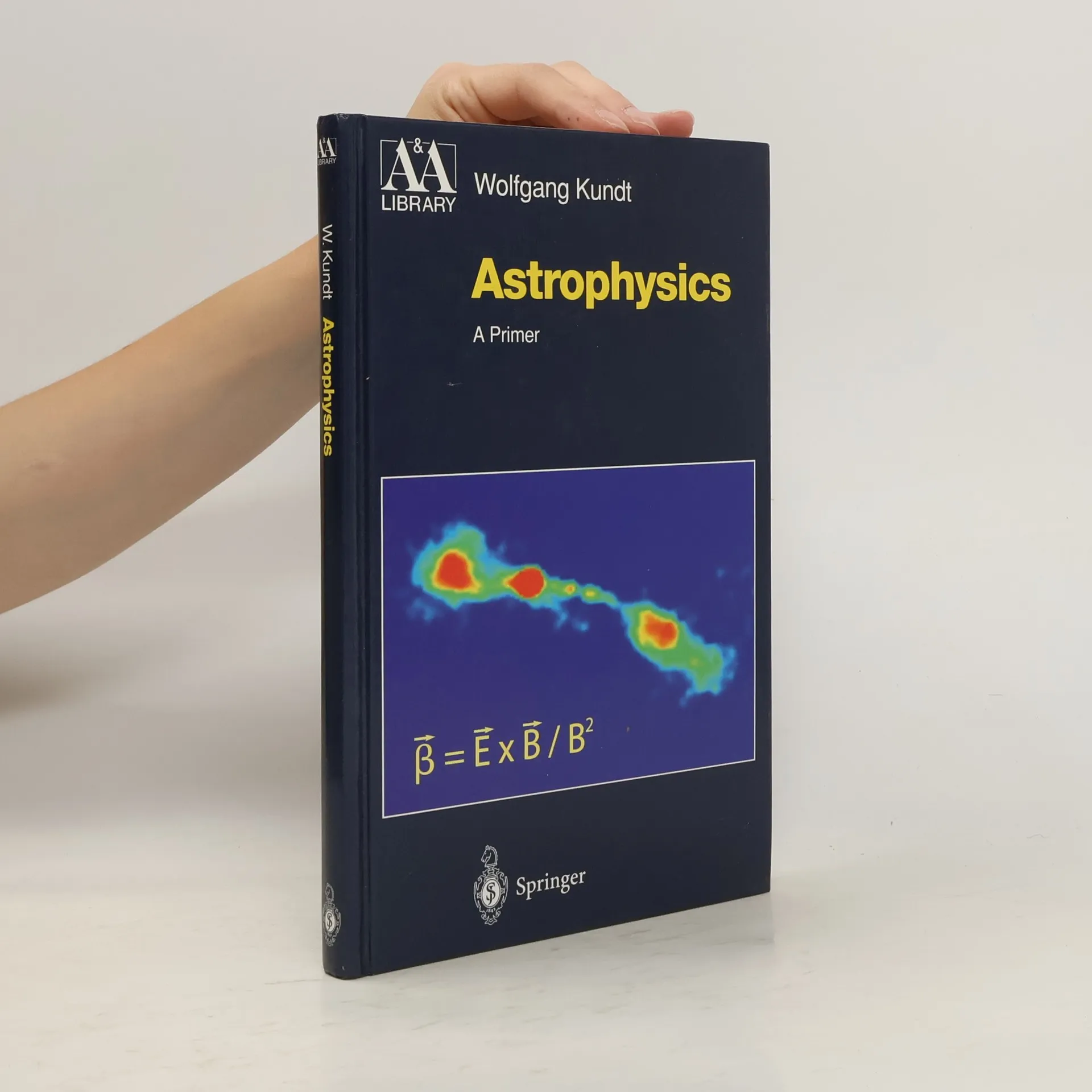
    Devised for a quantitative understanding of the physics of the universe from the solar system through the milky way to clusters of galaxies all the way to cosmology, this acclaimed text offers among the most concise and most critical ones of extant works. Special chapters are devoted to magnetic and radiation processes, disks, black-hole candidacy, bipolar flows, cosmic rays, gamma-ray bursts, image distortions, and special sources. At the same time, planet earth is viewed as the arena for life, with plants and animals having evolved to homo sapiens during cosmic time. This text is unique in covering the basic qualitative and quantitative tools, formulae as well as numbers, needed to for the precise interpretation of frontline phenomena.

    Astrophysics
  • Astrophysical concepts

    • 651 Seiten
    • 23 Lesestunden

    This classic text - aimed at senior undergraduates and beginning graduate students in physics and astronomy - presents a wide range of concepts in sufficient depth to give the reader a quantitative understanding of the subject. Emphasising physical concepts, it provides the student with a series of astrophysical sketches, concluding with a synthesis of all the subjects discussed in the book, sketching the history of the universe from its beginning to the formation of the Sun and the planets.

    Astrophysical concepts
    4,4
  • Focusing on the chemical evolution of various galaxy types—elliptical, spiral, and irregular—this book highlights the significance of star formation history in shaping star populations. It offers a comprehensive comparison of theoretical models against two decades of observational data, providing insights into the intricate processes governing galaxy development and composition.

    Chemical Evolution of Galaxies
  • The?rsteditionofthistextappearedin1994.Shortlyafterthethirdprinting, our editor suggested that we attempt a second edition because new devel- mentsinstellarstructureandevolutionhadmadeouroriginalworkoutdated. We (the original authors, CJH and SDK) reluctantly agreed but with res- vations due to the e?ort involved. Our initial reluctance disappeared when we were able to convince (cajole, twist the arm of, etc.) our new coauth- colleague Virginia Trimble to join us. (Welcome Virginia!) We (i.e., all three of us) hope that you agree that the present edition is a great improvement compared to the 1994 e?ort. Our objectives in this edition are the same ones we set forth in 1994: Whatyouwill?ndisatextdesignedforourtargetaudience:thety- cal senior undergraduate or beginning graduate student in astronomy or astrophysics who wishes an overview of stellar structure and e- lution with just enough detail to understand the general picture. She or he can go on from there to more specialized texts or directly to the research literature depending on talent and interests. To this end, this text presents the basic physical principles without chasing all the (interesting!) details. For those of you familiar with the ?rst edition, you will ?nd that some things have not been changed substantially (F = ma is still F = ma), while othersde?nitelyhave.Forexample,Chapter2hasbeencompletelyrewritten.

    Stellar interiors
    4,3
  • Compact stars

    • 390 Seiten
    • 14 Lesestunden

    Neutron stars are the smallest dense stars known, with densities some 1014 times that of Earth. This text discusses the physics of these extreme objects and includes the needed background in classical general relativity in nuclear and particle physics.

    Compact stars
    5,0
  • High-redshift galaxies emerged as a distinct research field in the late 20th century, facilitated by the Lyman-break technique, which enabled the identification of significant samples, and the advent of 8 to 10-meter telescopes that provided quality spectroscopic data. Today, these galaxies represent a crucial topic in astrophysics, comprising 5–10% of publications in major astronomy journals. The rapid development of this field, coupled with the constant influx of new results, makes writing a comprehensive book challenging. However, the vast amount of existing research and the ongoing interest in high-redshift galaxies justify the need for a summary and evaluation of the available data. This serves as an introduction for newcomers or those interested in the findings. The end of the first decade of the 21st century is an opportune moment for such a summary, as the current generation of ground-based optical telescopes, the Hubble Space Telescope, and key large radio telescopes have been operational for about one to two decades. While these instruments will continue to yield significant scientific results, many initial programs that utilized their unique capabilities have now been completed.

    High redshift galaxies
    4,0
  • Focusing on the formulation of mathematical models, this book delves into the light curves of eclipsing binary stars and the algorithms used to create these models. The latest edition introduces new physics relevant to light curve modeling and distance fitting, along with fresh applications and updated references, enhancing its relevance for researchers in the field.

    Eclipsing Binary Stars: Modeling and Analysis
  • In the first part, the book gives an up-to-date summary of the observational data. In the second part, it deals with the kinetic description of cosmic ray plasma. The underlying diffusion-convection transport equation, which governs the coupling between cosmic rays and the background plasma, is derived and analyzed in detail. In the third part, several applications of the solutions of the transport equation are presented and how key observations in cosmic ray physics can be accounted for is demonstrated.

    Cosmic ray astrophysics
    4,0
  • A corrected reprint of the ? rst edition appeared in 2000. It was a requirement that the pagination remain unaltered, but nevertheless, apart from minor and format corrections on 17 pages, a number of corrections or additions of substance could be incorporated. These included minor corrections to Figs. 1. 3 b) and 2. 8 and to the text of Fig. 5. 18. The most important change of all was probably the complete revision of the historical treatment of Cassegrain in the Portrait Gallery, due to the superb research of Baranne and Launay on his identity, published in 1997. Additions of substance were text on pages 21, 323 and 487 (Portrait Gallery – Mersenne) and corrections on pages 117 2 4 (y to y ), 174 (concerning the scale of Fig. 3. 37), 263 (Fig. 3. 96 instead of 3. 97 in the text), 341 (sign in the text equation below Eq. (4. 36)), Table 5. 2 (concerning UKIRT), Table A. 15 (? rst symbol), pages 505 (Ref. 3. 71) and 531 (Brown and Cassegrain). Several of these errors were pointed out by readers, to whom I express my gratitude. The present 2nd edition contains all the material of the ? rst edition, - changed apart from some further corrections, but with 25 pages more of - ditional explanations or new material, including 5 new ? gures (2 in Chap. 4, 2 in Chap. 5 and 1 following the Portrait Gallery).

    Reflecting telescope optics 1
    5,0
  • Starburst regions in galaxies significantly enhance our understanding of the early universe. This updated edition of Norbert Schulz’s book explores the complex physical processes involved in star creation and early evolution. It highlights how these processes manifest across various wavelengths, from radio to high-energy X-rays and gamma rays, with a focus on high-energy signatures. Key analysis techniques are discussed, showcasing modern research methods in the field. New chapters cover massive star formation, proto-planetary disks, and observations of young exoplanets. Recent advancements and contemporary research on star formation theory are presented, alongside new observations from the Spitzer Space Telescope, Hubble Space Telescope, and Chandra X-Ray Observatory, which collectively enhance high-resolution space-based observations. The inclusion of chapters on proto-planetary disks and young exoplanets reflects the evolving landscape of the subject. Enhanced with numerous color images, the book illustrates both established and emerging topics. The author updates theories on fragmentation, dust, and circumstellar disks, while placing a stronger emphasis on computational approaches, targeting graduate students and young researchers.

    The formation and early evolution of stars
    4,0
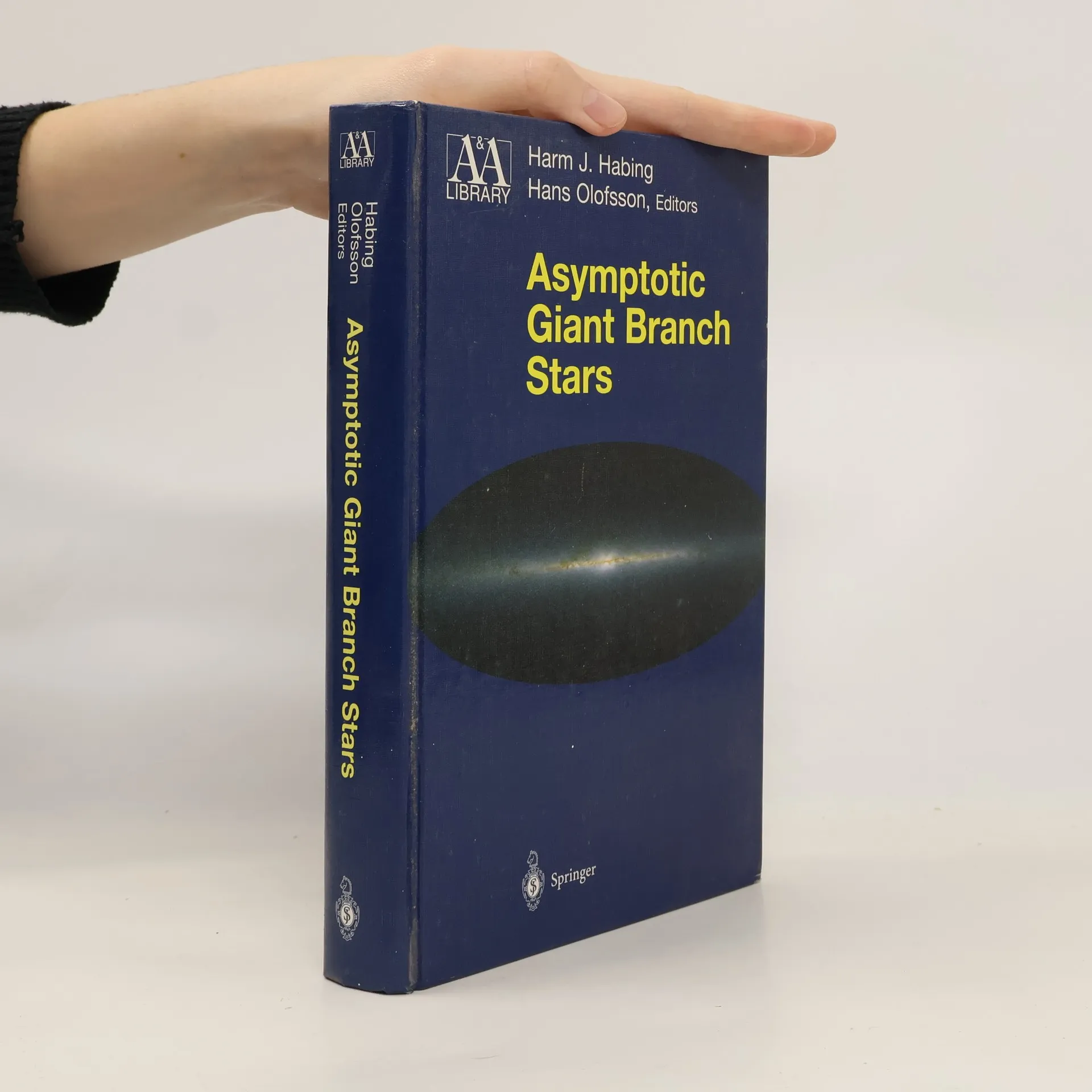
  • This book deals with stars during a short episode before they undergo a ma jor, and fatal, transition. Soon the star will stop releasing nudear energy, it will become a planetary nebula for abrief but poetic moment, and then it will turn into a white dwarf and slowly fade out of sight. Just before this dramatic change begins the star has reached the highest luminosity and the largest diameter in its existence, and while it is a star detectable in galaxies beyond the Local Group, its structure contains already the inconspicuous white dwarf it will become. It is called an "asymptotic giant branch star" or "AGB star". Over the last 30 odd years AGB stars have become a topic of their own although individual members of this dass had already been studied for cen turies without realizing what they were. In the early evolution, so called "E-AGB"-phase, the stars are a bit bluer than, but otherwise very similar to, what are now called red giant branch stars (RGB stars). It is only in the sec ond half of their anyhow brief existence that AGB stars differ fundamentally from RGB stars.

    Asymptotic giant branch stars
  • This second edition has been entirely restructured and almost doubled in size, in order to improve clarity and account for the great progress achieved in the field over the last 15 years. „This is not a handbook for observers. It is a broader reference for students, active researchers, and anyone who wants a detailed look at the tools of modern astronomy...“ -PHYSICS TODAY

    Observational astrophysics
    3,8
  • A wealth of new experimental and theoretical results has been obtained in solar physics since the first edition of this textbook appeared in 1989. Thus all nine chapters have been thoroughly revised, and about 100 pages and many new illustrations have been added to the text. The additions include element diffusion in the solar interior, the recent neutrino experiments, methods of image restoration, observational devices used for spectroscopy and polarimetry, and new developments in helioseismology and numerical simulation. The book takes particular advantage of the results of several recent space missions, which lead to substantial progress in our understanding of the Sun, from the deep interior to the corona and solar wind.

    The sun
  • This textbook addresses students and practitioners. It attempts to give an outline of the methods and tools of radio astronomy needed by the astronomer who wants to relate the message from interstellar space to physical processes. It gives a unified treatment of the entire field of radioastronomy from the centimetre to the sub-millimetre wavelength range, discussing both single telescopes and interferometric devices. It describes the basic physical principles and gives a reasonably complete outline of the instruments and methods of measurements and analysis, including both continuum radiation and spectral lines. This second edition has been largely rewritten and expanded. It includes the most recent developments in astronomy.

    Tools of radio astronomy
    4,0
  • This book effectively combines Special and General Relativity with key elements of nuclear and particle physics. It includes problem sets for various chapters, making it suitable for courses focused on the physics of white dwarf and neutron star interiors.

    Special and General Relativity
    4,0
  • Modern astrometry

    • 375 Seiten
    • 14 Lesestunden

    On the occasion ofthe second edition ofthe book, it appeared necessary to up date information that was already seven years old. Astrometry has recorded tremendous advances during these last years, so that, in addition to cor recting identified errors and misprints, there are many major modifications. Among the events that forced me to modify significantly the contents of the book, the most important are the release of the Hipparcos and Tycho cata logues, the introduction of CCD astrometry, the decision of the International Astronomical Union to adopt a new celestial reference frame, the dramatic improvement of accurate time and frequency standards, the decision taken by space agencies to prepare several new space astrometry satellites and the development of optical interferometry. The description and the consequences of these events have been included in this edition. One of them is that a mi crosecond of arc or microarcsecond (uas) has become a widely used unit. On the contrary, the result was also that the importance of some in struments such as astrolabes or transit circles has decreased. However, I left but because their description unchanged, not only for their historical interest, newer techniques often use similar data reduction methods so that one can refer to them. Conversely, some methods or instruments have evolved and new information is included. Finally, many new references were added to the original list.

    Modern astrometry
  • The Early Universe

    • 466 Seiten
    • 17 Lesestunden

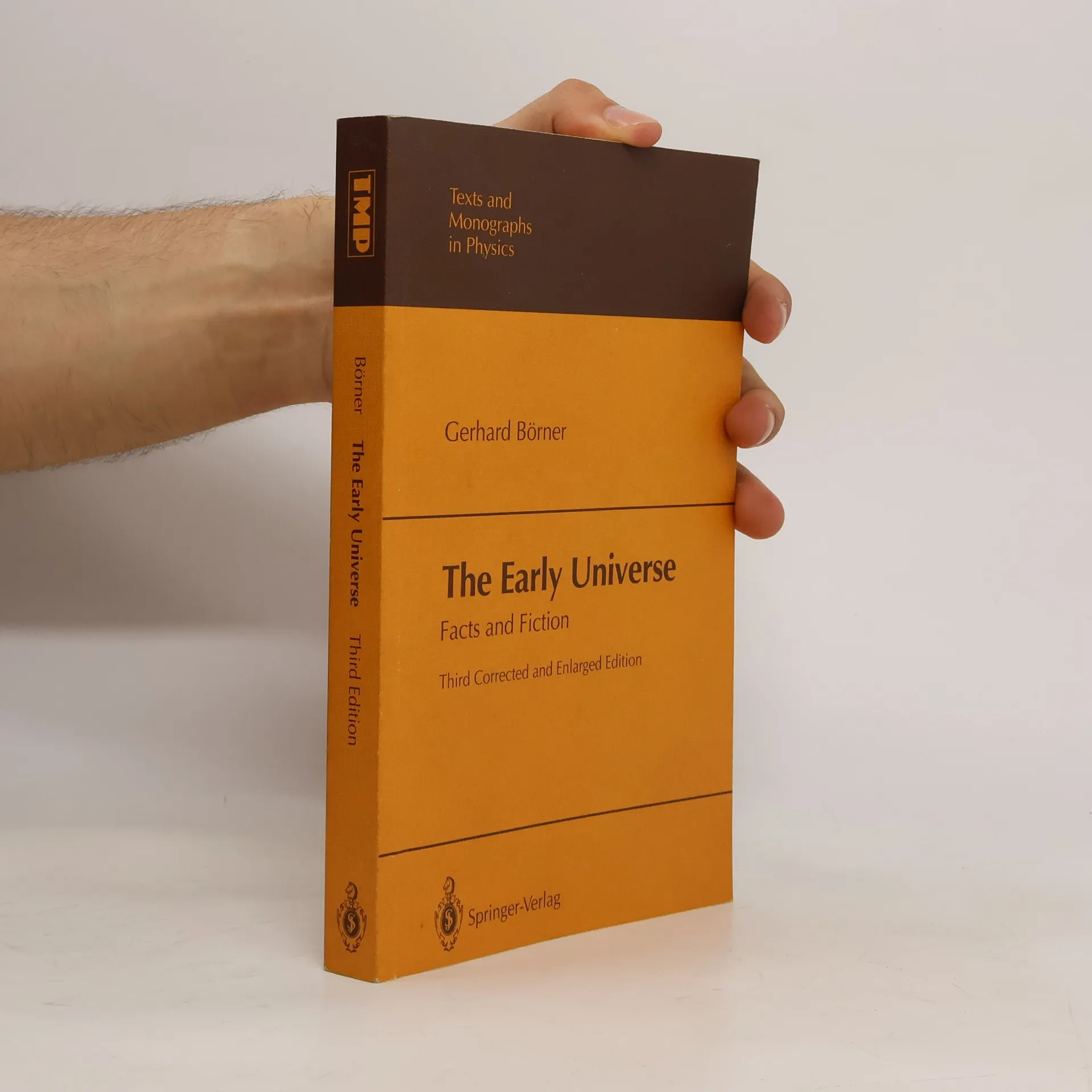
    In this corrected and enlarged edition of Börner's well respected textbook, you will find an up-to-date account of the interplay between particle physics and astrophysics upon which modern cosmology is founded. The author describes some of the theories which have been developed to model the fundamental interaction of elementary particles in the extremely high temperatures of the early universe, taking care to distinguish facts and well- established results from hypotheses and speculations. The three parts of the book discuss the standard hot big bang model of the early universe, the basic ideas of the standard and the grand unified theories of elementary particles, and the influence of dark matter of the large- scale evolution of structure. In addition to making some minor corrections, the author has added an appendix presenting new results and an updated bibliography. Two main groups of readers are research students in astronomy can use this book to understand the impact of elementary particle theory on cosmology, while research students in particle physics can use it to acquaint themselves with the basic facts of cosmology. The book is written carefully enough to appeal also to a wider audience of physicists.

    The Early Universe
    4,0
  • Theory of Orbits

    Volume 1: Integrable Systems and Non-perturbative Methods

    • 393 Seiten
    • 14 Lesestunden

    S. Chandrasekhar's influential work presents stellar dynamics as a branch of classical dynamics, akin to celestial mechanics. It explores the evolution of stellar dynamics through three main perspectives: celestial mechanics, fluid mechanics, and statistical mechanics, addressing complex problems in interpreting stellar systems.

    Theory of Orbits
  • In the last 45 years, X-ray astronomy has become an integral part of modern astrophysics and cosmology. There is a wide range of astrophysical objects and phenomena, where X-rays provide crucial diagnostics. In particular they are well suited to study hot plasmas and matter under extreme physical conditions in compact objects. This book summarizes the present status of X-ray astronomy in terms of observational results and their astrophysical interpretation. It is written for students, astrophysicists as well a growing community of physicists interested in the field. An introduction including historical material is followed by chapters on X-ray astronomical instrumentation. The next two parts summarize in 17 chapters the present knowledge on various classes of X-ray sources in the galactic and extragalactic realm. While the X-ray astronomical highlights discussed in this book are mainly based on results from ROSAT, ASCA, RXTE, BeppoSAX, Chandra and XMM-Newton, a final chapter provides an outlook on observational capabilities and projects discussed for the future.

    The universe in x-rays
  • Written by a well-known astrophysicist, who is also a superbly talented writer, this work deals with the matter and radiation content of the universe, the formation of galaxies, and provides a comprehensive introduction into relativistic astrophysics as needed for the clarification of cosmological ideas.

    Galaxy formation
    4,3
  • Compact objects are a crucial focus in contemporary astronomical research. Supermassive black holes are key to understanding galaxy formation in the early Universe, while old white dwarfs serve as benchmarks for determining the Universe's age. Mergers of neutron stars and black holes generate intense gravitational waves, which will soon be measured by upcoming detectors. This work provides a thorough introduction and current overview of the physical processes governing these objects, encompassing everything from foundational concepts to the latest findings and observations. It begins with a classification of compact objects, followed by essential principles of general relativity. The author delves into the physics and observations of white dwarfs and neutron stars, presenting the latest equations of state for neutron star matter, and explores the gravitational fields of rapidly rotating compact objects and black holes, including ray tracing and magnetospheres. Additionally, the text covers gravitational waves and new insights into accretion processes through magnetorotational instability in accretion disks. Utilizing a 3+1 split approach to Einstein's equations and relativistic hydrodynamics, each chapter includes problems and solutions to enhance comprehension. This advanced textbook will be valuable for both students and researchers in the field of astrophysics.

    Compact objects in astrophysics
    4,7
  • Our purpose in writing this book is to show how physics has been applied to developing our current understanding of the phase structure, physical condi tions, chemical makeup and, evolution of the (thermal) interstellar medium. We hope it provides an up-to-date overview which postgraduates, advanced undergraduates, and professionals in astrophysics can use as a „reference of first resort“ before going on to read the more specialist monographs or research literature. We have covered the exciting observational results, but without consideration of the experimental techniques or instruments required. An elementary understanding of mathematical physics and of quantum me chanics has been assumed, and a knowledge of basic astrophysics would be helpful. Older textbooks on interstellar physics have tended to develop the subject matter in an order which reflects the historical development of the field. Here a more pedagological approach has been adopted, based on our lecture course experience. We cover successively more complex physical systems found in the diffuse universe. Detailed mathematical rigour is eschewed in favour of provid ing the reader with a basic physical insight into these systems. Astrophysical problems are treated as practical applications of the physics. In practice, the material is generally ranked in order of decreasing entropy, since the hottest and most diffuse phases tend to be physically less complex.

    Astrophysics of the diffuse universe
    4,0
  • This long-awaited second edition of the classical textbook on Stellar Structure and Evolution by Kippenhahn and Weigert is a thoroughly revised version of the original text. Taking into account modern observational constraints as well as additional physical effects such as mass loss and diffusion, Achim Weiss and Rudolf Kippenhahn have succeeded in bringing the book up to the state-of-the-art with respect to both the presentation of stellar physics and the presentation and interpretation of current sophisticated stellar models. The well-received and proven pedagogical approach of the first edition has been retained. The book provides a comprehensive treatment of the physics of the stellar interior and the underlying fundamental processes and parameters. The models developed to explain the stability, dynamics and evolution of the stars are presented and great care is taken to detail the various stages in a star’s life. Just as the first edition, which remained astandard work for more than 20 years after its first publication, the second edition will be of lasting value not only for students but also for active researchers in astronomy and astrophysics.

    Stellar structure and evolution
    4,7
  • Using information and scale as central themes, this comprehensive survey explains how to handle real problems in astronomical data analysis through a modern arsenal of powerful techniques. The coverage includes chapters or appendices on: detection and filtering; image compression; multichannel, multiscale, and catalog data analytical methods; wavelets transforms, Picard iteration, and software tools.

    Astronomical image and data analysis
    3,0
  • Einzigartig in seiner umfassenden Abdeckung und Präsentation bietet dieses Lehrbuch tiefgehende Einblicke in die Natur von Galaxien, extragalaktischen Objekten, der großräumigen Struktur des Universums und der Kosmologie. Es bleibt dabei für fortgeschrittene Studierende zugänglich. Ein oder mehrere Kapitel sind den folgenden Themen gewidmet: der Klassifikation und Morphologie von Galaxien; dem galaktischen interstellaren Medium; der galaktischen Kinematik; elliptischen, spiralförmigen und Balkenspiralgalaxien; den Wechselwirkungen zwischen Galaxien; extragalaktischen Radiokreisen, Quasaren und deren Linien-Spektren sowie anderen aktiven galaktischen Kernen; der Entstehung von Galaxien; dem Universum als Ganzes; und der Kosmologie.

    Galaxies and cosmology
    4,0
  • The sun from space

    • 357 Seiten
    • 13 Lesestunden

    A comprehensive account of solar astrophysics and how our perception and knowledge of this star have gradually changed as mankind has elucidated ever more of its mysteries. The emphasis here is on the last decade, which has seen three successful solar spacecraft missions: SOHO, Ulysses and Yohkoh. Together, these have confirmed many aspects of the solar standard model and provided new clues to the numerous open questions that remain. The author, a leading researcher in the field, writes in a clear and concise style. Known also for his famous books „Astrophysical Formulae“, „Sun, Earth and Sky“ and the prize-winning „Wanderers in Space“, he has succeeded once again in addressing a complex scientific topic in a very approachable way.

    The sun from space
    3,0
  • Rotation is ubiquitous at each step of stellar evolution, from star formation to the final stages, and it affects the course of evolution, the timescales and nucleosynthesis. Stellar rotation is also an essential prerequisite for the occurrence of Gamma-Ray Bursts. In this book the author thoroughly examines the basic mechanical and thermal effects of rotation, their influence on mass loss by stellar winds, the effects of differential rotation and its associated instabilities, the relation with magnetic fields and the evolution of the internal and surface rotation. Further, he discusses the numerous observational signatures of rotational effects obtained from spectroscopy and interferometric observations, as well as from chemical abundance determinations, helioseismology and asteroseismology, etc. On an introductory level, this book presents in a didactical way the basic concepts of stellar structure and evolution in „track 1“ chapters. The other more specialized chapters form an advanced course on the graduate level and will further serve as a valuable reference work for professional astrophysicists.

    Physics, Formation and Evolution of Rotating Stars
    4,0
  • The interstellar medium

    • 437 Seiten
    • 16 Lesestunden

    Describing interstellar matter in our galaxy in all of its various forms, this book also considers the physical and chemical processes that are occurring within this matter. The first seven chapters present the various components making up the interstellar matter and detail the ways that we are able to study them. The following seven chapters are devoted to the physical, chemical and dynamical processes that control the behaviour of interstellar matter. These include the instabilities and cloud collapse processes that lead to the formation of stars. The last chapter summarizes the transformations that can occur between the different phases of the interstellar medium. Emphasizing methods over results, The Interstellar Medium is written for graduate students, for young astronomers, and also for any researchers who have developed an interest in the interstellar medium.

    The interstellar medium
    3,5
  • Relativistic Astrophysics and Cosmology provides a comprehensive overview of general relativity and its applications to compact objects, gravitational waves, and cosmology. It balances theoretical concepts with observational discussions and includes 140 exercises. Ideal for advanced undergraduates and beginning graduate students in (astro)physics.

    Relativistic Astrophysics and Cosmology