

Das Buch ist derzeit nicht auf Lager
Parameter
- 198 Seiten
- 7 Lesestunden
Mehr zum Buch
Friedrich Nietzsche's work serves as a powerful critique of modernity, challenging established notions in science, arts, and politics. He argues against the universality of morality, asserting that moral systems are shaped by individual perspectives rather than absolute truths. The book particularly targets European and Christian morality, which Nietzsche sees as hypocritical and life-denying. Through this provocative analysis, it examines themes of identity, religion, democracy, psychology, and individual freedom, influencing contemporary moral philosophy significantly.


Publikation
- 2024

- 2024
- 2023
- 2023
- 2023
- 2023
- 2023
- 2023
- 2023
- 2023
- 2023
- 2023

- 2022
- 2022
- 2022
- 2022
- 2022
- 2022
- 2022
- 2021
- 2021
- 2021
- 2021
- 2021
- 2021
- 2021
- 2021

- 2020
- 2020
- 2020
- 2020
- 2020
- 2020
- 2020
- 2020
- 2020
- 2020
- 2020
- 2020
- 2020
- 2020
- 2020
- 2020
- 2020
- 2020
- 2020

- 2019
- 2019
- 2019
- 2019
- 2019


- 2018

- 2018
- 2018
- 2018
- 2018
- 2018
- 2018
- 2018
- 2018
- 2018
- 2017
- 2017
- 2017
- 2017
- 2016

- 2013
- 2012
- 2010
- 2009
- 2009

- 2008
- 2008
- 2008
- 2008
- 2007
- 2007
- 2006
- 2005
- 2005
- 2004
- 2004





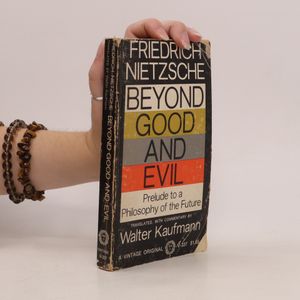


Buchkauf
Beyond Good and Evil, Friedrich Nietzsche
- Sprache

- Erscheinungsdatum
- 2024
Wir benachrichtigen dich per E-Mail.
Hier könnte deine Bewertung stehen.
- Titel
- Beyond Good and Evil
- Sprache
- Englisch
- Autor*innen
- Friedrich Nietzsche
- Verlag
- Warbler Classics
- Erscheinungsdatum
- 2024
- Seitenzahl
- 198
- ISBN13
- 9781962572675
- Reihe
- Schlagwörter
- Sachbücher, Sozialwissenschaften, Wahre Geschichten, Psychologische Thematik, Philosophisches Thema, Deutsche Literatur, Meinungsjournalismus, 19. Jahrhundert
- Erstveröffentlichung
- 1886
- Originaltitel
- Jenseits von Gut und Böse
- Bewertung
- 4,25 von 5 Sternen
- Beschreibung
- Friedrich Nietzsche's work serves as a powerful critique of modernity, challenging established notions in science, arts, and politics. He argues against the universality of morality, asserting that moral systems are shaped by individual perspectives rather than absolute truths. The book particularly targets European and Christian morality, which Nietzsche sees as hypocritical and life-denying. Through this provocative analysis, it examines themes of identity, religion, democracy, psychology, and individual freedom, influencing contemporary moral philosophy significantly.