





Die Ausgabe die ich hier gekauft habe, bietet eine gut lesbare deutsche Transkription des Textes von Morus, allerdings ohne Einführung oder Kommentar. Auffallend waren mehrere Druckfehler, die nichts mit der Übersetzung zu tun hatten. Dennoch sehr brauchbar, wenn man nur mit dem Text arbeiten oder ihn einfach kennenlernen möchte.
Ausverkauft, aber heiß begehrt!

Mehr zum Buch
First published in 1516, during a period of astonishing political and technological change, Sir Thomas More's Utopia depicts an imaginary society free of private property, sexual discrimination, violence, and religious intolerance. Raphael Hythloday, a philospher and world traveler, describes to the author and his friend an island nation he has visited called Utopia (combining the Greek ou-topos and eu-topos, for "no place" and "good place," respectively). Hythloday believes the rational social order of the Utopians is far superior to anything in Europe, while his listeners find many of their customs appealing but absurd. Given the enigmatic ambivalence of the character that More named after himself and the playful Greek puns he sprinkled throughout (including Hythloday's name, which means "knowing nonsense"), it is difficult to know what precisely More meant his readers to make of all the innovations of his Utopia. But its radical humanism has had an incalculable effect on modern history, and the callenge of its vision is as insistent today as it was in the Renaissance. With an introduction by Jenny Mezciems. (Book Jacket Status: Not Jacketed)
Publikation
- 2024

- 2024
- 2023
- 2023
- 2022
- 2022
- 2022
- 2022
- 2022
- 2022
- 2021
- 2021
- 2021
- 2021
- 2021
- 2021

- 2020
- 2020
- 2020
- 2020
- 2019
- 2019
- 2019
- 2018
- 2018
- 2018
- 2018
- 2018
- 2018
- 2018
- 2018
- 2018

- 2017
- 2017
- 2017
- 2016
- 2015
- 2014
- 2014
- 2013

- 2012
- 2012
- 2011
- 2011
- 2011
- 2011
- 2011

- 2010
- 2010
- 2010
- 2010

- 2009
- 2009
- 2008
- 2008

- 2006
- 2005
- 2005
- 2004

- 2001
- 1999







Buchkauf
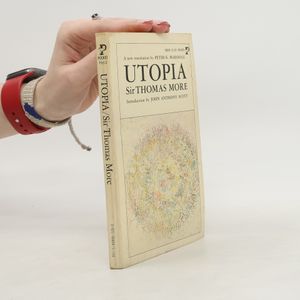
Utopia, Thomas More
- Sprache

- Erscheinungsdatum
- 1992
- product-detail.submit-box.info.binding
- (Hardcover)
Wir benachrichtigen dich per E-Mail.
- Titel
- Utopia
- Sprache
- Englisch
- Autor*innen
- Thomas More
- Verlag
- Everyman's Library
- Erscheinungsdatum
- 1992
- Einband
- Hardcover
- ISBN10
- 0679410767
- ISBN13
- 9780679410768
- Reihe
- Schlagwörter
- Belletristik, Religiöse Themen, Philosophisches Thema, Sci-Fi, Klassiker, Politik, Spannung, Gesellschaft, England, Zukunft, Inseln, Sozialismus, Utopie, Humanismus, Staat, Gedankenexperimente
- Erstveröffentlichung
- 1516
- Originaltitel
- Utopia
- Bewertung
- 3,45 von 5 Sternen
- Beschreibung
- First published in 1516, during a period of astonishing political and technological change, Sir Thomas More's Utopia depicts an imaginary society free of private property, sexual discrimination, violence, and religious intolerance. Raphael Hythloday, a philospher and world traveler, describes to the author and his friend an island nation he has visited called Utopia (combining the Greek ou-topos and eu-topos, for "no place" and "good place," respectively). Hythloday believes the rational social order of the Utopians is far superior to anything in Europe, while his listeners find many of their customs appealing but absurd. Given the enigmatic ambivalence of the character that More named after himself and the playful Greek puns he sprinkled throughout (including Hythloday's name, which means "knowing nonsense"), it is difficult to know what precisely More meant his readers to make of all the innovations of his Utopia. But its radical humanism has had an incalculable effect on modern history, and the callenge of its vision is as insistent today as it was in the Renaissance. With an introduction by Jenny Mezciems. (Book Jacket Status: Not Jacketed)